
A furnace-adjacent temperature and humidity recorder loop is auditable only when three layers line up: the right sensor for the radiant load, a placement plan that maps each heat zone, and records kept on-site for at least six months per OSHA's proposed indoor heat rule [S1].
Heat index is the metric OSHA's proposed rule sets action levels against, with an initial trigger at 80°F and a high-heat trigger at 90°F, so any temperature recorder deployed at the furnace loop has to compute the Rothfusz regression correctly, not just log raw dry-bulb readings [S1].
Instrument accuracy and humidity range required at the furnace perimeter
For a furnace monitoring loop, the sensor envelope should land at ±0.4°C temperature accuracy and ±3% RH humidity accuracy, the envelope published for ruggedized wireless sensors rated to IP65 in foodservice cold rooms and directly transferable to hot industrial zones [S3]. Onboard memory of roughly 10,000 measurements is the floor for any device that has to ride out a gateway outage without losing the audit trail [S3]. Humidity-only offsets are not academic: 83°F dry-bulb at 70% RH reads as about 88°F heat index, enough to cross the 80°F trigger that a plain thermometer would never flag [S1].
Pick a paperless recorder class device when the spec calls for redundant local storage plus cloud push, and stick to a plain temperature humidity recorder when only ambient loop data is needed. The wrong class is the most common audit finding in furnace-loop retrofits.
Heat index versus WBGT: choosing the right metric at the furnace
Heat index is valid for shaded, indoor, low-velocity work where humidity dominates perceived heat, which makes it appropriate for control rooms and corridors adjacent to the furnace line [S1]. Anywhere there is a significant radiant load, immediately at the furnace skin, near oven doors, or beside a reheat station, the wet-bulb globe temperature (WBGT) is the correct metric because it folds in radiant heat and air movement that heat index ignores [S1]. Minnesota already regulates indoor work using WBGT thresholds tied to task intensity, so specifying the wrong metric in a multi-state plant creates a compliance gap even when the device itself is sound [S1].
A defensible layout pairs a heat-index logger in shaded work cells with a WBGT instrument at the radiant source, then routes both into the same audit log. One instrument cannot legally cover both duty cycles, and conflating them is the second-most-common audit defect after missing records.
Placement and coverage: mapping the furnace monitoring zones
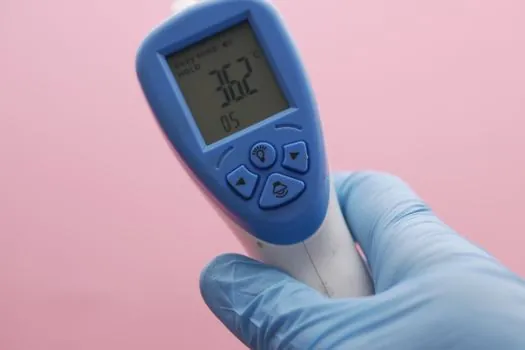
Walk every area with a reasonable expectation of crossing the 80°F trigger, mark the radiant hot spots, and assign at least one logger per zone rather than one logger per building [S1]. Wireless LoRaWAN sensors retrofit onto existing equipment in 15 to 30 minutes per unit without electrical modification, and they carry 3 to 10 years of battery life depending on protocol, which keeps the furnace-loop install cost low enough to justify one sensor per cell instead of one per facility [S2].
IP65-rated probes are the practical floor anywhere condensate, oil mist, or wash-down can reach the sensor head, since kitchen-grade wireless sensors with that rating have already proven the mechanical envelope survives steam and grease [S3]. Coverage gaps at the furnace charging door or the discharge end are the third audit defect: a single logger at the front of a long furnace line cannot defend a six-month record.
Records, alerts, and the six-month retention clock
OSHA's proposed rule requires on-site measurement records to be retained for six months, with a monitoring plan per work area, not per building [S1]. A cloud HVAC platform closes the loop by aggregating sensor streams, translating between BACnet, Modbus, and MQTT, and pre-processing locally so freeze protection and critical furnace alarms keep running during internet outages [S2].
Set the alert threshold at the heat-index action level for the zone (80°F initial, 90°F high heat in OSHA's framework, 80°F in Oregon and Maryland, WBGT bands in Minnesota) and route the alarm to a CMMS work-order pipeline so the corrective action is logged alongside the excursion [S1][S2]. Manual logs and ad-hoc spreadsheets do not survive a General Duty Clause citation, which is the federal fallback regulators use when no specific standard applies [S1].
Certification and supplier evidence to verify before purchase
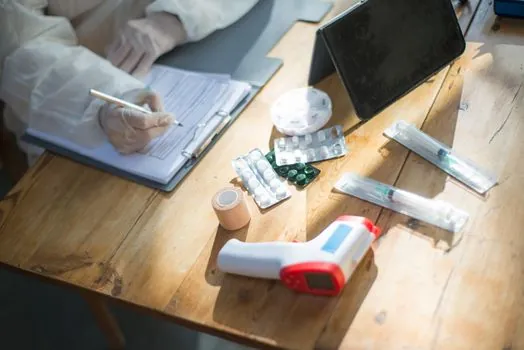
Any vendor selling into a furnace monitoring loop should be able to produce, on request, a calibration certificate traceable to NIST or an equivalent national institute, a sensor datasheet that states accuracy in °C and % RH (not just "high precision"), and an IP or NEMA rating matched to the zone's wash-down or dust exposure [S3]. Safety certification marks relevant to the loop include ATEX or IECEx for any sensor that will live in a classified area near the furnace, and UL or CE for the gateway and power supply. The audit defect here is paperwork that names the right mark but for the wrong product scope, so cross-check the certificate's model number and category against the unit being supplied.
For a related spec walkthrough on paperwork chains in adjacent loops, see this programmable DC power supply certification checklist, and for confined-space entry where similar record-retention logic applies, this safety light curtain selection guide. When the loop feeds back into process trim rather than just compliance, a loop calibrator or loop tester should be on the bench to verify the 4-20 mA or HART segment before sign-off.
Failure modes and limits of the loop
Heat index is not WBGT, and no software patch converts one to the other, so a heat-index-only deployment at a radiant furnace surface will systematically understate the hazard [S1].
Battery exhaustion is the third predictable failure, so any wireless loop needs a gateway that flags low-battery cells weeks, not hours, before they drop off; a 3 to 10 year battery life claim is meaningless if the gateway cannot surface the state-of-charge field [S2][S3]. Cover these three failure modes in the monitoring plan and the six-month audit record will hold.
Track the next signal: OSHA's indoor heat rulemaking docket for any movement on the 80°F trigger or the six-month retention clause, and the 2027 commercial-building cloud-controls adoption figure (45%) as a benchmark for how quickly peer plants are formalizing their monitoring stacks [S1][S2].