Specifying a sound level meter for a foam-prone reactor, fermenter, or chemical vessel is a certification problem first and a measurement problem second, and the controlling document is ANSI/ASA S1.4 Part 1:2014 / IEC 61672-1, which defines three instrument classes (Class 1 laboratory, Class 2 general field, Class 3 survey) with explicit tolerances on frequency weighting, time weighting (Fast, Slow, optionally Impulse), and level linearity [S6].
Foam at the liquid surface does not change which class you must use, but it changes what you are listening for: the dominant noise source shifts from broadband motor and agitator noise to bubble-burst cavitation and resonance, which typically falls in the 31.5 to 8000 Hz band covered by a standard Class 1/2 meter and the visible 1/1- or 1/3-octave filters called out in IEC 61260 [S1][S9].
Which ANSI / IEC class the vessel actually requires
For any foam-prone vessel in a chemical, pharmaceutical, or ferment skid where the acoustic survey feeds a PSM or mechanical-integrity record, the meter must satisfy IEC 61672-1 Class 1 (tolerance ±0.7 dB reference level, ±0.5 dB linearity at 1 kHz) or, where a Class 2 instrument is permitted, ±1.5 dB reference and ±1.0 dB linearity, with the exact values printed on the certificate of conformity [S6][S9].
Class 2 instruments such as the PCE-318 or Digi-Sense 13-245-287 are explicitly described as "class II / type 2" handhelds, 1 dB accuracy, frequency range 31.5 to 8000 Hz, with windscreen, tripod mount, and AC/DC output options, which is the minimum envelope for non-laboratory surveys on a process skid [S1][S8]. For laboratory-grade benchtop validation of vessel resonance, the class 1 envelope applies and the certificate must reference IEC 61672-1 Part 1 directly, not the older IEC 60651/60804 [S6][S9].
For pure OSHA 29 CFR 1910.95 noise-dose surveys around the same vessel, the sound level meter must still be an IEC 61672 Class 1 or 2 instrument with a current field calibration, and the windscreen must be fitted because foam-burst acoustic pulses produce air movement that distorts a bare microphone capsule [S6][S10].
Calibration evidence the audit will ask for
The single most common audit finding is a meter with a 2018 calibration label still in service: ANSI S1.4-1983 explicitly warned that "American National Standards are subject to periodic review" and that conformity is invalidated the moment the design standard is superseded, and the live standard is now IEC 61672-1 [S5][S6][S9].
Two calibrations must be on the certificate stack: a laboratory calibration by an ISO/IEC 17025-accredited acoustics lab (typical cycle 12 months), and a pre- and post-shift field check with a Class 1 sound calibrator at 94 dB or 114 dB at 1 kHz, with the drift recorded against the ±0.5 dB acceptance band [S9]. The Digi-Sense 13-245-287 ships with a "NIST-traceable certificate" and the windscreen, 3.5 mm earphone plug, software, USB cable, and AAA batteries in the box, which is the documentation pattern auditors look for, but the NIST trace only covers the as-shipped state, so an annual re-trace is still mandatory [S8].
For 1/1- or 1/3-octave band analysis, used to separate agitator cavitation from foam-burst noise, the filter set itself must be calibrated to IEC 61260 and the filter calibration certificate must travel with the meter certificate [S9]. A common failure mode is shipping an IEC 61672-1 meter with a non-IEC-61260 filter set, which silently downgrades the band data to indicative only.
Environmental and electrical derating for foam-prone vessels

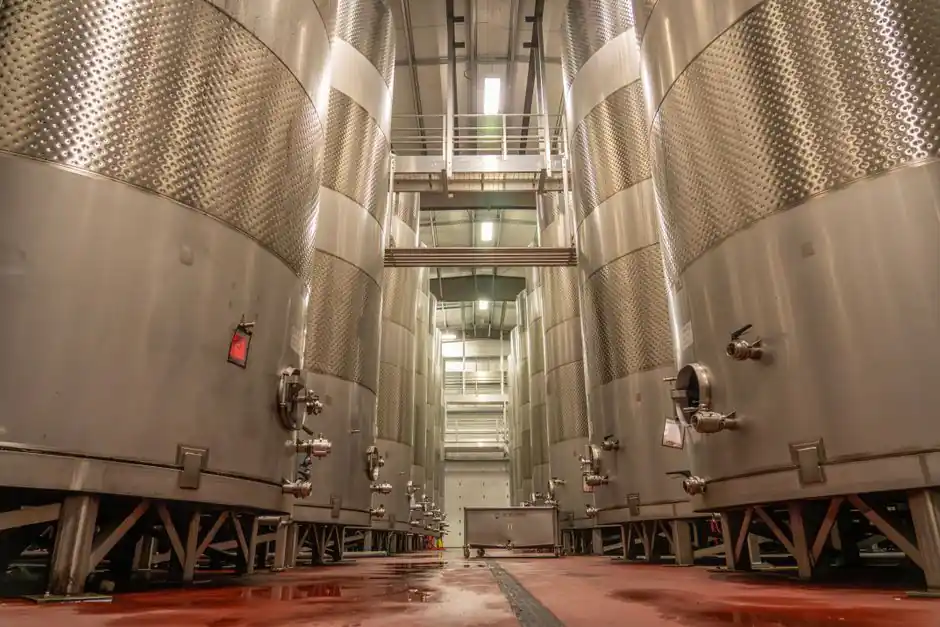
Foam-prone vessels almost always sit in a washdown, CIP, or ATEX zone, and the meter's ingress protection, temperature class, and intrinsic-safety rating must be specified alongside the acoustic class, otherwise the safety certification on the meter will not cover the area classification the audit will write down [S2][S10].
Operating envelope typical for a handheld Class 2 industrial meter is 0 to 40 °C, 10 to 90 %RH non-condensing, and the microphone capsule is the part that fails first in a humid, foam-aerosol environment, so a windscreen and a desiccant capsule are not optional accessories [S1][S8]. For hazardous-area use, the meter and calibrator combination must carry the same Ex marking as the vessel skid, and the calibration procedure must be repeatable inside the Ex enclosure, otherwise the process calibration record cannot be defended [S9].
Signal output matters for closed-loop acoustic monitoring: an AC or DC linearised analog output, or a USB data-logging stream such as the one shipped with the Digi-Sense 2025029, is needed to feed a process control historian so that the same acoustic channel that proves OSHA compliance can also be trended against agitator RPM, foam level, and gas-flow setpoint [S1][S8].
Decision criteria: which meter to put on the bench
Four criteria separate the candidates for a foam-prone process vessel, and the choice should be made on the weakest criterion the application can tolerate: acoustic class, calibration evidence, environmental rating, and signal-output type [S1][S6][S8][S9].
Class 1 vs Class 2 laboratory (IEC 61672-1 ±0.7 dB / ±0.5 dB) vs general field (±1.5 dB / ±1.0 dB); calibration evidence periodic (annual 17025 lab + daily field check) vs as-shipped NIST trace only; environmental rating handheld IP54 with windscreen vs IP65 + Ex i vs none; signal output AC/DC linear analog vs USB data log vs display only [S6][S8][S9]. A Class 1 instrument with annual 17025 calibration and a non-Ex handheld body is the right pick for a non-hazardous foam-prone fermenter where the data feeds both PSM and process control; a Class 2 Ex-rated unit with the same calibration depth is the right pick for a solvent or styrene reactor; a Class 2 general-field unit with NIST-trace certificate only is acceptable for a once-per-shift OSHA walk-around, but not for trending cavitation events [S1][S6][S8][S9][S10].
Common failure modes during a vessel survey
Three failure modes account for most rejected surveys: windscreen removed, A/C weighting set wrong, and pre-calibration drift > ±0.5 dB; all three are visible on the certificate and the field log, and all three can be caught by a checklist that runs before the meter is switched on [S1][S9].
Foam-burst pulses carry high crest-factor content, so the meter must be in Fast (or Impulse) response and A-weighted, with the slow-response C-weighted setting reserved for peak surveys, otherwise low-frequency agitator noise will mask the actual foam event [S6][S9]. A multifunction process calibrator is commonly used to inject a reference 94 dB / 1 kHz signal into the meter's preamp chain, which is the same field check the lost-foam casting line industry uses to validate acoustic emission pickups on its mould line, and the procedure is directly transferable to a chemical vessel [S9].
For related RFQ guidance on a comparable handheld metrology spec, a lux meter selection on an electrical enclosure RFQ follows the same "class, calibration evidence, environment, output" pattern and is useful as a template; the same applies to signal calibrator compatibility with corrosion resistance requirements, where the certificate stack is the deciding factor.
Verify the certificate scope before purchase: the lab that issued the calibration must be ISO/IEC 17025-accredited for acoustics, the certificate must list IEC 61672-1 (and IEC 61260 if octave filters are used), the serial number on the meter must match the certificate, and the issue date must be within the past 12 months for the laboratory trace and within the past 24 hours for the field check [S6][S9]. If any of those four items is missing, the survey data on the foam-prone vessel is indicative only and will be rejected by a PSM or OSHA audit.