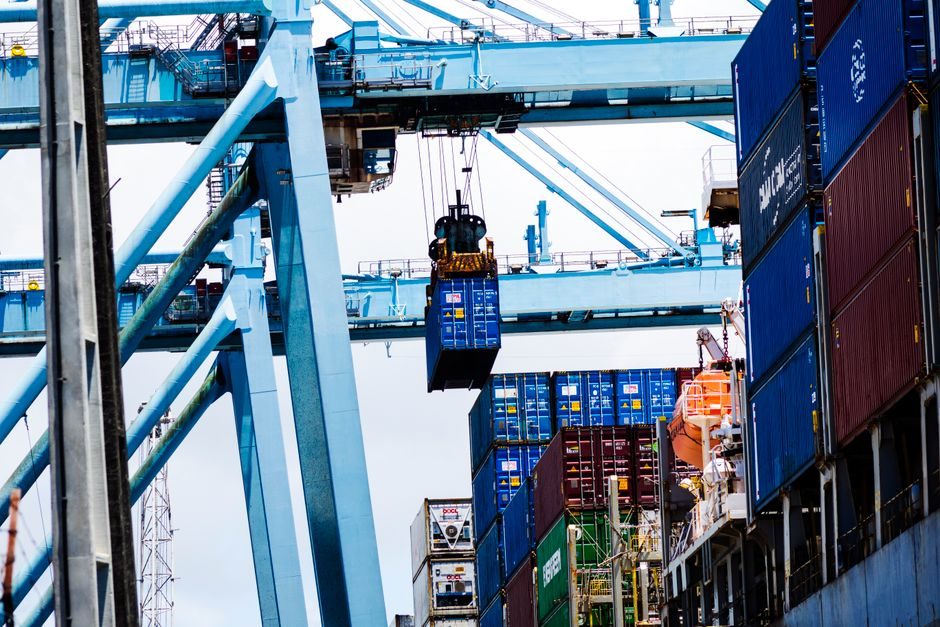
Quoted FOB-China prices for 0.5–10 t electric mini gantry cranes span US$320–3,800 per piece, while 0.5–30 t low-headroom electric chain-hoist trolleys cluster at US$500–1,000 per set on the same Made-in-China catalogue page as of 2026-06-06 [S6]. Heavy-duty MDG-series units at 40 t / 32 m are actively listed for inquiry on Okorder as of 2026-06-17 [S5]. Weihua publicly announced completion of the 550-tonne gantry crane heavy-load test in early June 2026, marking the upper bound of the domestic product line [S3].
Chinese gantry-crane manufacturing depth is concentrated in Henan, where Weihua operates dedicated container gantry and project crane lines [S2] and HY Crane lists 30 years of ISO 9001-certified gantry and overhead crane production [S1]. On the North American side, Dearborn Crane markets 60 years of bridge/gantry/jib crane and hoist experience as of 2026-06-24 [S4]. Together these two hubs set the pricing bands most procurement teams actually see in mid-2026.
Capacity, Span and Girder Configuration Drive the Headline Number
The largest cost lever on a gantry crane RFQ is the lift-capacity × span pair, not the duty cycle. Mini single-girder electric gantry cranes at 0.5–10 t and 3–12 m spans quote at US$320–3,800 per piece in mid-2026 [S6], while a 40 t / 32 m MDG double-girder unit is sold on inquiry basis with no public list price [S5]. The same pattern holds across the entire Weihua catalogue: 550 t represents the present upper limit of engineered gantry builds [S3], and that scaling is roughly cubic with span once the structure moves into double-girder territory.
Girder count is the next multiplier. Single-girder MH-type machines are 25–40% cheaper than double-girder MG/MDQ units of the same capacity, primarily because the main beam, end-carriages and hoist runway shorten the steel mass. For a procurement engineer comparing two quotes of identical SWL, the girder topology and FEM duty classification (A3–A7 per CMAA / FEM 1.001 / ISO 4301) typically explain more price spread than brand. The encyclopedia entry on gantry crane design and types lays out the single vs double-girder trade space against overhead bridge crane alternatives.
Component Breakdown: Hoist, Trolley, End Carriage and Electrical
A 0.5–30 t low-headroom electric chain hoist with integrated trolley lists at US$500–1,000 per set on Made-in-China as of 2026-06-06 [S6]; wire-rope hoist equivalents in the 3.2–80 t range overlap that band when single-speed. The hoist alone is usually 20–35% of the bare crane price. Selecting a variable-frequency (VFD) dual-speed hoist instead of a single-speed contactor-controlled unit typically adds 15–25% to the hoist cost, but is now standard on any crane specified for precision load positioning or empty-hook creep speeds.
End carriages, wheels, gaskets, buffers and current-collector bars are commodity-priced and rarely break the quote, but rail length and electrification (busbar vs festoon vs cable reel) are not — see the linear guide and travel-drive logic that overlap with bridge-crane runways. A 100 m festoon-cable run with 4-core flat cable adds roughly US$15–25/m to the supply line; a comparable busbar (HFP series, 100 A, 4-pole) sits at US$40–70/m on most 2026 RFQs. Buyers who fail to separate "crane price" from "installed runway" almost always underestimate the installed cost.
New vs Used, OEM vs Wholesale, and Where 2026 Pricing Actually Prints
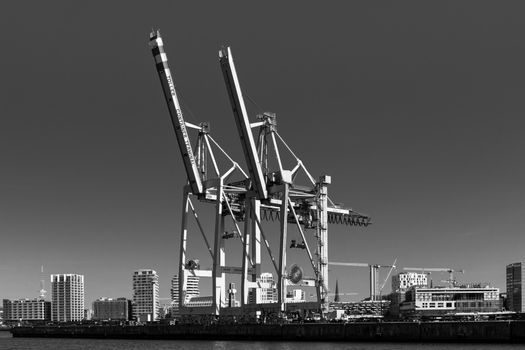
Made-in-China's Gantry Crane solutions portal as of 2026-06-06 lists factory-direct, wholesale and OEM tiers side-by-side for 0.5–10 t electric mini cranes (US$320–3,800) and Seagull-branded 3.2–80 t low-headroom double-girder electric wire-rope hoists (US$500–1,000/set) [S6]. The price spread within a single product family on that page runs roughly 12:1 from the cheapest 0.5 t mini to the heaviest single-piece configuration, which is the practical "open market" range for new equipment. Okorder lists MDG 40 t/32 m units as a "Ref Price: Loading" inquiry model, not a fixed list — meaning the 40 t+ tier is still a project-bid environment as of 2026-06-17 [S5].
Used and refurbished gantry cranes (typically 5–20 t, FEM A5–A6 duty, 10–25 years old) trade in the 30–50% band of equivalent new list price in North America and Europe, with Dearborn-style integrator pricing reflecting full re-certification to ASME B30.17 / CMAA 74 [S4]. That differential is large enough that buyers who can absorb a longer lead time for inspection, shot-blasting and structural NDT often pick up the same SWL at 40–55% the new-built budget. For project sites where mobile cranes would otherwise be rented for repeated lifts, a refurbished gantry regularly beats the rental math inside 6–9 months of operation.
Cost Levers the Sales Rep Will Not Flag First
Five practical levers move the bottom line more than 5% each. (1) Span beyond ~25 m on a double-girder shifts steel tonnage sharply and should be re-validated against crawler crane alternatives for one-off heavy lifts. (2) FEM/CMAA duty class upgrade from A5 to A7 roughly doubles the hoist and motor cost. (3) Outdoors vs indoor changes the corrosion package (paint system, galvanised vs painted, IP55 vs IP65 enclosures) by 4–8% on coastal/container-yard builds. (4) Cantilever extensions on one or both ends of the main beam add 8–15% to steel mass for every metre. (5) Explosion-proof / ATEX or IECEx-rated hoists for hazloc zones roughly double the electrical component cost — the crane scale and load-monitoring options below them inherit the same rating. [S1]
Where crossed-roller guide precision tables sit inside a gantry-mounted work envelope, motion-control accuracy becomes part of the spec and pushes buyers toward servo-driven hoists or anti-sway VFDs. The cleanest way to keep these adders from running the RFQ is to freeze the duty class, span, cantilever, environment and certification list before asking for a quote, then comparing line-by-line rather than lump-sum.
Comparison Snapshot: Light-Duty vs Heavy-Duty Gantry Builds (2026)
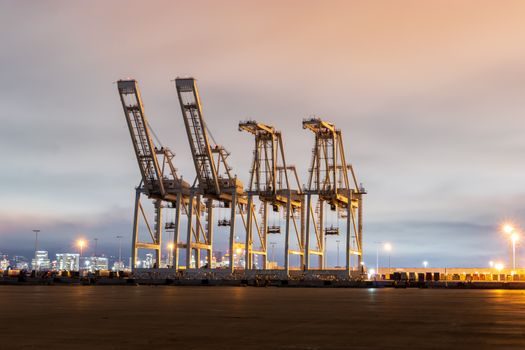
Side-by-side on four decision criteria as of 2026-06-26, drawn from [S3][S5][S6]: Light-duty 0.5–10 t electric mini single-girder (Made-in-China tier) lists at US$320–3,800/piece FOB, suits 3–12 m spans and A3–A5 duty, and is typically delivered ex-stock with 15–30 day lead time. Mid-duty 3.2–80 t low-headroom double-girder (Seagull-tier) lists at US$500–1,000/set for the hoist trolley alone, suits 12–30 m spans and A5–A6 duty, and runs 30–60 day lead time. Heavy-duty MDG 40 t/32 m is inquiry-priced, suits A6–A7 duty and 20–35 m spans, with 60–120 day engineering and delivery [S5]. Ultra-heavy project gantry at 550 t class is custom-engineered per project, FEM A7–A8 duty, 6–12 month engineering-to-commissioning cycle [S3].
The relevant trade-off is not "cheaper vs dearer" but "stock vs engineered." Stock-tier builds (0.5–10 t) absorb roughly 70–80% of small-workshop and light-fabrication use cases, mid-tier covers most warehouse/container-yard and steel-stock-handling jobs, and 40 t+ MDG/550 t class is reserved for shipyard, precast concrete yard, wind-turbine assembly and steel-mill ladle handling where gantry crane main beams must be welded and machined to project-specific tolerances.
2026 Lead-Time, Payment and Sourcing Notes
Okorder's MDG 40 t/32 m listing as of 2026-06-17 carries the standard Made-in-China B2B payment terms: T/T or L/C, with "Supply Capability" filled per RFQ rather than as a fixed monthly volume [S5]. FOB-China pricing on the Made-in-China catalogue page is flagged as "indicative only" — pre-tax, ex-works, no delivery, no customs duty, no installation/activation, subject to raw-material and FX moves [S2][S6]. Buyers should treat every FOB figure in 2026 as ±15% until a hard quotation is signed.
Direct comparisons against overhead bridge crane specs show gantries typically run 10–20% cheaper on equal SWL/span when runway foundations are simple, but add the cost of rails, sleeper plates and ground anchoring that a building-mounted bridge crane inherits for free. Where lift cycles are short and span is fixed, pallet stacker capacity sizing is a different product family and should not be confused with gantry pricing. Track the next two signals: any Weihua or HY Crane post-June 2026 announcement of a price-list refresh for 40 t+ MDG units, and any Dearborn-style North American integrator posting a 2026 Q3 used/refurbished inventory update [S3][S4].