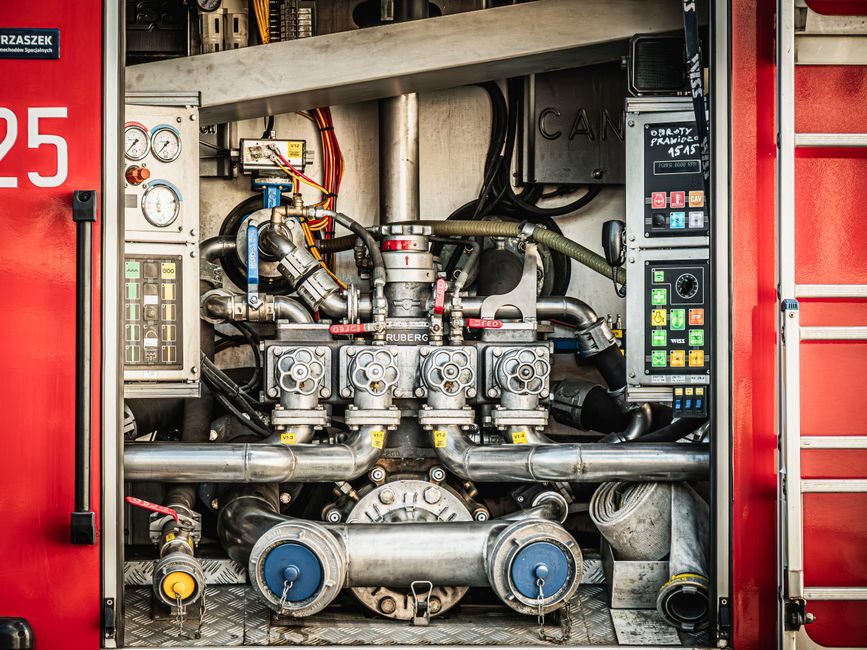
Confined space entry (CSE) requires a pumped 4-gas personal monitor (LEL, O2, CO, H2S) paired with a fixed area gas alarm controller at the access point; common confined spaces include storage tanks, silos, ducts, vats, and combustion chambers where asphyxiation is the dominant fatality mode [S2].
The controller layer and the personal monitor layer are separate decisions: the controller watches the area around the manhole, the personal monitor rides on the entrant's lapel and is the last line of defence inside the vessel [S1][S2].
Sensor Stack: The Non-Negotiable 4-Gas Core
SGX Sensortech specifies that confined-space hazards fall into three families — flammable gas, toxic gas, and oxygen depletion — and recommends pumped, real-time sensors that give a fast response to atmospheric change while surviving the knocks of entry through a manway [S2]. The minimum stack for general industrial CSE is LEL (catalytic bead or NDIR), O2 (electrochemical, 0–25% or 0–30% range), CO (electrochemical, 0–500 ppm typical), and H2S (electrochemical, 0–100 ppm typical) — anything less than four sensors does not address the three hazard families plus the oxygen envelope.
For sewer, brewery, or anaerobic-digester work, swap or add H2 (0–1000 ppm) and NH3 (0–100 ppm) cells; the sensor head must still meet the same IP rating and response-time budget as the core four. A gas analyzer with IR bench becomes cost-effective only when the same instrument is used for hot-work permitting in addition to entry, not as a dedicated CSE monitor.
Pumped Sampling, Response Time, and Calibration Gas
Dräger's CSE guidance calls for a pump to draw the sample to the sensor before the worker enters, plus continuous monitoring once inside the space — the same instrument covers both phases [S1]. A 0.25–0.5 L/min internal pump with a 5–10 m sample draw tube is the common configuration; T90 response under 30 seconds at the end of the draw tube is the practical acceptance line.
Calibration interval is 30 days for catalytic LEL and 90–180 days for electrochemical O2/CO/H2S when a bump test is done before each shift; span gas is typically 2.50% CH4 (50% LEL) in air for the combustible channel and a 4-gas mix (18% O2 / 25 ppm H2S / 50 ppm CO / 2.50% CH4) for the electrochemical stack. Spec the demand-flow regulator rather than a fixed-orifice regulator — it tolerates partial blockages in the sample line.
Fixed Area Controller vs Personal Monitor: Who Buys What
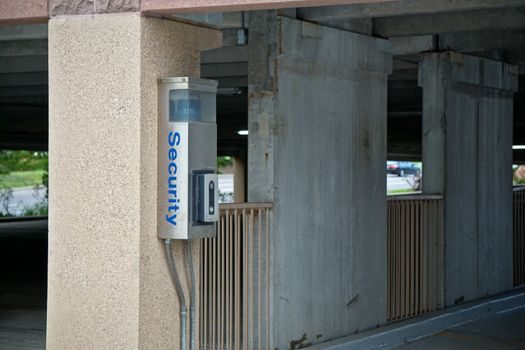
The fixed gas alarm controller lives at the manhole or in the attendant's shelter, takes 4–20 mA or RS-485 Modbus from one or more remote sensor heads, and drives audible/visual alarms at 85 dB @ 1 m plus a strobe; this is the area-wide layer and is reusable across many entries. A domestic-style LPG/CO buzzer (the kind sold for kitchens) is not a CSE controller — it lacks relay outputs, a certified sensor head, and a documented alarm-threshold set [S3].
The personal monitor is intrinsically safe, body-worn, and disposable-data-logging; it is mandatory even when a fixed controller is in place because the entrant may move beyond the fixed sensor's reach, and the worker needs an on-body alarm that survives a fall or loss of consciousness. A gas mass flow controller belongs in the calibration rig, not on the entrant.
Hazard Classification and Certification: ATEX/IECEx Zone Mapping
Inside a tank that has held flammable vapour, the body-worn monitor must be ATEX/IECEx-certified for Zone 0 or Zone 1 depending on whether the space is gas-free before entry; the fixed area controller head at the manhole is typically Zone 1. ATEX 2014/34/EU and the IEC 60079 series govern equipment for explosive atmospheres, and Dräger's CSE materials explicitly tie permit-to-work decisions to the risk-assessment matrix that classifies the space before anyone breaks the plane of the entry [S1].
For hydrogen service, add a second flammable channel with a different response curve (catalytic bead fails at low %LEL in lead-free atmospheres — NDIR or a second catalytic head is the common workaround). Sensor head ingress protection should be IP66/IP67 minimum; the controller cabinet at the entry point should be IP65 with a weather hood.
Permit-to-Work Integration and Rescue Trigger Logic

Dräger's CSE Connect links the gas monitor data stream to the permit-to-work workflow, so a high-gas alarm auto-suspends the permit rather than relying on a verbal call from the attendant to the supervisor [S1]. The alarm setpoints most commonly specified are LEL 10% / 20%, O2 19.5% low / 23.5% high, CO 25 ppm TWA / 75 ppm STEL, H2S 10 ppm TWA / 15 ppm ceiling — these are the values to hard-code in the controller's logic, not free-form 4 mA–20 mA trim.
Rescue trigger logic should latch the alarm relay, drive a separate 95+ dB siren at the entry, and free an electrical interlock that kills downstream pumps or mixers when the O2 channel goes into alarm. A perimeter alarm tied to the same controller extends the evacuation signal to the wider plant, not just the manhole — useful for wastewater plants and refinery turnarounds where the affected vessel sits inside a larger operating unit.
Selection Comparison: Three Controller Architectures
Single-head 4-channel controller (1 sensor head, 4 sensors, 4 relays) is the low-cost entry for one-vessel sites — typical unit cost sits in the band covered by Guangzhou Qqlion-style fixed gas alarm panels, and the same panel supports both combustible and toxic channels when ordered with the right sensor cart [S3]. Multi-head Modbus controller (4–8 RS-485 heads, 8–16 relays, touchscreen) fits tank farms and digester complexes where one controller covers multiple manholes.
Wireless mesh CSE kit (body-worn monitor + gateway at the manhole) cuts the trip hazard of a sample line but requires a coverage test at each new site and is not a substitute for a wired fixed controller on a permit-required vessel. The wrong choice is a domestic CO/LPG standalone buzzer — it has no relay, no Modbus, and no documented ATEX/IECEx sensor head, so it cannot feed the permit-to-work system [S3].
What This Spec Will Not Catch
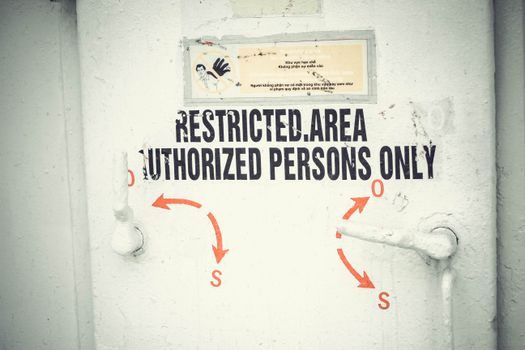
A 4-gas stack does not cover CO2 asphyxiation in fermenter headspaces, mercaptans in refinery vessels, or HF/COCl2 in chemical-plant entries — for those, add a fifth or sixth electrochemical or IR cell on the same monitor head, not as a separate handheld. Dräger's risk-assessment matrix is the right place to document the additions before the entry, not after the first near-miss [S1].
Track two signals over the next quarter: (1) any IEC 60079-0/60079-29 revision that re-classifies catalytic-bead LEL performance in silicone/sulphur-poisoning atmospheres, and (2) site-level adoption of cloud-tethered permit systems that auto-suspend entry when the controller relay opens — Dräger's CSE Connect is the visible reference architecture for the second signal [S1].
For related coverage, see O-Ring Seal Selection: Material, Pressure, Temperature, Gland.