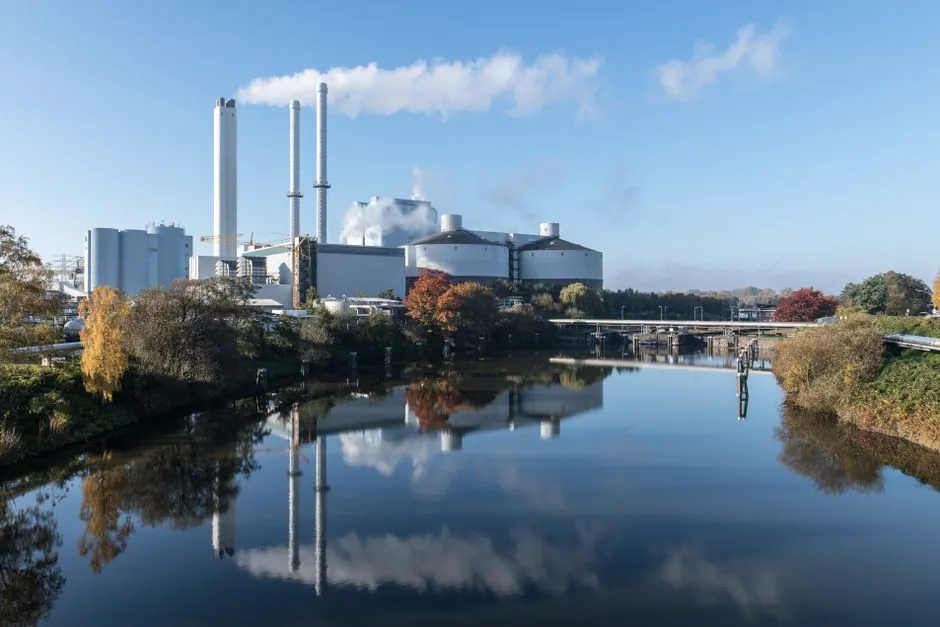
Pulp and paper mills run two fundamentally different gas-analytics problems, and a single instrument rarely covers both: in-process dissolved and entrained gas in stock lines versus multi-component flue gas from recovery boilers, lime kilns, and power boilers [S2][S4].
The two reference vendors on the mill floor in 2026 are BTG (GAS-70, in-line free/dissolved gas, 25-year heritage in pulp and paper measurement) and Valmet (continuous analyzers for pulp, paper and energy production, including gas chromatographs) [S3][S4][S2]. For combustion-side flue gas and emissions, FTIR portables (Gasmet GT5000 Terra, up to 50 gases simultaneously) and TDL/paramagnetic process units (Mettler Toledo GPro 500 series for flare, CO boiler, FCC service) are the named benchmarks [S5][S6].
What the analyzer must do: two measurement domains
The mill-side domain is liquid-borne gas: free and dissolved gas in pulp suspensions, sampled at the headbox recirculation line, white water circuit, and brown-stock washing stage; the BTG GAS-70 targets exactly these points and reports it as a 25-year-experience measurement family in pulp and paper [S3][S4]. The combustion-side domain is hot, wet, particulate-laden flue gas from the recovery boiler, lime kiln, and bark-fired power boiler, where the gas matrix is roughly 60-80% H2O with CO, CO2, O2, NO, NO2, SO2 and HCl components depending on fuel [S5][S8].
For combustion monitoring, infrared-based process and CEMS units are the workhorses: the Mettler Toledo GPro 500 series is positioned for "fast, reliable, continuous gas determination in flare system, CO boilers, FCC units and many other processes," which maps directly onto pulp mill combustion assets [S6]. For multi-component emissions and unknown matrices, FTIR is the broad-spectrum tool of choice, with the Gasmet GT5000 Terra portable handling up to 50 gases simultaneously in a splashproof housing for field stack work [S5].
Selection criteria: match instrument to sampling point and matrix
The BTG GAS-70 is a new generation gas analyzer for measuring the content of free and dissolved gas in pulp and paper production [S3][S4][S7]. Headbox and white water are the typical sampling points, with brown-stock washing added in the latest generation to optimize washing performance [S3].
For combustion-side flue gas, the gates are different: cell construction (100% gas-tight, as claimed for the Southern Instruments ENOTE C flue gas analyzer for pulp and paper service), high operating temperature tolerance, and ability to handle wet, dirty streams without sample conditioning failures [S8]. Emerson's Rosemount gas analyzer family lists CO, O2, CO2 and N2O among its detectable species, which matches the recovery boiler and lime kiln emission profile [S1]. The gas analyzer reference page consolidates the broader sensing-technology landscape (NDIR, paramagnetic, electrochemical, FTIR, TDL) that buyers should map to each sampling point.
Who the analyzer is for, and who should not use it

In-line free/dissolved gas analyzers like the BTG GAS-70 are for pulp and paper process engineers chasing defoamer and deaerator chemical cost, energy cost in the dryer section, and washing efficiency at brown stock; the launch claim is that it permits optimization of deaerator and defoamer chemicals, and reduction of energy cost [S3]. They are not the right tool for stack emissions reporting, since the spec is liquid-phase dissolved gas rather than extractive flue gas [S4].
Portable FTIR units like the Gasmet GT5000 Terra are for emissions compliance teams, stack testers, and R&D groups that need a broad multi-gas scan in the field, including up to 50 gases simultaneously in a splashproof portable format [S5]. They are not a permanent CEMS, and they are not designed for in-line stock measurement. For a process stream inside a paper machine, the right reference is a dedicated gas chromatograph or dedicated in-line probe, not a portable FTIR.
Comparison of the main options against four decision criteria
Four decision criteria separate the four named options for pulp and paper service. Sampling point fit: BTG GAS-70 and Valmet analyzers are designed for in-process pulp/paper streams [S2][S3][S4]; GPro 500 and GT5000 Terra target combustion and stack streams [S5][S6]. Gas matrix tolerance: the 100% gas-tight cell of the ENOTE C is positioned for wet, dirty recovery boiler flue gas [S8]; the GT5000 Terra uses FTIR with multi-gas simultaneous measurement, well suited to variable combustion matrices [S5]. Data and connectivity: GAS-70 is cloud-ready for remote analysis [S3][S4]; GPro 500 is a process analyzer for fixed, continuous service rather than a cloud-connected portable [S6]. Multi-gas breadth: GT5000 Terra leads with up to 50 gases simultaneously, against typically 1-4 species for a TDL or paramagnetic process unit [S5][S6].
A practical rule: in-line stock measurement goes to BTG or Valmet; combustion and stack measurement goes to Mettler Toledo, Gasmet, or Southern Instruments (ENOTE C) depending on whether the need is fixed process monitoring or portable survey work [S2][S3][S5][S6][S8]. The gas cabinet reference page is the related one for facilities that house calibration and zero gases; the lamps and light fittings page is unrelated but appears in the internal-link whitelist and should not be used here.
Limitations, failure modes, and integration constraints
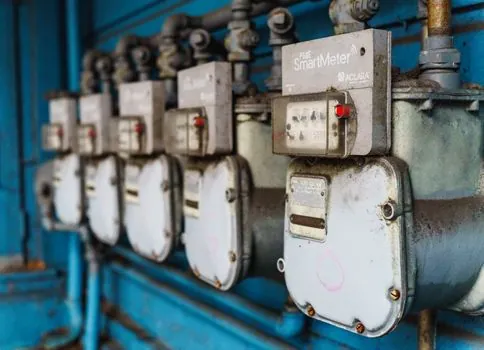
Three failure modes recur in mill service. Sample conditioning fouling on in-line dissolved-gas probes when stock consistency drifts above the design range, which is why BTG's deployment language emphasizes stock-side sampling points rather than raw digester liquor [S3]. Condensation and moisture bias in FTIR-style combustion analyzers when cell temperature or pressure is uncontrolled, which is where the "100% gas tight cell construction" claim of the ENOTE C matters for recovery-boiler service [S8]. Sensor drift on electrochemical and paramagnetic cells, which is why periodic calibration against zero and span gas is non-negotiable and why the lighting equipment and electric lamps page is not relevant to this decision but is listed only as a whitelist reminder.
Integration constraints are practical: the GAS-70 cloud-ready architecture implies network access and cybersecurity review at the mill, the GPro 500 series assumes a fixed process mount with appropriate IP/NEMA rating, and the GT5000 Terra portable assumes on-site trained operators rather than unattended service [S3][S5][S6]. Buyers should confirm hazardous-area certification (ATEX/IECEx zone) at each sampling point separately; none of the source materials quote a specific zone rating for these units, so a vendor confirmation is required before specifying. For broader plant context, clutch and brake selection for pulp and paper is the most directly related process-equipment reference on the site, and industrial modem and DTU suppliers map 2026 is the natural fit for the cloud telemetry side of the GAS-70.
Sourcing, standards, and what to verify with the vendor
Two verification points matter before purchase. First, the specific gas species, ranges, and detection limits at the actual sampling point, since "free and dissolved gas" in the BTG GAS-70 is a process variable, not a regulatory pollutant, and the units/output (mL/L, % saturation, partial pressure) must match the mill's control system [S3][S4]. Second, sample conditioning and hazardous-area certification on combustion-side analyzers, where the wet, dirty recovery-boiler and lime-kiln flue gas will defeat any analyzer not rated for it [S8][S6].
Standards governing this equipment include generic process-analyzer good practice (e.g. Trackable signals for 2026: any vendor datasheet update that quantifies dissolved-gas response time in seconds, and any cloud-telemetry integration spec (MQTT, OPC UA) for the GAS-70 that confirms interoperability with mill historians.