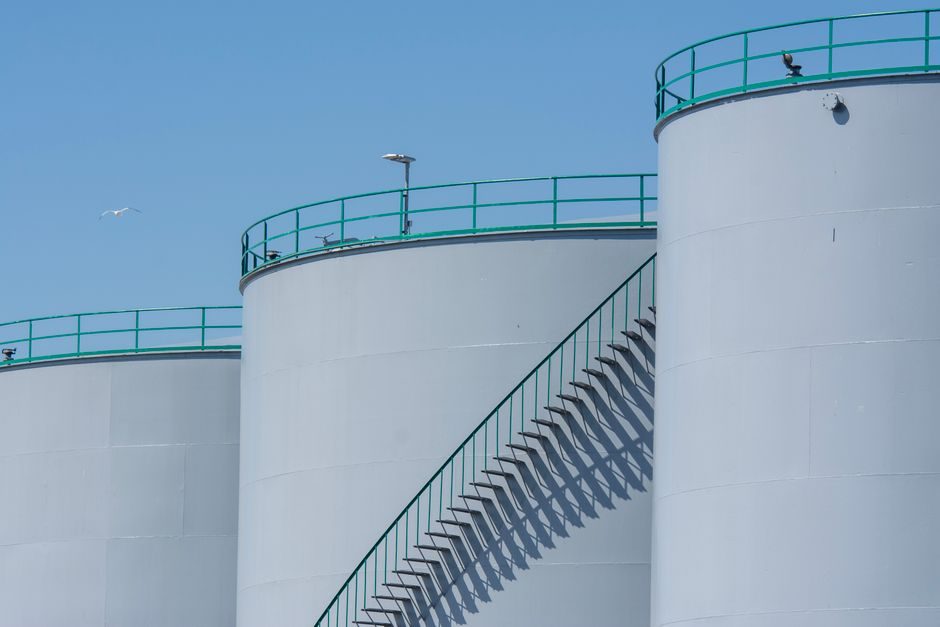
Sichuan Zhengdakai New Materials Co., Ltd. entered full-scale construction of a 10 billion CNY complex that uses natural gas as feedstock to produce ethylene glycol and dimethyl carbonate (DMC), with phase 1 sized for 5 billion CNY in annual revenue and roughly 1.5 billion CNY in annual profit-and-tax once commissioned [S3].
Zhengdakai was established in December 2021 and sits inside Xuanhan County's push to convert a resource-producing base into an industrial cluster, pulling in PET new materials, packaging, textile fibre and logistics as downstream chain pull [S3]. For buyers sourcing industrial gas derivatives, the project is a concrete capex signal, not a policy statement.
Feedstock Conversion Route and Product Slate
Gas-to-EG and gas-to-DMC are the two product trains attached to this complex, both routed through syngas generated from natural gas reforming [S3]. Ethylene glycol is the dominant PET-pre-cursor intermediate, so the project size alone is enough to shift regional MEG balance once phase 1 lands; DMC is the smaller, higher-value co-product, increasingly used as a lithium-battery electrolyte solvent and as a low-toxicity methylating agent.
The plant is a downstream anchor in the literal sense: it consumes pipeline-spec natural gas and emits oxy-chemicals, so its operating envelope is set upstream by gas pressure, heating value and contaminant limits typical of a sour-gas-treated residue stream. For procurement, the right read of "gas-to-chemicals" is "feedstock plus syngas conditioning plus a fixed downstream offtake," not a generic petrochemical expansion.
Upstream Specs the Downstream Plant Demands
Two physical properties of the natural gas feedstock drive almost every upstream-to-downstream interface decision: viscosity at high pressure and high temperature, and pseudo-reduced pressure/temperature behaviour across the operating envelope. [S1]
Heidaryan, Moghadasi and Salarabadi published a viscosity model covering gases at relatively high pressures and high temperatures, calibrated for hydrodynamic loss calculations in both pipeline conduits and porous reservoir media [S1]. Sanjari, Nemati Lay and Peymani followed with an empirical correlation built from 4,089 experimental data points, validated across pseudo-reduced pressure from 0.01 to 21 and pseudo-reduced temperature from 1 to 3 [S2]. Together these define the practical P-T box a gas chromatograph and a gas analyzer must cover to certificate a feedstock stream bound for a syngas reformer.
For the Xuanhan cluster, the practical consequence is a tighter upstream spec window: H2S/CO2 removal to reformer-friendly ppm levels, heating-value stability for the EG/DMC carbon balance, and a Wobbe index band that the local pipeline operator can hold inside contract tolerances.
Capex, Phase-1 Numbers and Downstream Linkages
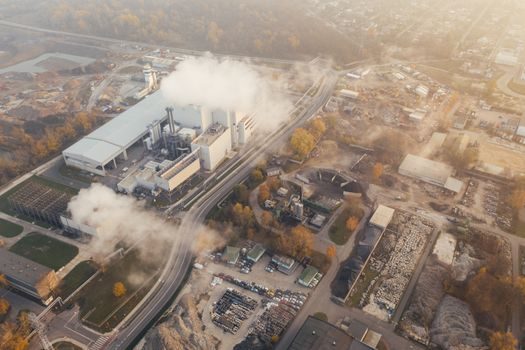
The headline capex of 10 billion CNY is staged: phase 1 of the project targets 5 billion CNY in annual revenue and approximately 1.5 billion CNY in annual profit and tax once online [S3]. That is a 15% headline profit-and-tax-to-revenue ratio, which is consistent with a moderately integrated gas-chemical complex rather than a commodity MEG merchant unit.
Stated downstream linkages are PET new materials, packaging, textile chemical fibre and logistics, plus a stated goal of building a natural-gas-based chemical industry cluster in Xuanhan [S3]. The midstream side of that chain — pipeline gas, distribution and storage — is covered in the broader natural gas supply chain 2026 spec and sourcing map, which lines up against the same feedstock this complex will consume.
Selection Map: What This Plant Is For, and What It Is Not
FOR: integrated gas-to-chemicals developers willing to underwrite a 10 billion CNY phased capex; regional governments converting resource counties into chemical clusters; offtakers needing a regional MEG/DMC alternative to coastal imports. [S2]
NOT FOR: merchant gas producers with no chemical conversion; small-scale gas-field developers lacking reformer-scale offtake; traders seeking a quick-turnaround LNG cargo play. For the latter two, a more relevant interface is the fixed gas detector and combustible gas detector spec layer at processing stations, not a gas-to-chemicals anchor.
Failure Modes and Operating Constraints to Watch
Three failure modes dominate this asset class. First, feedstock contamination: reformer catalyst life is set by trace sulphur and heavy metals in the pipeline gas, so a slip in upstream treating is paid for in catalyst change-outs. Second, syngas ratio drift: the H2:CO ratio must stay inside a narrow window to hit both EG and DMC yield targets; downstream analyser drift is the usual root cause. Third, energy integration: gas-to-EG is heat-balance-sensitive, and any loss of waste-heat recovery collapses the unit's specific energy consumption. [S3]
Mitigation sits on the instrumentation side: continuous gas detection at the reformer battery limits, online gas analysis for H2/CO/CH4/CO2 ratios, and pipeline-side gas-quality analysers that feed the custody-transfer gas analyzer stream. None of this is exotic; what is novel in 2026 is the scale at which a single Chinese inland county is consolidating all three layers under one cluster plan.
Standards, Sourcing and Trackable Signals
The project sits inside a Chinese gas-chemical cluster framework, with downstream products (EG, DMC) shipping into PET, electrolyte and pharma-grade markets that each carry their own spec overlays. Comparative purchase decisions for similar complexes run on four axes: feedstock flexibility (gas vs. coal vs. naphtha), capex per tonne of EG capacity, integration depth with downstream PET/fibre units, and proximity to a high-quality gas source. [S1]
Trackable signals: phase 1 mechanical completion date and first-offtake date for the EG train; whether the DMC train is sized for battery-grade solvent spec from day one; and the local pipeline operator's published heating-value and Wobbe-index band for Xuanhan-delivered gas. For broader context on how a downstream gas-chemical node connects to mechanical equipment supply chains, the submersible pump price and material levers 2026 map and the connector upstream–downstream chain 2026 are useful reference points on parallel industrial chains.