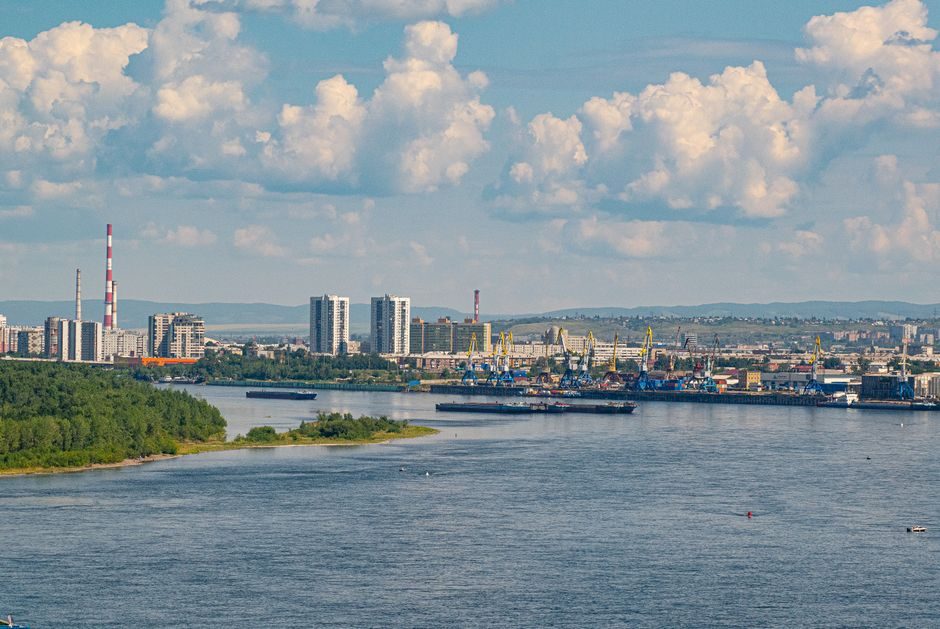
Australia's natural gas value chain splits into two production tracks — conventional gas and unconventional gas (coal-seam gas and shale) [S2] — both of which feed the same downstream assets: gathering networks, processing plants, transmission trunk lines, distribution mains, and (for export) LNG liquefaction trains [S2][S3].
For industrial buyers, the engineering content of the chain is concentrated at three nodes — wellhead/gas-plant instrumentation, pipeline compressor stations, and LNG loading — where DC power supply cabinets, switching power supply modules for SCADA RTUs, and roller chain drives on compressor crankcases and conveyor chain links on LNG plant conveyors dominate the bill of materials.
Upstream: Conventional vs. Unconventional Gas Streams
Australian producers classify reservoir output as conventional gas or unconventional gas such as coal-seam gas (CSG) and shale gas, and both streams are gathered at the wellhead before any processing [S2]. CSG requires additional water-separation and compression on the well-pad because the gas leaves the coal seam saturated and at low wellhead pressure, which is why gathering systems for CSG fields are typically 1.5–2× the linear density of conventional gas-field gathering [S2].
For procurement, the upstream difference shows up in the spec: CSG projects over-spec gas-driven roller chain drives on dewatering pumps and compressor crankcases because the duty cycle is continuous, while conventional offshore projects tend to favour higher-pressure gathering headers with multi-stage centrifugal compression. The 2026 Vecchi/Davis/Brear Australian decarbonisation-pathways study frames this same upstream layer as one of the three "macro-scale" levers (production volume, methane abatement, and CO₂ reinjection) that determine whether gas remains a transitional fuel or is displaced by hydrogen blends [S1].
Mid-Stream: Gathering, Processing and Transmission
After extraction, gas moves through gathering lines to a processing plant where water, CO₂, H₂S and heavier hydrocarbons are stripped; the dry, sales-quality gas then enters the transmission network for long-distance haul to city gates, large industrial customers, or LNG plants [S2]. The mid-stream is where pipeline telemetry, custody-transfer metering, and compressor-station DC power supply and switching power supply cabinets concentrate — each mainline compressor station typically houses 6–12 RTUs, each drawing 24 VDC or 48 VDC from redundant switching power supply modules with battery-backed UPS. A 2020 Springer optimisation model for LNG supply chains confirms that storage and transport-mode choice (pipeline vs. ISO tank containers vs. small-scale LNG carriers) can shift total chain cost by double-digit percentages when demand is uncertain [S3].
The 2026 procurement conversation at the Energy Supply Chain and Procurement Summit in Houston has moved past cost and continuity into assurance-of-supply, meaning single-source dependencies in critical components — specialty valves, silent chain timing drives, catalyst, and even SCADA DC power supply modules — are now treated as strategic risk rather than a purchasing line item [S4]. For buyers, the practical translation is dual sourcing on every Class-A safety instrument and a 6–12 month safety stock on long-lead power-conversion and silent chain components.
End-Use Segments Driving 2026 Demand
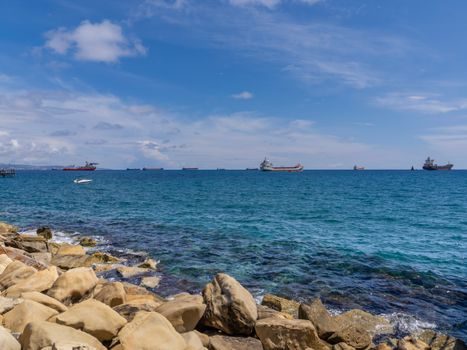
The Business Research Company's 2026 global natural gas report breaks demand into four end-use lanes — transport, industrial, electric power, and "other" — and four supply lanes: associated gas, non-associated gas, unconventional sources, and a fourth that includes biogas/renewable natural gas [S5]. Power generation remains the single largest pull on LNG export volumes, with industrial and transport the fastest-growing share; light-duty vehicles, medium- and heavy-duty buses, and medium-/heavy-duty trucks are the listed sub-segments on the transport side [S5].
For mid-stream equipment buyers, this demand mix is the variable that sets the capex clock: when power-generation gas demand is high, LNG plant owners re-rate their conveyor chain and roller chain drives on boil-off gas (BOG) compressors to higher service factors, and they push replacement intervals on silent chain timing drives from 24 to 18 months. This is the same demand cycle that LNG market analysts size against the 2019–2024 baseline (with updated 2025–2026 forecasts) and break out by application across power generation, transport, and industrial use [S5].
Supply-Security Scoring of Gas Suppliers
A 2022 peer-reviewed study (Zhu, Zhao, Xu, Hao) applied an FAHP-Entropy-PROMETHEE framework to China's natural-gas suppliers and found that supply security varies widely and the gap between top and bottom suppliers has widened, with most suppliers sitting at medium and low security [S6]. The five criteria that drove the ranking — reserve replacement ratio, import-source diversification, pipeline vs. LNG flexibility, geopolitical-risk weighting of supplier country, and price-volatility exposure — map cleanly onto procurement scorecards used by 2026 Australian and European LNG buyers [S6].
The procurement translation is concrete: a Tier-1 supplier score on the FAHP-Entropy scale is what justifies a 24-month framework agreement, while a Tier-3 score triggers contract clauses that allow spot-tanker diversion, dual-port offtake rights, and a 10–15% volume flexibility band. In instrumentation terms, that same uncertainty band is why LNG buyers are now specifying hot-swappable, redundant switching power supply modules on every RTU/PLC rack — because the cost of a single brown-out at a custody-transfer meter is larger than the cost of a second DC power supply feed.
Comparison: Pipeline Gas vs. LNG vs. CNG Distribution
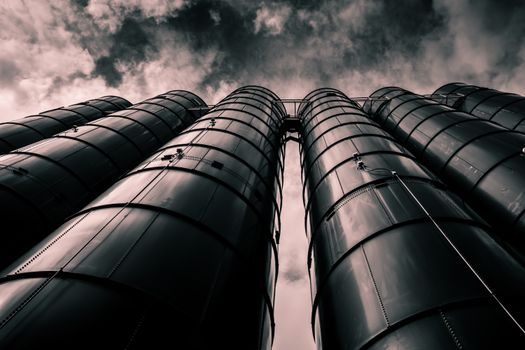
Across the three physical delivery modes — pipeline natural gas, liquefied natural gas (LNG), and compressed natural gas (CNG) — the decision matrix for an industrial buyer in 2026 looks like this [S3][S2]:
• Pipeline gas: lowest per-unit transport cost above ~1.5 bcm/yr offtake, but requires sunk capex on a dedicated lateral and metering station; ideal for large industrial users within ~200 km of a trunk line [S2]. • LNG: highest flexibility on routing and volume, but adds liquefaction toll, shipping charter, and regasification terminal slot — best for 0.2–5 mtpa offtake or for peaking power [S3][S5]. • CNG / small-scale LNG: viable below ~0.2 mtpa and for remote mines/stranded industrial sites, with higher per-GJ transport cost but zero pipeline capex [S3].
The 2026 procurement differentiator, per the Houston summit framing, is no longer the unit transport cost but the assurance that the chosen mode can be re-routed within 30–60 days if any single node fails — which is why dual-mode supply contracts (pipeline primary, LNG back-up) are now the default at large gas-fired power stations [S4].
Constraints, Failure Modes and Standards Sourcing
The three structural failure modes on a 2026 gas chain are: (1) upstream methane abatement gaps that lock out LNG offtake into the EU under Fit-for-55 import rules; (2) mid-stream compressor-station brown-outs caused by single-point-of-failure DC power supply and switching power supply feeds; and (3) downstream demand collapse when power-sector gas is displaced by renewables — the scenario Vecchi et al. model as the "low-gas, high-hydrogen" pathway for Australia to 2050 [S1].
On standards sourcing, custody-transfer metering is governed by AGA Report No. 9 (ultrasonic) and AGA Report No. 3 (orifice) for North-American LNG cargoes, by ISO 5167 for orifice measurement on transmission lines, and by IEC 60079-10-1 for hazardous-area electrical equipment classification on gas-plant skids — the latter being the reason Ex d / Ex e certified DC power supply enclosures are now a hard spec on most Australian CSG projects. LNG storage tank and loading-terminal safety follows NFPA 59A in the US and the parallel AS/NZS 1596 framework in Australia. Vecchi et al. also stress that the Australian case study is anchored on observed geospatial pipeline routing data, not modelled assumptions, which makes its per-kilometre cost and emissions figures auditable [S1].
Trackable 2026 Signals for Buyers
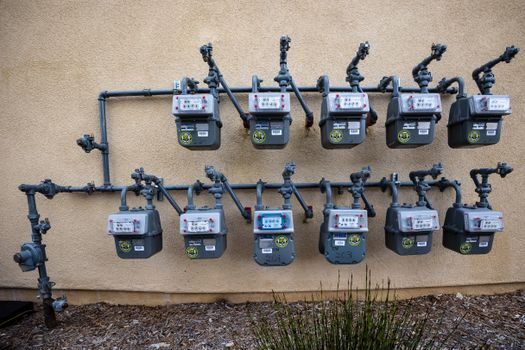
Three signals worth watching through the rest of 2026: (a) the next AEMC gas-supply-chain bulletin, which tracks the conventional vs. CSG production split and downstream pipeline capacity [S2]; (b) the post-summit procurement whitepaper from the 2026 Energy Supply Chain and Procurement Summit, which should publish its assurance-of-supply single-source-dependency scorecard by Q4 [S4]; (c) the 2026 update to the global natural gas market dataset (transport / industrial / electric-power / other split by associated, non-associated and unconventional gas), which is the reference dataset that downstream equipment vendors and EPCs re-base their volume forecasts on [S5].
For related coverage, see Aluminum Die Casting Machine Suppliers 2026: China Cluster, Tonnage Bands and Sourcing.