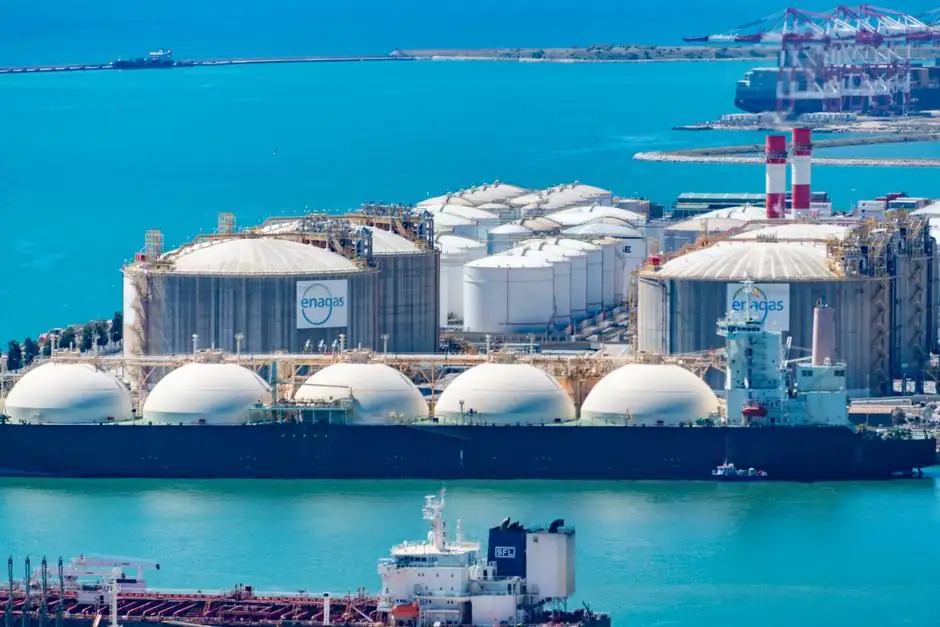
Gas fire suppression in oil and gas facilities is selected by hazard class and enclosure profile, not by agent brand: NFPA 2001 covers clean agents, NFPA 12 covers CO2, and ISO 14520 / EN 15004 govern inert gas blends, with design concentration, hold time, and room integrity as the binding acceptance criteria [S2][S4].
For upstream, midstream, and downstream oil and gas assets the agent choice is driven by whether the protected space is normally occupied, the fuel class (hydrocarbon liquid, gas, or electrical), and whether the enclosure can hold the design concentration long enough to cool hot surfaces below re-ignition temperature, with 10-15 minutes as the typical hold target [S2][S4][S5].
Three Agent Families, Three Physical Mechanisms
Modern gaseous systems fall into three engineering families, each extinguishing by a different mechanism and governed by a different standard track [S2].
Halocarbon clean agents such as HFC-227ea and FK-5-1-12 extinguish by chemical chain interruption, store as a liquefied gas under its own vapour pressure, and are listed under NFPA 2001; inert gas blends such as IG-541 and IG-55 extinguish by reducing oxygen below the combustion threshold and are designed to ISO 14520 / EN 15004; CO2 extinguishes by oxygen displacement and is specified under NFPA 12, with strict occupied-space rules because the asphyxiation margin must be positive and documented [S2].
For the same protected volume, design concentrations differ sharply: inert blends typically need 35-50% by volume to drop O2 to roughly 12-14%, while HFC-227ea is effective at roughly 7-9%, which directly drives cylinder count, footprint, and refilling cost on an oil and gas site [S2].
Inert Gas Blends: IG-55, IG-541, and IG-100 Compared
IG-55 is a 50/50 blend of nitrogen and argon, electrically non-conductive, with ODP = 0 and GWP = 0, and is approved for occupied spaces when the asphyxiation margin is verified [S1][S2].
IG-541 (also sold as INERGEN) is a 52% nitrogen / 40% argon / 8% CO2 mix that adds a small CO2 fraction to trigger human respiration in a discharge, keeping the asphyxiation margin usable for occupied enclosures; IG-100 is 100% pressurized nitrogen, the simplest chemistry and the lowest recurring cost where the site already has a nitrogen supply [S2][S5].
On long pipe runs the storage pressure matters: a 30 MPa cylinder bank with a 6 MPa constant discharge pressure enables transmission up to roughly 200 m, with working pressure ratings from 27 to 36.6 MPa on the cylinder assembly, spraying time held below 120 s, and cylinder volumes of 80 L (14.25 kg fill) or 90 L (16.04 kg fill) at the IG-100 / IG-55 size class [S1].
Halocarbon Clean Agents vs. Water-Reactive Hazards
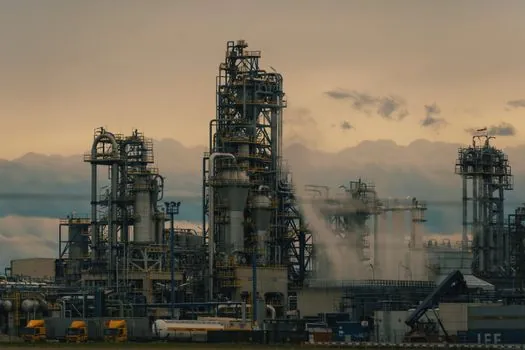
FK-5-1-12 and HFC-227ea win on cylinder count and footprint, but they are not interchangeable with inert gas in every oil and gas room: in a confined space near hydrocarbon pools or hot bitumen, halocarbon decomposition under direct flame impingement can produce HF, which is why NFPA 2001 limits use on deep-seated Class B hazards and why most oil and gas electrical rooms still trend to IG-541 or IG-55 [S2].
For unmanned switchgear rooms, MCC buildings, and turbine enclosures the typical decision is IG-55 at 30 MPa storage versus a halocarbon system at 2.5 MPa, and the engineering trade is roughly 3-4x cylinder count for the inert blend against 2-3x agent cost per kilogram for the halocarbon, with selection driven by which constraint (footprint vs. agent lifecycle cost) dominates the project [S1][S2].
Detection, Hold Time, and Enclosure Integrity
Cross-zoned detection is the first hard gate: high-value oil and gas rooms use a double-knock arrangement where two detectors (typically photoelectric smoke plus either a second smoke or a flame detector) must activate before the releasing panel starts the pre-discharge countdown, to suppress false discharges on a platform or refinery [S10].
Hold (retention) time is verified by a door fan test, with 10 minutes as the common floor and 10-15 minutes as the typical design band; if the enclosure cannot hold concentration, the system fails acceptance regardless of agent cost [S2][S4].
Pressure-relief venting must be sized to prevent the discharge itself from over-pressurising the room; inert systems in tight enclosures need correctly sized relief dampers, and the room integrity test report is what the authority having jurisdiction signs against, not the agent data sheet [S2].
Where Gaseous Suppression Fits in an Oil and Gas Fire Map
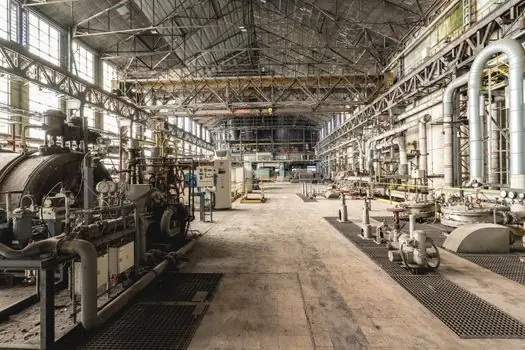
On an offshore platform, roughly 80% of fires originate in hydrocarbon processing or storage areas, and SOLAS Chapter II-2 governs the fixed fire-fighting system requirements on the marine side, which is why the suppression map is layered: deluge and foam for open hydrocarbon hazards, water mist for machinery spaces, dry chemical for local gas fires, and gaseous systems for enclosed electrical, control, and turbine rooms [S5].
Onshore the same logic applies: electrical rooms, control rooms, MCC buildings, analyser houses, and SCADA/server rooms are the natural fit for total-flooding gas systems, while tank farms, loading racks, and pump rows stay on foam and deluge [S5][S6].
Gas station and retail forecourt applications sit in a different risk band: encapsulator agents such as F-500 EA, which is UL-listed under NFPA 18 for Class A and Class B hazards, are fluorine-free with no PFAS or PFOA, and are increasingly used to replace PFAS-based AFFF at forecourts and EV charging islands, but they are a water-mist-class solution, not a room-flooding gas system [S3].
Selection Criteria, Trade-Offs, and Common Misapplications
The four most binding selection criteria for oil and gas projects are: occupancy (inert blends win for normally-occupied rooms, CO2 is largely restricted to unoccupied spaces), fuel class (deep-seated hydrocarbon fires push the choice toward inert gas, away from halocarbons), enclosure tightness (poor room integrity rules out total flooding and forces a local-application or water-based system), and regulatory listing (UL, FM Approval, or VdS third-party listing is the usual procurement gate) [S2][S4][S8].
Gas systems are designed for a single discharge event: after activation the cylinder bank must be recharged, which on a remote platform or a 36-hour-logistics refinery is a real downtime driver and a key reason inert blends with 30 MPa storage and 200 m transmission are specified for long pipe runs from a single cylinder room [S1][S8].
Gas systems are also not general-purpose: they are effective on Class A, B, and C fires but are not specified for Class D (combustible metals) or Class K (cooking media) hazards, and they cannot cool a large hydrocarbon pool fire, which is where foam and deluge remain the correct tool [S2][S8].
For procurement engineers issuing RFQs, the spec sheet must fix agent family, design concentration, hold time, room integrity test method, detection cross-zone logic, third-party listing, cylinder storage pressure, and discharge time, in that order, before any brand is named, because the agent family and concentration drive 80% of the system cost while the brand drives the rest.
Standards, Listing, and the Procurement Checklist
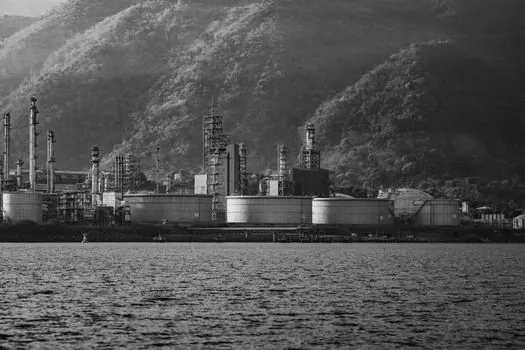
The standards stack on a typical oil and gas gaseous suppression submittal is NFPA 2001 (clean agents), NFPA 12 (CO2), ISO 14520 (inert gas blends), and EN 15004 (European design for gaseous systems), with UL, FM Approval, or VdS third-party listing required by most oil and gas operators before a system is accepted [S2].
The first specification question to close in any RFQ is whether the protected room is normally occupied, because that single answer eliminates CO2, locks in the agent family, and sets the asphyxiation-margin calculation that the room integrity test will later verify [S2][S4].
For deeper cross-discipline context on the electrical side of a substation or control room, the cable sizing map in this control cable spec guide lines up with the conductor protection side of the same enclosure, and the fire door selection spec gate governs the room boundary that the room-integrity test depends on, since a gas system is only as good as the door, damper, and penetrations that hold its concentration.
The underlying component specifications are covered under gas fire suppression, oil seal, and construction machinery and equipment.