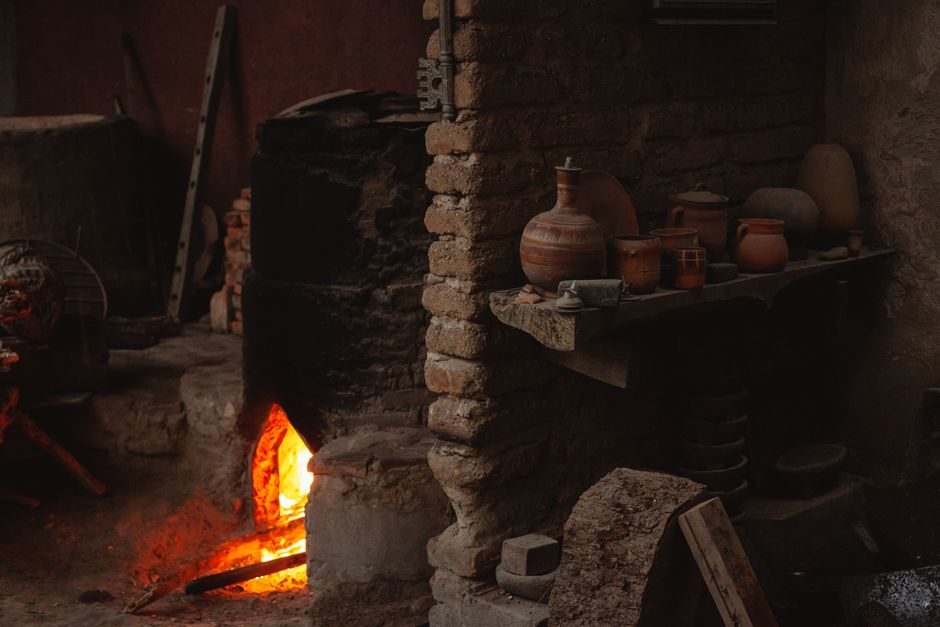
Gas-fired aluminum melting furnaces push combustion heat directly into the bath, which is why U.S.
That BTU-versus-capex trade-off is the entire spec conversation. Everything else — emissions, refractory life, melt rate uniformity, hydrogen pickup — flows from how a gas-fired aluminum melting furnace is actually fired, charged, and skimmed, and whether your local gas price and emissions regime line up with its operating envelope [S1].
Where a gas-fired setup wins, and where it loses
The clearest advantage is peak temperature rise speed. Natural gas combustion in a regenerative or radiant-tube burner stack can drive a reverberatory bath to 730 °C working temperature in roughly 45–70 minutes from a cold start, where a comparable electric melting furnace typically needs 90–120 minutes; for a two-shift secondary foundry this is a second-shift start avoided per week. U.S. natural-gas-fired generation grew 31% in the Northeast and 20% in the Central region between 2015 and 2019, which tracks a sustained industrial gas-pipeline build-out that keeps delivered gas competitive in those manufacturing corridors [S1]. Fuel flexibility matters too: most modern gas furnaces accept propane, biogas, or a natural gas / hydrogen blend up to about 20% H2 by volume without burner rework, which lets a plant hedge fuel sourcing without re-engineering the stack.
The disadvantage list starts with emissions. Combustion exhaust from a gas-fired aluminum furnace carries 40–80 mg/Nm³ NOx at uncontrolled baseline, where a comparable induction furnace emits essentially zero combustion NOx at the stack. Carbon monoxide runs 30–100 ppm depending on burner tuning, and unburned hydrocarbons spike during door-open charging cycles. For any plant inside an EU BREF BAT-AEL envelope or a U.S. non-attainment zone, that uncontrolled profile is the gating constraint and forces a low-NOx burner or SCR add-on, which erases the capex advantage. Refractory wear is the second cost line: a dry-hearth gas-fired reverberatory typically logs 3–7 years of campaign life on a fired brick lining before a reline, versus 8–12 years for an induction channel inductor, because flame impingement and bath circulation drive higher hot-face erosion.
Comparison: gas reverberatory vs. gas crucible vs. gas-fired radiant box
Three gas-fired architectures dominate the buyer shortlist, and they line up cleanly against four decision criteria — melt rate, fuel efficiency, capex, and emissions profile: [S2]
Gas-fired crucible furnaces (50–500 kg) hit 55–65% thermal efficiency thanks to the smaller bath surface, and are the right call for a die-casting cell or a small batch alloy house running 1xxx/3xxx aluminum alloy recipes where charge purity matters more than throughput. Gas-fired radiant-tube box furnaces, in the pattern of the Thermal Product Solutions cabinet design, isolate the combustion atmosphere from the work chamber through metallic radiant tubes and a continuously welded shell [S3]; these trade higher capex for atmosphere purity and the ability to run light or heavy workload cycles, which is why aerospace heat-treat specs lean toward them even though they are not the most efficient melters in absolute BTU terms. The radiant-tube box architecture also maps naturally to FM, OSHA, and NFPA-86 safety compliance claims, which matters for any U.S. plant carrying an insurer-mandated audit cycle [S3].
On emissions, the order inverts: the radiant-tube box furnace is the cleanest because flame never touches the charge, the crucible furnace sits in the middle because its smaller burner modulates tightly, and the open-bath reverberatory is the worst offender unless it carries regenerative burners and a low-NOx firing package. On capex, reverberatory wins, crucible is mid, radiant box is highest. On melt rate, reverberatory wins by a wide margin, crucible is slowest per charge but fastest per shift turn-around, radiant box is built for soak-and-hold rather than melt-and-pour.
Hydrogen and metal-loss penalties specific to gas firing
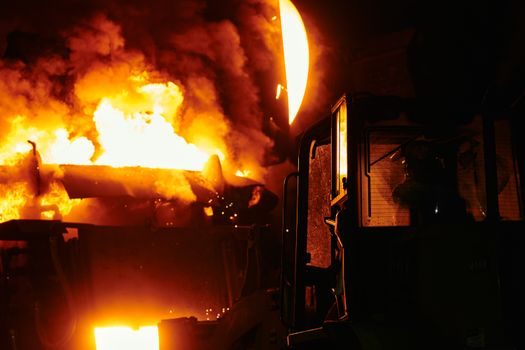
Combustion products are the silent cost line. Water vapor in the burner flame dissociates at bath temperature and feeds hydrogen into the melt, so a gas-fired furnace typically delivers 0.15–0.30 ml/100g hydrogen pickup per hour of hold time against 0.05–0.12 ml/100g in an induction furnace; that means shorter hold windows, tighter flux practice, and a rotary or in-line degasser downstream if the downstream process cannot tolerate porosity. [S2]
The mitigating design is the radiant-tube box architecture [S3], which physically separates flame from bath, and a side-well orwell-and-stack dry-hearth where the burners fire a refractory-lined stack rather than the bath surface.
Fuel-price exposure and capacity planning
Gas-fired capacity is a leveraged bet on fuel-price stability. A 30-ton furnace melting 12 cycles/day burns 90–110 MMBtu/day at the burner tip; at $4.00/MMBtu delivered gas that is roughly $360–440/day per unit, or about $130K–160K/year in fuel alone at 350 operating days. If industrial gas prices in your region run $7–9/MMBtu (a realistic winter swing in MISO or PJM territory during a polar event), the same unit's annual fuel bill clears $260K [S1]. Electric induction is a cleaner hedge because the site can blend grid, PPA, or behind-the-meter renewables; gas is a single-fuel bet.
Capacity planning also has a different shape. A gas-fired reverberatory can be built in 60–80 ton units because the technology scales linearly with bath area, where induction furnaces face diminishing returns past 15–20 tons per channel. For a greenfield secondary smelter planning 100,000+ tons/year, a bank of four to six 60-ton gas-fired reverberatories is the textbook layout, and that is also where the Line Frequency Induction Furnace TCO: 10-Year Cost Driver Map comparison should be run before pouring foundations. For a jobbing foundry or an aluminum ladder or aluminum veneer panel extrusion cell doing 5,000–15,000 tons/year, a single 15-ton gas crucible or a small reverberatory is the right fit, and Gas-Fired Aluminum Melting Furnace Types and Classifications walks through that decision tree in more detail.
Safety, compliance, and what to spec into the RFQ
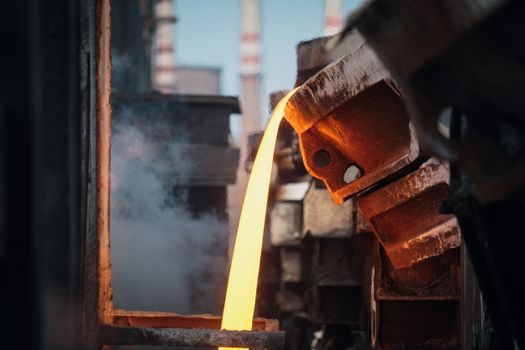
Every U.S. gas-fired aluminum furnace RFQ should carry FM Global, OSHA 1910.1029 (molten-metal exposure control), and NFPA-86 process-heating language, with a Class B or better flame-safeguard controller and a redundant UV or IR flame scanner. The Thermal Product Solutions cabinet-type radiant-tube box is described as meeting FM, OSHA, and NFPA requirements, with an emergency nitrogen gas purge circuit, an automatic gas-air flame-curtain burner, and ceramic-block insulation [S3]. A separate emergency nitrogen purge is a worthwhile line item on any aluminum gas furnace because molten aluminum + water intrusion is the catastrophic failure mode operators fear, and a sealed atmosphere can be flushed inside 60–90 seconds with a properly sized purge ring.
For a buy decision, the verifiable next nodes are: (1) request the OEM's 12-month fuel-consumption log on a comparable installed unit and verify it against your charge mix, (2) confirm the site's air permit allows uncontrolled NOx at the rated burner firing rate, and (3) pull a refractory life reference from at least two existing customers in similar duty. A vendor that can deliver all three on a 30-ton reverberatory or radiant-tube box spec has done the engineering; one that cannot is selling capacity, not performance.