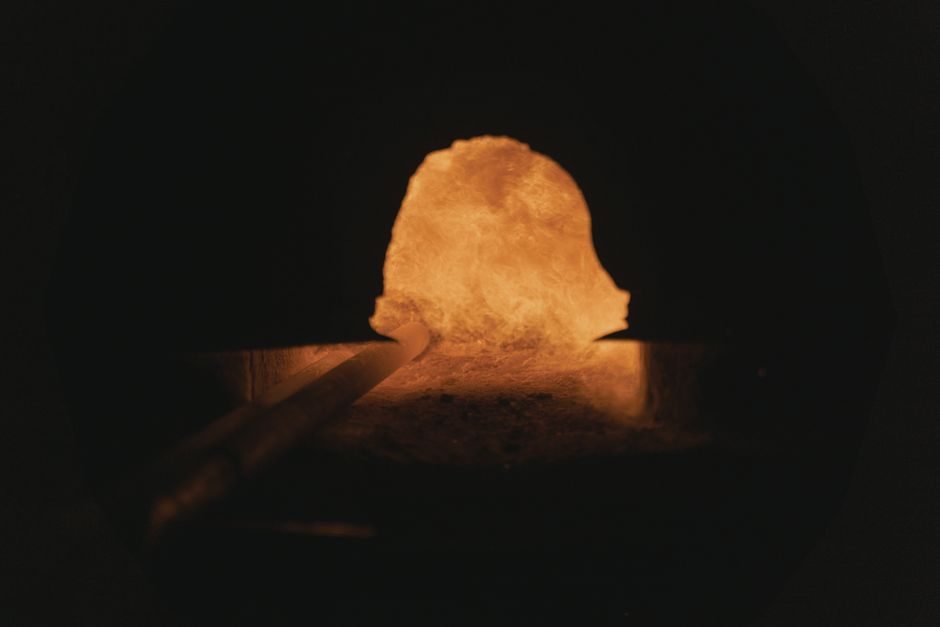
Gas-fired aluminum melting furnaces split into three primary vessel types — crucible, reverberatory, and stack melter — then sub-classify by combustion-air preheat (cold-air, recuperative, regenerative) and by chamber count [S2][S3].
Refractory-lined vessels in this family cover melting, holding, and metal treatment duties; firing fuels span natural gas, LPG, furnace oil, and light diesel oil, with regenerative burners now standard on large reverberatory units [S2][S3].
Vessel Type: Crucible, Reverberatory, and Stack Melter
Crucible furnaces hold a single refractory pot and expose the flame directly to the metal; they suit small foundries and alloy-change flexibility [S2]. Reverberatory furnaces — the workhorse of secondary aluminum — burn gas above the bath and reflect heat downward, allowing bulk melting, holding, and alloy adjustment in one refractory-lined shell [S2]. Stack melters (shaft melters) feed solid charge downward against rising hot gas, giving the highest specific melt rate per unit footprint among gas-fired designs [S3]. Per the Die Cast Machinery reference, the die-casting industry also uses EAF, induction, and cupola vessels for ferrous melts, but gas-fired crucible and reverberatory units dominate non-ferrous aluminum duty [S2].
Reverberatory designs accept monolithic, brick, or hybrid refractory linings depending on alloy chemistry and temperature exposure; options include metal circulation pumps, mass-flow control, and dual-zone temperature control [S2]. For process context, see the broader melting furnace entry, which covers the cross-vessel comparison.
Heat-Recovery Sub-Classes: Cold-Air, Recuperative, Regenerative
Cold-air gas-fired units supply combustion air at ambient temperature — lowest capital cost, lowest efficiency, and still common in small crucible furnaces [S2]. The JOM feasibility study (Brimmo and Hassan, 2014) explicitly targets aluminum holding reverberatory furnaces, which sit at the low end of fossil-fuel efficiency without recovery [S6].
Regenerative and recuperative upgrades are described in the gas aluminum melting furnace reference, including the trade-off between burner cost and natural-gas savings.
Chamber and Firing-Direction Sub-Classes
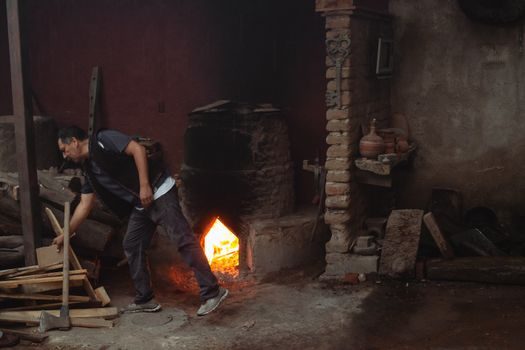
Single-chamber reverberatory furnaces combine melting and holding in one bath; multi-chamber designs separate the functions so the holding zone can operate at lower flame temperature, cutting gas consumption per ton held [S3]. Within either layout, top-fired (open-flame above bath), side-fired, and immersed-heater configurations change the heat-transfer path; CFD work by Hassan and Brimmo (2015) compared immersed heaters against open-flame burners in casting furnaces and quantified the resulting temperature field differences [S3]. Burner allocation — distance between burners and the high-fire/low-fire gas-flow split — is itself a tuning variable: Hassan, Alshehhi, and Belt (2018) modeled a gas-fired holding furnace and recorded significant performance gains by rebalancing the gas flow ratio between two burners on high fire [S3].
For comparison with electrically heated alternatives, the line-frequency induction furnace trade-off spec map lines up induction against gas-fired reverberatory on duty band, melt rate, and energy source.
Selection Criteria: Alloy, Melt Rate, and Energy Target
First screen on alloy: reverberatory and crucible units handle the broad aluminum-alloy range, including aluminum alloy grades that need clean, low-turbulence melt handling [S2]. Second screen on melt rate — small foundries below ~1 t/h typically pick gas-fired crucible furnaces; mid-size casthouses in the 1–10 t/h band run single-chamber reverberatory; high-throughput secondary smelters above 10 t/h move to stack melters or multi-chamber regenerative reverberatory [S2][S3]. Third screen on energy target: where the project is justified by payback, regenerative burners drop specific gas consumption sharply versus cold-air baselines, while recuperative units offer a middle payback path [S3][S6].
Refractory selection rounds out the spec: monolithic linings suit frequent alloy change-out, brick linings suit steady high-throughput melts, and hybrid linings split zones by exposure severity [S2]. A criteria-based comparison for the three vessel types on melt rate, capital, efficiency, and alloy flexibility is summarized below.
Use Cases: Holding vs Melting vs Treatment
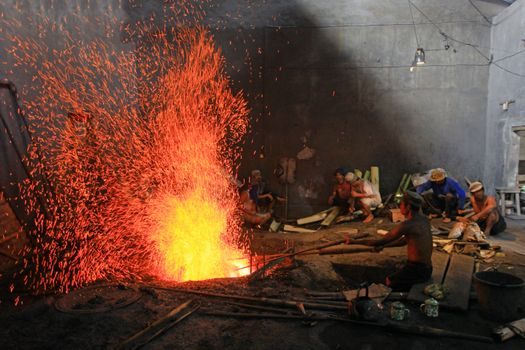
Melting duty requires the highest specific energy input and benefits most from regenerative burners and stack-melter geometry; the secondary-aluminum industry has been the main driver of these upgrades [S3]. Holding duty — keeping molten metal at temperature between furnace and casting line — is often skipped in plant energy programs because the natural-gas draw looks small, yet once the melting furnace is upgraded, holding-furnace retrofits become the next payback opportunity [S3]. Treatment duty (alloy adjustment, degassing, refining) uses reverberatory shells fitted with circulation pumps and mass-flow control to keep chemistry uniform; the process step typically follows melt and precedes transfer into a ladle or transport vessel [S2]. The casting ladle 10-year cost map is the natural follow-on read for the transfer step downstream of these vessels.
Limitations, Failure Modes, and Control Challenges
Gas-fired aluminum furnaces present three persistent operating problems. First, the gas-fired reverberatory holding furnace is the lowest-efficiency fossil-fuel system in the secondary-aluminum melt shop, so a large volume of gas is consumed at low utilization to hold metal far below flame temperature — the very inefficiency that regenerative retrofits target [S6]. Second, temperature control is a high-nonlinearity, high-dead-time problem: Springer model-identification work (2024) used bilinear and first-order-plus-dead-time models fitted to steady-state gas-fired furnace tests to minimize mean-square error against measured temperature response [S1]. Third, refractory life is shortened by aluminum's tendency to infiltrate brick and monolithic linings, so selection of monolithic, brick, or hybrid lining must track alloy chemistry and exposure zone [S2].
Applicable Standards and Sourcing Notes
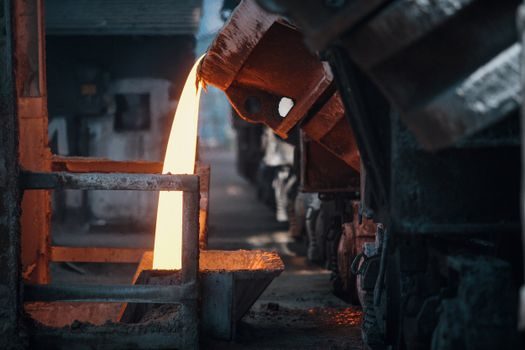
Combustion-air preheaters, burner management, and furnace pressure relief follow standard industrial-furnace codes; the model-identification literature uses the bilinear and FOPDT representations as the control-side baseline, with Strommer et al. (2014) and Roffel (1974) cited as the gas-supply and gas-fired furnace dynamics references [S1]. Process-side references include the JOM 2014 feasibility study on regenerative burners in aluminum holding furnaces and the Light Metals 2015/2016 CFD and combustion-gas-circulation papers [S3][S6]. For buyers comparing new-build Chinese OEM supply (e.g., Foshan Metech Aluminum Technology's XINTE aluminum melting furnaces) against used or refurbished imported units, the same vessel-type and heat-recovery classifications above apply — the typology is independent of OEM origin [S4]. Where downstream molten-metal transfer matters, the related casting ladle 10-year cost map covers ladle selection adjacent to these furnaces.
Two trackable signals for the next planning cycle: (1) revalidation of the 2014 JOM regenerative-burner feasibility economics against 2025–2026 natural-gas prices for any payback re-run, and (2) reissue of gas-fired furnace model-identification work using the 2024 bilinear/FOPDT framework against any new burner-control retrofit [S1][S3][S6].