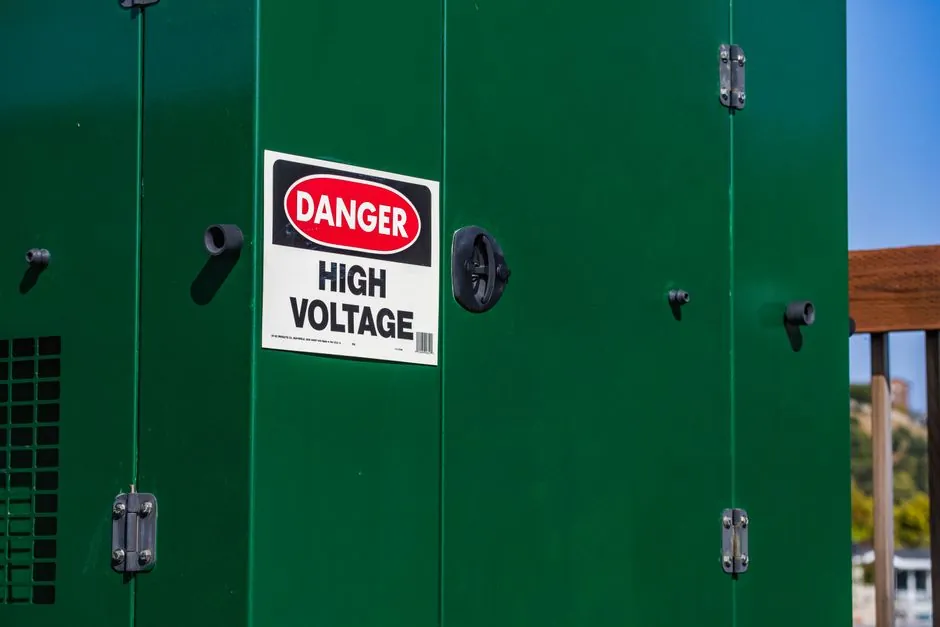
Gas generator sets sized for 2026 industrial standby and prime duty cluster in two bands: 60 Hz 125-150 kW EPA-certified units for North American sites (Caterpillar DG125, DG150) [S4][S6], and 50 Hz 400/230 V packages at 20-1400 kW for global manufacturing and CHP applications [S1]. Selection is driven by four gates: fuel availability, certification, load profile, and alternator pairing.
Stationary gas units differ from diesel in that they trade fuel flexibility for lower emissions and longer overhaul intervals on natural gas. Buyers who ignore certification type (U.S. EPA Stationary Emergency vs Non-Emergency) typically re-spec the entire unit within 18 months of commissioning.
Fuel Type Gates: Natural Gas, LPG, Biogas
Natural gas (NG), liquefied petroleum gas (LPG), and biogas are the three pipeline-or-bottle fuels feeding 2026 gas generator sets, and each dictates a different engine map, gas train, and pressure regulator [S1][S3]. NG units (e.g., JDEC TPS1375G, Caterpillar 3516 NG) require 2-5 kPa utility supply or 1-2 bar elevated-pressure methane line, while LPG packages need vaporizers and twin-stage regulators; biogas adds H2S scrubbing and methane-number monitoring above ~200 ppm H2S [S3].
One Chinese supplier lists FOB pricing for a JDEC TPS1375G natural gas genset at 250,000-280,000 USD/Set with a 1 Set minimum order, payable by L/C or T/T [S3]. Above 1000 kW, 60 Hz, 1800 rpm NG sets become the dominant offering on Chinese export channels, alongside a parallel 50 Hz Perkins gas genset line at 1000 kW [S3]. Selecting the wrong fuel variant (e.g., NG ignition timing on a biogas fuel) shortens valve life by 30-50% in field reports.
Power Rating Bands and Frequency
The 2026 export catalog splits cleanly into 50 Hz and 60 Hz families. At 50 Hz, SDEC, Perkins, and Cummins-powered diesel-equivalent packages on gas reach 144-1400 kW (180-1750 kVA) at 400/230 V, with rated currents scaling from 260 A to 2728 A [S1]. At 60 Hz, the Caterpillar DG125 (125 kW) and DG150 (150 kW) sit in the mid-standby band, both EPA-certified for Stationary Emergency and Non-Emergency application [S4][S6].
For 60 Hz standby at 220/127 V, 320 kW Cummins NTA855-G3 packages rate at 1049.8 A with Stamford HCI444ES alternators; 750 kW KTA38-G2B sets reach 2460.4 A using LVI634B alternators [S1]. The right band for a buyer is set by peak load (kW), inrush kVA for motors, and harmonic current on the bus. Below 100 kW, inverter or silent-enclosed units dominate; above 1000 kW, 50 Hz containerized or CHP skid packages are the norm.
Certification and Emissions: EPA Stationary Gating

U.S. EPA Stationary Emergency and Non-Emergency certification is the single non-negotiable gate for any 60 Hz gas gen-set installed in regulated U.S. jurisdictions, and the Caterpillar DG125/DG150 are explicitly listed under both application classes [S4][S6]. For 50 Hz global export, the gating shifts to CE, GB (China Compulsory Certification), and local grid-code compliance rather than EPA tier language.
Specifying a non-EPA-certified unit into a North American stationary emergency role triggers permit refusal at the AHJ (Authority Having Jurisdiction) and forces a re-purchase. Buyers outside North America should map the 50 Hz equivalent: IEC 60034 rotating-machine standards for the alternator, and ISO 8528-5 for transient response on gas-fueled sets, both widely referenced in Chinese OEM datasheets [S1].
Alternator and Voltage Selection
Alternator pairing on 2026 gas sets is dominated by four brands: Stamford, Leroy Somer, Marathon, and Mecc Alte, with Leroy Somer's TAL-A44-D common in the 80 kW 50 Hz class and LSA51.2S55 paired with 1400 kW Perkins 4016TAG drivers [S1]. Caterpillar pairs its own-branded alternators on the DG125/DG150 60 Hz gas family [S4][S6].
Voltage options scale with kW: 230/400 V at 50 Hz, 220/127 V or 120/240 V at 60 Hz. Three-phase output is standard above ~20 kW; single-phase is rare above 100 kW. THD (total harmonic distortion) on the alternator output depends on the AVR (automatic voltage regulator) spec; buyers running non-linear loads (VFDs, LED drivers) should request <5% THD and a winding pitch of 2/3 to limit triplen harmonics, though this is a generic engineering recommendation, not a standard I can attribute to a specific clause in the research.
Enclosure, Containerization, and Site Fit

2026 export catalogs segment gas sets into open-type, silent (soundproof), containerized, and trailer-mounted. Silent/canopied units at 22 kW (Yuchai YC4FA40Z-D20) target <75 dB(A) @ 7 m sites like hotels and clinics; containerized 50 Hz packages up to 1400 kW ship as ISO 20/40 ft skid for offshore or remote mining sites [S1].
For linear motion on sliding enclosure doors or genset skid rails, buyers should spec stainless or zinc-plated rails; for cross-rolled roller integration inside acoustic canopies (used in some isolation-mount designs), refer to crossed-roller bearing data. Containerized units must still meet the same EPA, GB, or CE gate as the bare engine, plus IMO-style container corner-cast certification for marine loading.
Application Mapping: Who Should Pick What
Standby hospital/data-center duty (Tier IV equivalent): spec 60 Hz EPA Stationary Emergency-certified, 125-150 kW natural gas (DG125/DG150) with a Stamford or Caterpillar OEM alternator [S4][S6]. CHP/cogeneration for brewery or food plant: spec 50 Hz, 100-1000 kW NG with heat-recovery jacket and exhaust economizer, Leroy Somer LSA-series alternator [S1][S3]. Remote telecom or pipeline compressor: trailer-mounted or containerized 50-150 kW LPG/biogas with extended fuel tank skid [S1].
Do not pick a 50 Hz non-EPA-certified open-type unit for North American emergency standby duty, as the AHJ will reject the permit. Do not pick a 60 Hz DG-series for European 50 Hz grid-parallel operation without a frequency converter. Buyers needing refined gas-quality measurements at the intake skid can use a dedicated gas analyzer on the regulator train to validate methane number before the engine sees the fuel.
Sourcing Channels and Tariff Reality
Chinese OEM export catalogs (chinageneratorsets.com, ecvv.com supplier Tide Power) dominate the 50 Hz global mid-kW band with 7 dedicated gas-gen-set SKUs versus 43 diesel SKUs in the same catalog, reflecting diesel's higher unit volume but gas's higher per-unit margin [S1][S3]. For 60 Hz North American mid-kW, Caterpillar's DG125/DG150 set the de-facto OEM benchmark [S4][S6].
China Customs HS-code lookups for "Gas Generator Set" return mixed HS lines (some 8502 electric-generator entries, some 8411 turbine-adjacent codes), with MFN rates in the 6.5-10% band and VAT at 13% on general entries; U.S. Section-301 additional duties may add 10-25% depending on the exact 10-digit code [S5]. Buyers importing into the U.S. should request the OEM's 10-digit HTS classification before signing the PO. As a sanity cross-check on supply-chain decisions, see stainless steel pipe procurement gates for the parallel alloy/HS-code discipline used in pressure-vessel supply chains, and steel pipe selection for renovation for the same HS-code approach applied to mechanical fit-up. The 2026 shortlist logic is therefore: confirm fuel and certification first, then fix kW and voltage, then pick the alternator brand, then choose enclosure type, then verify HTS and tariff line before issuing the PO.