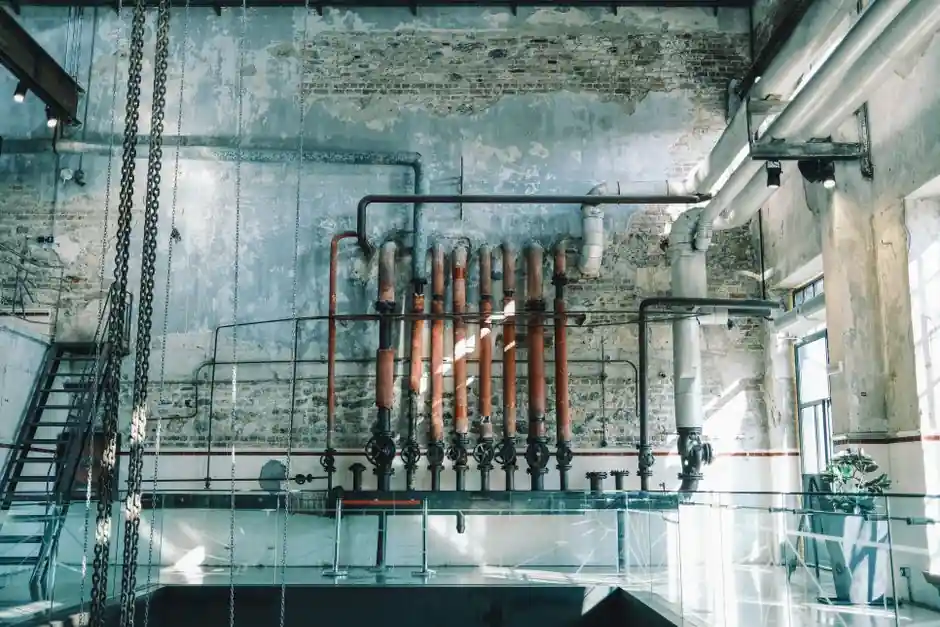
Renovation pipe specification resolves around four hard gates: existing-system compatibility, applicable standard (ASTM A53, A106, JIS G3466), fluid duty (temperature, pressure, corrosivity), and joint method (weld, thread, grooved, flanged), with supply-chain lead time as the tie-breaker [S1][S3][S4].
On 2026-08-08 a Guangzhou-based integrated supplier listed seamless, welded, OCTG, stainless and coated steel pipe as separate product lines under one procurement envelope, the same product split that drives most retrofit bill-of-materials in Asian and Middle-East markets [S1]. Stockists in Dubai serving Saudi Vision 2030 infrastructure reported 20+ years, 2000+ projects, 15+ countries of carbon-steel plate and pipe distribution, the typical scale at which a renovation contractor can expect same-region mill or stockist delivery for standard NPS 1/2 to NPS 16 sizes [S3].
Match the existing line class before discussing material grade
Renovation work almost never starts on a blank sheet: the specifier first measures the existing line's standard, NPS, schedule and joint type, then matches the replacement to it. A53 Grade B ERW covers NPS 1/8 to NPS 26 with Schedules 10 through 160 and remains the default for lower-pressure plumbing, fire-protection risers and HVAC hydronic lines in residential and light-commercial retrofits [S4]. Where the existing line is seamless, a seamless steel pipe replacement of the same ASTM A106 Grade B/C schedule is the specifier's safe call for steam and process hot water above 200 °C.
Joint method forces the material choice more than fluid duty in many retrofits. Threaded black steel pipe to ASME B1.20.1 is still common on domestic water and gas risers in older buildings; grooved couplings (Victaulic-style) dominate modern commercial mechanical-room retrofits because they allow dry-fit assembly in tight ceiling voids. Welded replacement is preferred when the original joint is welded and the line cannot be disassembled for threading or grooving [S3][S4].
Standards map: ASTM A53, A106, JIS G3466 and the corrosion variants
Four standard families cover roughly 90% of renovation pipe procurement: ASTM A53 (welded and seamless, black and galvanized, Grade A and Grade B), ASTM A106 (seamless, high-temperature carbon steel, Grades A/B/C), JIS G3466 (square and rectangular structural pipe) and the corrosion-resistant sub-line of galvanized A53, 3LPE-coated line pipe, and stainless 304/316 [S1][S4].
ASTM A53 Type E (ERW), Type F (furnace-butt-weld, NPS 1/2 to NPS 4 only) and Type S (seamless) are the three manufacturing routes a renovation engineer must identify on the existing tag before ordering. Galvanized A53 is specified by a zinc-coating mass class (e.g. Class A ≈ 550 g/m² average, Class B ≈ 460 g/m²) and is the default for above-grade potable water, fire risers and exposed mechanical-room pipe [S4]. JIS G3466 STKR400/STKR490 square hollow sections are the structural-tube family used where the renovation is also reinforcing frames, canopies or guard-rail posts, not carrying pressure [S4].
Suppliers that hold ISO 9001, ISO 14001 and ISO 45001, plus CE and GOST/POC, and ship pipe with third-party inspection by SGS, BV, TUV or DNV, give the specifier mill-test-certificate (MTC EN 10204 3.1) traceability that most renovation QA plans require, especially for hospital, school and data-centre retrofits [S1]. For Gulf-region projects, materials must also be ASTM/ASME/NACE-compliant and carry 3.1 MTCs, with vendor approval from PDO, ADNOC, Saudi Aramco, KOC, SABIC or SWCC for hydrocarbon-line retrofits [S3].
Selection matrix: pick the variant by duty, not by habit
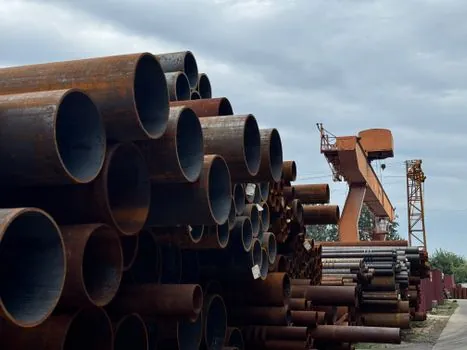
Use the following comparison grid as a quick gate; it aligns the four workhorse products against the four decisions that drive renovation cost.
Criteria compared: A53 ERW (galvanized), A53 seamless, A106 seamless, JIS G3466 structural square. Dimensions: (1) typical pressure/temperature rating, (2) corrosion environment fit, (3) standard joint method, (4) typical renovation use case. A53 ERW galv sits at cold-service / low-pressure with the broadest joint choice (thread, grooved, flanged) and is the default for potable risers and dry fire lines. A53 seamless steps up to mid-pressure steam and hot water with butt-weld or flanged joints, used when the original line is seamless. A106 Grade B/C is the high-temperature seamless choice above ~400 °C, typically welded. JIS G3466 is non-pressure, used for frame and canopy work, joined by welding or bolted cleats [S1][S4].
For wet, buried or coastal retrofits, a coated or stainless steel-plastic composite pipe liner is often substituted; for low-pressure cold-water service inside buildings, PE pipe and pipe fitting assemblies now displace galvanized steel on the domestic side, leaving steel to the risers and the mechanical room.
Supply chain and lead time as a renovation gate
Renovation schedules are usually tighter than greenfield, so lead time often overrides grade. Standard NPS 1/2 to NPS 6 in A53 ERW and A53 seamless is commonly ex-stock in Dubai, Guangzhou and Tianjin distribution hubs, with Schedule 40 and Schedule 80 black or galvanized routinely available; non-standard schedules (XS, XXS) and large-diameter A106 seamless require mill roll with 4-8 week lead times [S1][S3][S4].
Distributor networks for threaded, grooved, flanged and welded pipe fitting matching those four pipe families allow one-stop procurement, and integrated suppliers will package MTCs, third-party inspection and export crating with the pipe shipment [S1][S3]. For renovation work tied to public infrastructure (Vision 2030 schools, hospitals, drainage), buyers are explicitly aligning scope to the same mega-program EPC contractors, which means pipe suppliers pre-qualified to those EPCs hold the practical lead-time advantage [S3].
Failure modes and constraints to spec around
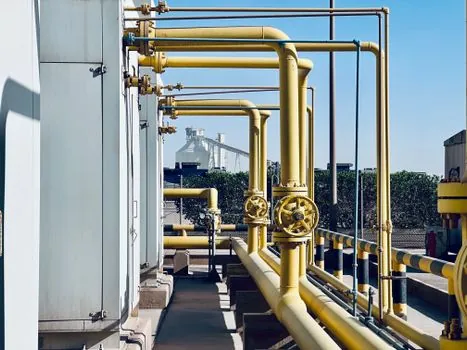
Three failure modes account for the bulk of renovation rework: galvanic corrosion at the steel-to-copper dielectric union, internal scaling on hot-water recirculation lines older than ~20 years, and threaded-joint leakage on lines that have been welded and re-cut. The mitigation in each case is a spec gate, not a field fix.
Dielectric unions or bonded dielectric flanges are mandatory where galvanized or black steel meets copper in a domestic hot-water riser retrofit, otherwise the steel side fails in 3-7 years. For hot-water recirculation lines with measured wall loss, the renovation spec should drop to a larger schedule (Sch 80 instead of Sch 40) or move to A106 seamless rather than reuse the original A53 ERW. Where the existing joint is welded and cannot be un-bolted, the spec must hold welded replacement, since re-thinning the original pipe to cut new threads below the existing weld is the most common cause of post-renovation leakage [S1][S3].
What the renovation specifier actually signs off on
The renovation BOM should lock, line by line: standard and grade (A53 Type E Grade B, A106 Grade B, JIS G3466 STKR400), manufacturing route (ERW vs seamless), NPS and schedule, coating (black, hot-dip galvanized per ASTM A53 with declared zinc mass, 3LPE, FBE), joint type (threaded ASME B1.20.1, grooved, flanged ASME B16.5, butt-weld), and MTC level (EN 10204 3.1 with third-party SGS/BV/TUV/DNV inspection) [S1][S3][S4].
Mechanical and structural items for adjacent renovation work (drainage, roads, schools, hospitals) usually fall under the same supply contract, and the carbon-steel plate stock that supports them is sourced from the same qualified distributor, which is why boiler-quality carbon-steel plate stockists diversified into pipe over the past 35 years [S3].
Trackable next signals to watch: mill-list updates of A53/A106 stocks at the Guangzhou, Tianjin and Jebel Ali hubs; Saudi Aramco and ADNOC approval-list refreshes for pipe suppliers; and any third revision of ASTM A53 that touches galvanized zinc-mass classes. For adjacent lifting and rigging on the same renovation site, crawler crane selection for pipeline construction gives a parallel spec-gate reference.