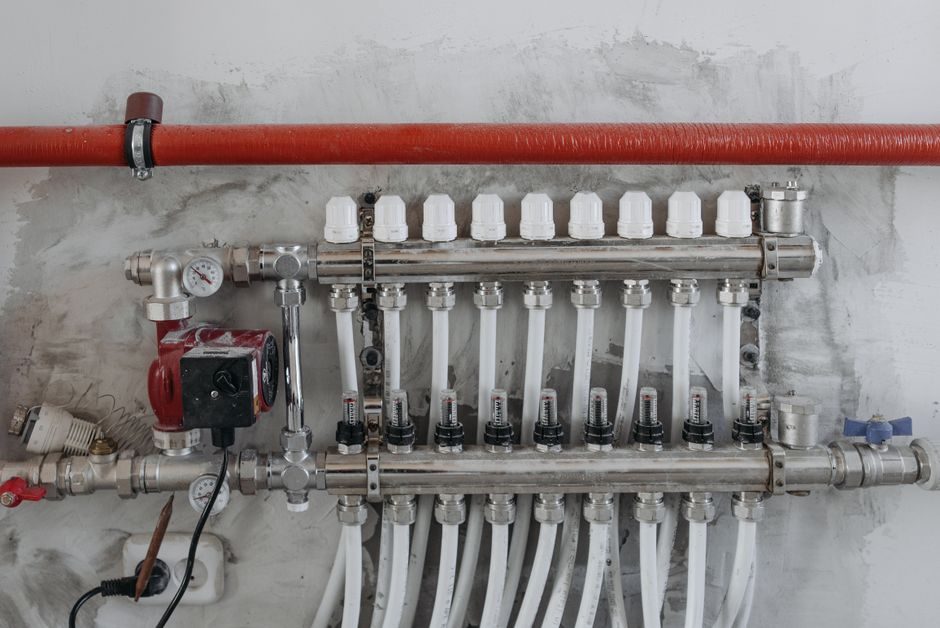
Ball valve procurement in mid-2026 is dominated by a small set of specification gates — body material, port geometry (full-bore vs reduced-bore), end connection, pressure/temperature class, seat/seal chemistry and a handful of industry compliance overlays — and the global B2B catalogue confirms the four metals doing the heavy lifting: brass, SS304, SS316 and tin bronze [S1][S3][S7].
The price discovery layer is unusually tight on the Chinese B2B market: factory-direct SS304 2-piece female-male threaded ball valves surface at US$4.00-5.80 per piece with documented "in-stock" status, and a parallel Sanitary Ball Valve index lists 1-6 product hits per page with 3/8" refrigerant / DBB / SS316 / bronze / PVC / PPR variants from Made-in-China.com [S7][S5]. On the manual / water / male thread side, BONOMI GMBH continues to advertise a 2026 "ball valve series" with the explicit caveat that list prices are pre-tax and exclude delivery, customs duties and installation/activation surcharges [S1].
Body Material Bands: Brass, SS304, SS316, Bronze, PVC
Brass, leaded brass and DZR brass remain the workhorse for water and HVAC duty. Yuhuan Zhengqu Fluid Intelligent Control Co. catalogues its full product line under a "Brass valves" banner, signalling that the company is still treating brass — not stainless — as its primary SKU family in 2026 [S3]. The 2026 series product pages for brass body ball valves typically run in the lower price tier on Chinese B2B indexes and are the default for potable-water and compressed-air service where a stainless body would be over-spec [S7].
Stainless 304 and 316 split the industrial / chemical duty. Made-in-China.com's "Thread Ball Valve" hot-product index lists "Factory Direct SS304 2PCS Female Male Thread Ball Valve in Stock Ready" at US$4.00-5.80 and tags it "Best Seller," with two further identical-range SS304 2-PCS F-M listings from competing factories at the same US$4.00-5.80 band — a tight cluster that suggests genuine 2026 factory-direct pricing rather than placeholder data [S7]. For 316, the sanitary sub-index groups "DBB SS316 Bronze PVC PPR PP Plastic CI Stainless Steel Sanitary Stop" valves under a single product-features line, indicating that 316 sanitary is treated as a distinct family with double-block-and-bleed options rather than a drop-in for 304 [S5].
Tin bronze enters the picture for marine, steam and salt-water service where dezincification and chloride attack would chew through brass. On the 2026 supplier map, body and trim bronze is sourced through a small ring of foundries and stockists — a useful cross-reference for any valve spec that names bronze ball/stem/seat Tin Bronze Suppliers Map 2026. Plastic bodies (PVC, PPR, PP) appear in the same sanitary-search line and are used for low-pressure, chemically aggressive media where metal-ion contamination is unacceptable [S5].
End Connection and Port Geometry
Threaded (NPT/BSP), flanged (ANSI/EN/DIN/JIS) and welded (socket, butt) are the three end-connection families a 2026 spec must declare. The current Chinese B2B catalogue skews heavily to threaded: every "Best Seller" SS304 line on the hot-product index is F-M thread, and Superklean Env Engg's enquiry page lists a 3/4" ball valve SKU as the most common inquiry item — a sign that instrumentation and panel-grade 3/4" threaded units still lead the inquiry volume [S2][S7].
Flanged ends and the related "high-pressure" sub-class belong to a different manufacturing group. High Mpa Valve Group's trade-show listing explicitly bundles ball, globe, gate, check, plug and hard-seal butterfly valves under one URL, reflecting how Chinese vendors still group high-Mpa / flanged / API-602-class work as a separate family from the threaded-commodity line [S4]. Shanghai Taitong Valve's site groups ball, globe, gate, check and plug valves on a single catalogue, again demonstrating that the same vendor will often span both the commodity threaded and the engineered flanged product [S6].
Full-bore versus reduced-bore is a flow/pressure-drop decision, not a manufacturing afterthought. Full-bore (also called full-port) units match the pipe ID, drop the seat orifice restriction and are mandatory for pigging service in oil & gas; reduced-bore is cheaper, lighter and is the default for general isolation. The BONOMI "ball valve series — 2026" listing describes the line as "manual / for water / male" — a phrasing consistent with a reduced-bore or standard-bore manual isolation family rather than a full-bore piggable line [S1].
Pressure Class, Temperature and Seat Chemistry

Pressure class is the second filter after body material. On the B2B price layer, the SS304 2-PCS F-M line is published without a published PN/Class figure — a red flag for any spec that needs a hydrostatic-test certificate; you have to ask the factory for the pressure-rating datasheet [S7]. High-pressure ratings in the 800-2500 Lb / PN100-PN420 band are normally reserved for forged-steel flanged or welded-end units, and the "High Mpa Valve" vendor name is a direct tell that the company targets that band rather than the US$4-5.80 commodity range [S4].
Seat and seal chemistry — PTFE, RPTFE, PEEK, metal-to-metal, UHMWPE, EPDM, FKM — is the lever that fixes temperature and chemical compatibility. PTFE is the default on commodity brass and SS304 units and is rated roughly to +200 °C; PEEK extends to about +260 °C and is used in higher-temperature steam and downstream-of-compressor service; metal-seated (often Stellited ball + seat) is the route above ~+400 °C or in abrasive slurry duty. None of the 2026 B2B listings in the current research publish seat material in the headline, so a procurement spec must require the seat code on the data sheet rather than trust the title field [S7][S5].
Standards overlay is the third axis. A spec that names "API 6D" is calling for pipeline full-bore double-block-and-bleed ball valves; "API 608" is the ball-valve standard for general process; "API 607/ISO 10497" is the fire-safe test; ASME B16.34 is the pressure-temperature envelope; NACE MR0175 is mandatory for sour service (H₂S) and any valve with carbon-steel or low-alloy body plus elastomer seals in oil & gas. ATEX/IECEx marking is required for Group I M2 / Group II Cat 2 hazardous-area service and the BOM must call out the certification, not the vendor's marketing [S1][S5].
Selection Criteria and a Side-by-Side Comparison
A 2026 buy-spec should rank the four most common body families against the same four gates — pressure, temperature, media compatibility and lead-time. The figure-of-merit matrix below is the kind of structured comparison a procurement engineer can paste into a sourcing meeting: [S1]
Brass body — pressure to PN25/PN40, temperature to ~+180 °C with PTFE seat, best media fit for potable water, hot water, compressed air and light chemicals; lowest lead-time and lowest price on Chinese B2B [S3][S7]. SS304 body — pressure to PN40-PN64 commodity, temperature to ~+200 °C with PTFE, broad chemical fit including food and dairy; factory-direct price US$4.00-5.80 for 2-PCS F-M threaded in stock [S7]. Tin bronze — pressure to PN25 typical, temperature to ~+200 °C, the default for sea-water, deck and salt-air service; sourced through a smaller foundry ring Tin Bronze Suppliers Map 2026. The decision rule is straightforward: brass for water, 304 for general chemical/food, 316 for chloride and acid, bronze for marine/steam — and PVC/PPR only when metal-ion contamination is the binding constraint [S5].
Who a Ball Valve Is For — And When It Is the Wrong Valve
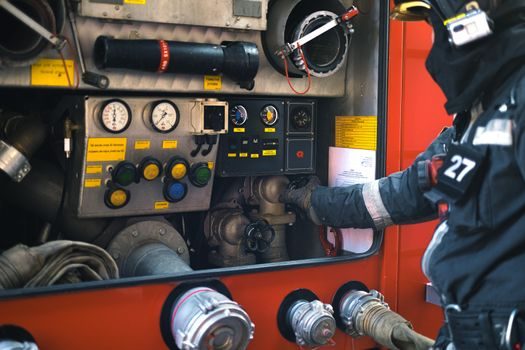
Ball valves are correct for on-off isolation, not for throttling. Drop the seat and a partially closed ball will erode the soft seat in hours and the metal seat in days; use a ball valve for full-open/full-closed service and use a globe or control valve for modulating duty. They are also the wrong choice for slurries with high solids content (use a plug or pinch valve), for fibrous media that will foul the cavity (use a gate or knife-gate valve) and for cryogenic LNG duty (use a specific cryogenic ball with extended bonnet and low-temperature greases). [S2]
Within isolation duty, the right variant is set by the application: manual 1/4-turn is the cheapest, and electric ball valve builds (with quarter-turn actuator + position feedback) are the right answer when the spec calls for remote operation, ESD shutdown or integration with a DCS/PLC discrete I/O or HART/FF bus. Battery or solenoid-actuated versions exist for small instrumentation lines; pneumatic is dominant in oil & gas and tank-farm service. The current research does not publish a specific actuator market-share or installed-base figure, and the buyer spec should be driven by the I/O list and the hazardous-area certificate rather than by an industry-wide percentage that has not been sourced [S1][S5].
Sourcing Channels and Verification Gates
The 2026 sourcing map is essentially two-tier. Tier 1 is the engineering-vendor catalogue: BONOMI GMBH in Europe for the 2026 series [S1]; High Mpa Valve Group, Shanghai Taitong Valve and Yuhuan Zhengqu Fluid in China for the engineering / commodity split [S3][S4][S6]. Tier 2 is the B2B index: Made-in-China.com's hot-product pages for live factory pricing and "in stock" tags [S5][S7], and India-focused go4worldbusiness for direct-inquiry contact data including the MOQ field [S2].
Four verification gates must be on every 2026 PO. First, request the actual pressure-temperature envelope on the manufacturer's letterhead, not the "PN16" line in a product title [S7]. Second, ask for the seat/seal material code and the body material certificate (3.1 material cert per EN 10204 for stainless and bronze bodies, especially on any 316 / DBB / sanitary SKU) [S5]. Third, ask for the standard list — API 6D, API 608, API 607 fire-safe, ASME B16.34, NACE MR0175, ATEX/IECEx — and pin each to the exact SKU in the PO, not the brochure [S1][S5]. Fourth, on the price line, apply the same pre-tax / ex-works / freight-on-board discipline BONOMI publishes: the 2026 B2B index prices exclude delivery, customs duties and installation/activation surcharges and are indicative, varying with raw-material and FX moves [S1]. On lead-time, "in stock" SKUs on the SS304 2-PCS F-M line are shipping inside a normal B2B cycle; engineered flanged and high-Mpa units sit on a multi-week build schedule and must be ordered against a vendor's published lead-time curve rather than the B2B index [S4][S6][S7].
Trackable 2026 signals to watch: (a) the 2026 BONOMI series and the SS304 2-PCS F-M "Best Seller" line at US$4.00-5.80 in stock — both still listed on 2026-06-25 / 2026-06-15 snapshots respectively [S1][S7]; (b) the sanitary sub-index continuing to bundle 316 DBB with bronze and PVC under one product-features line, signalling ongoing multi-material sanitary sourcing [S5]; (c) the High Mpa Valve / Shanghai Taitong / Yuhuan Zhengqu group continuing to publish ball-valve SKUs alongside globe, gate, check and plug on the same corporate URL, indicating the engineered-valve supply chain in China is still operating as a single trade-show and catalog cluster rather than as fragmented specialty vendors [S3][S4][S6].
For component-level specifications, see linear guide.