
Gate valve manufacturing is geographically split between Indian forging specialists such as Jayant Valves in Ahmedabad and Dchel Valves, and Chinese foundry-export clusters in Zhejiang (Wenzhou / Yongjia / Yuhuan), Tianjin and Qingdao, with Kemus (China), Sunawei, and Huibo among the active exporters [S1][S5][S6][S7][S8].
The standardised SKU families dominating 2026 export catalogues are: high-pressure forged steel gate valves for oil & gas and power; resilient-seated rising-stem valves for water and gas distribution; and large-diameter cast-iron wedge mechanical gate valves for low-pressure municipal lines [S1][S4][S5]. Common body materials advertised are WCB, A105, CF8 and CF3, with pressure classes from Class 150 through Class 2500 and media temperatures from -196 °C up to 540 °C depending on trim [S2][S3].
Body Material Map: Carbon Steel, Forged Steel, and Stainless Trims
Forged carbon steel (ASTM A105) is the default body for high-pressure API 600 / API 603 gate valves used in upstream oil & gas and power-plant steam, while cast carbon steel WCB handles the Class 150-600 service band at lower cost [S2][S3]. Stainless variants CF8 / CF3 (austenitic 304 / 316L equivalents) are specified where corrosion, low temperature, or hygienic service rules out carbon steel; the same Okorder SKU spans -196 °C to 540 °C by swapping trim and seat materials rather than the body [S2].
For lower-pressure water and HVAC duty, cast iron remains the workhorse: Kemus offers a DN2000 (≈ 80-inch) PN16 NRS wedge mechanical gate valve in cast iron for low-pressure municipal and plant service [S5]. Resilient-seated rising-stem variants, with an EPDM or NBR encapsulated wedge, are the typical buried-line choice because the resilient seat gives drop-tight shut-off on dirty or unfiltered water [S4].
Pressure Class and Temperature Envelope
Class 150 to Class 2500 (PN20 to PN420) is the common export envelope, with body wall thickness, bonnet bolting and stem diameter scaling with the class rating [S2]. Temperature is bounded by seat and packing rather than body: metal-seated WCB/A105 bodies survive up to ≈540 °C with stainless trim, while resilient-seated designs cap at ≈70-120 °C depending on the elastomer [S2][S4].
Pressure-seal bonnet gate valves are a distinct sub-family where the bonnet joint self-energises as internal pressure rises, which is why they are the standard pick for high-temperature, high-pressure power-station main steam and feedwater isolation above Class 600 [S1]. For a process engineer weighing a gate valve against a ball valve on a hot line, the pressure-seal gate wins on seat longevity in clean service, but the ball valve is faster to operate and bidirectional-tight at lower cost.
Supplier Clusters and Sourcing Signals
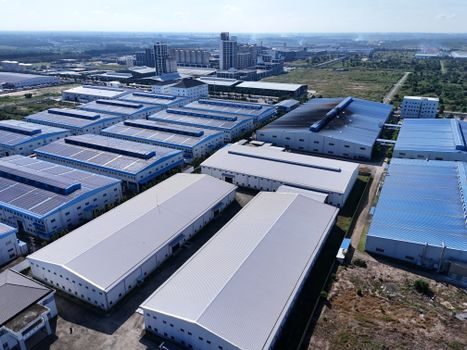
The Indian cluster is dominated by forged-steel specialists in Ahmedabad, Gujarat, exporting high-pressure and pressure-seal gate valves for refineries, petrochemicals, gas pipelines, marine, and water-treatment projects [S1]. Dchel Valves, a multi-line Indian manufacturer, lists gate, ball and butterfly valve production under one roof — a useful single-vendor signal for EPCs that want consolidated MTCs [S7].
The Chinese cluster splits into two tiers: Tianjin-port and Qingdao-port forged-steel exporters quoting API-standard high-pressure gate valves (sample run as low as 1 piece, production capability 300 pieces per month) [S3]; and Zhejiang province OEM factories in Yongjia, Yuhuan, and Anfeng industrial zones that ship mixed-portfolio lines including ball, butterfly valve, gate, brass angle and safety valves for distribution and OEM customers [S6][S8]. Okorder-listed Tianjin factories publish a Class 150-2500 SKU with monthly capacity up to 30 000 pieces, indicating scaled foundry output rather than bespoke forging [S2]. The operational signal for a buyer: Indian suppliers typically lead on forging traceability and pressure-seal engineering, Chinese suppliers lead on volume, lead time, and competitive resilient-seated SKUs.
Selection Criteria vs Product Type
Across the four dominant gate-valve types, the decision matrix lines up on four axes: pressure class, media cleanliness, temperature, and actuation duty [S1][S2][S4][S5].
1) High-pressure forged steel gate valve (A105 / F316): up to Class 2500, -196 °C to 540 °C, suited to oil & gas, petrochemical, and power; manual, geared, electric, or pneumatic actuation. Not suited to dirty or slurry service because particulate damages the seating surfaces. 2) Pressure-seal gate valve: typically Class 600-2500, high-temperature main-steam and feedwater; the self-energising bonnet requires clean, predictable internal pressure. 3) Resilient-seated rising-stem gate valve: Class 150-300 (PN10-16) water, raw water, sewage, and gas distribution; drop-tight on particulates but temperature-capped by the elastomer and not for hydrocarbon service. 4) Cast-iron wedge mechanical gate valve (e.g. DN2000 PN16): low-pressure bulk water, penstocks, and irrigation; large bore, manual or bevel-geared, but not for high-temperature or flammable-gas service.
For duty points that involve throttling, frequent cycling, or slurry, the knife gate valve and butterfly valve families typically beat the conventional gate on seat life, even though neither matches the gate's full-bore, low-pressure-drop characteristic. For pumping and compressor discharge where a single-direction check is required alongside manual isolation, the check valve is normally specified as a separate line item rather than as a gate-valve function.
Standards, Testing, and Documentation Signals
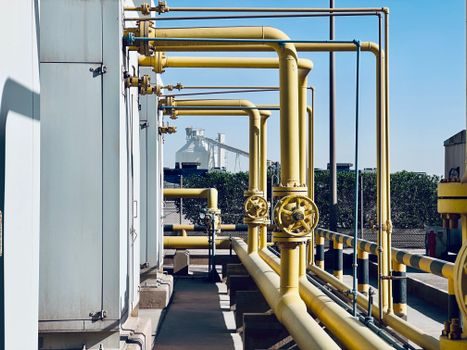
The API 600 / API 603 / API 6D family is the dominant design and testing basis for high-pressure and pipeline gate valves, with API 600 covering bolted-bonnet general service, API 603 covering corrosion-resistant cast gates, and API 6D covering pipeline and subsea isolation [S3]. Forged-steel high-pressure offerings on Okorder explicitly invoke the API standard as the design and inspection basis, which gives a buyer a ready-made MTC, hydrostatic test, and dimensional RT checklist [S3].
Resilient-seated and cast-iron lines are typically governed by AWWA C509 / C515 for waterworks and EN 1171 / EN 1074 for European utility service; the balancing valve family is not a direct substitute but lives in the same HVAC and district-energy specification packages. For cryogenic service at -196 °C, extended bonnet and austenitic stainless trim (CF8 / CF3) are the minimum spec — extended bonnet keeps the packing above the frost line, and austenitic steel retains impact toughness at LNG temperatures [S2].
Limitations, Failure Modes, and Specification Traps
Conventional gate valves are poor throttling devices: partial-lift operation erodes the seating surfaces and accelerates leak-by, so a buyer that needs modulating control should reach for a ball valve or control valve instead. Bottom-Entry and through-conduit designs need to be specified explicitly — the default API 600 gate has a rising stem and a two-piece bonnet that becomes a maintenance liability on dirty service. [S3]
Resilient-seated valves can blister or fail when exposed to hydrocarbons, solvents, or steam above the elastomer rating, and the encapsulated wedge cannot be re-machined in the field; operators must keep hydrocarbon service on metal-seated gate or ball valve lines. A buyer should also confirm the seat test direction (typically bi-directional on resilient-seated, uni-directional on metal-seated wedge) and the body test pressure, normally 1.5 × the cold working pressure hydrostatically and 1.1 × pneumatically with air, against the procurement documents [S2][S3].
Two trackable signals for the next sourcing window: Indian pressure-seal forging capacity in Ahmedabad-Gujarat continues to absorb refinery and power-boiler orders, with manufacturers such as Jayant Valves listing power, marine, and gas-pipeline applications as core verticals [S1]. Chinese foundry-export pricing for Class 150-600 resilient-seated and cast-iron gates remains aggressive out of Tianjin and Zhejiang, with published monthly capacities of 30 000 pieces on the largest listings and ≥300 pieces on smaller forged-steel lines [S2][S3]. For deeper spec work, cross-reference the engineer's map on gate valve sizing and selection and the food-grade gate valve selection map before locking the datasheet.