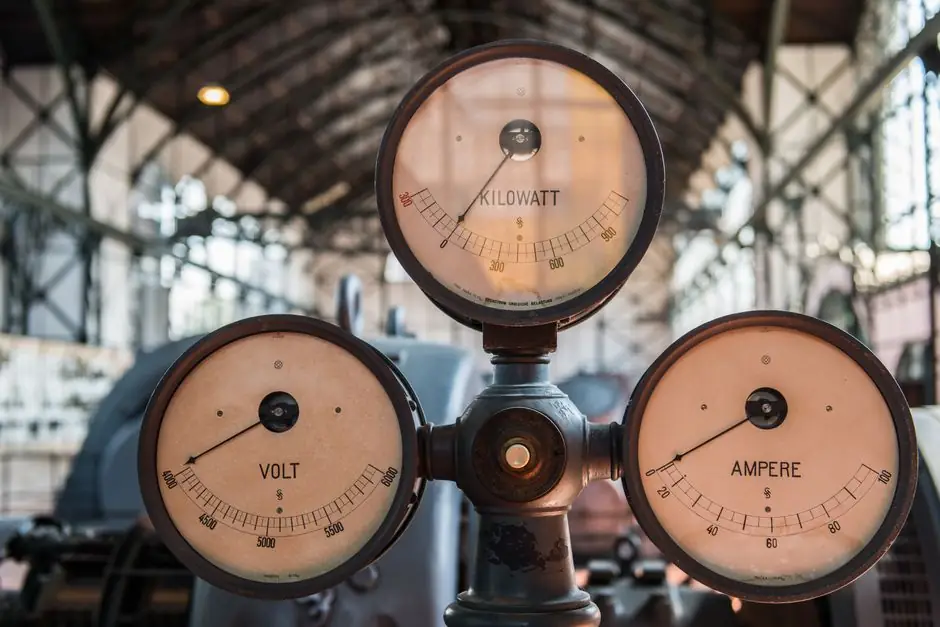
As of 2026-08, Made-in-China.com lists three-wire gauge pressure sensors starting at US$27.80 per piece [S4], while flange-diaphragm level/gauge transmitters from HG Instrument carry an MOQ of one piece at US$10.00 to US$1,000.00 [S6], and ABB's 266HSH high-overload gauge model is rated for maximum working pressure up to 105 MPa (15,225 psi) [S1].
The 2026 gauge pressure transmitter market still spans three distinct price tiers, from sub-US$50 commodity sensors through US$300 to US$900 industrial-grade 4-20 mA/HART units such as the Honeywell STG97L and STG700 Smartline family, into four-figure high-overload, hygienic, and Safety Integrity Level (SIL) certified instruments [S1][S2][S4][S5][S6].
What "gauge pressure transmitter" actually means in a 2026 spec line
A gauge pressure transmitter measures process pressure referenced to local atmospheric pressure, as opposed to an absolute pressure transmitter, which references a sealed vacuum, or a differential pressure transmitter, which measures the difference between two process taps [S1][S3].
The reference type directly changes the calibrated range: a 0 to 10 bar gauge unit reads 0 bar at vent, while the same physical sensor in absolute mode would read approximately 1.013 bar at vent and be ranged accordingly. Standard industrial output is 4-20 mA with HART overlay on a two-wire loop, although Foundation Fieldbus, PROFIBUS PA, and Ethernet-APL variants exist for digital-only architectures [S1][S3].
Inline gauge transmitters such as the BCST JCBP/JCBA series integrate the process connection directly into the body for pipe-mounted applications, eliminating the impulse tubing typically used with coplanar or traditional flanged styles [S3]. Buyers specifying a pressure transmitter line should pin reference type, calibrated span, and output protocol on the same line item, since these three choices alone swing the unit price by a factor of three to ten.
Price bands observed across 2026 sourcing channels
The Made-in-China.com gauge pressure sensor price index, refreshed through 2026-07, clusters listings in two groups: low-cost three-wire and I2C sensors between US$27.80 and roughly US$80 per piece, and stainless-steel 4-20 mA industrial transmitters from approximately US$150 up to about US$600 for standard ranges [S4].
Specialty units sit higher: the Honeywell STG97L Smartline gauge variant is positioned as a "low cost pressure sensor" extension of the Smartline family and is sourced primarily through trading-company listings with pricing quoted on inquiry rather than as a fixed tag [S5]. Flanged diaphragm-seal gauge/level units, which bundle a remote seal and capillary for slurry, viscous, or hygienic service, span US$10.00 to US$1,000.00 per piece on HG Instrument's listing, with 10,000 pieces per year production capacity cited [S6].
ABB's 266HSH high-overload gauge transmitter, the top of the heavy-industrial class, is published on the ABB product page without a list price and is normally procured via regional channel partners [S1]. The pattern is consistent: advertised price drops as range and certification complexity drop, and disappears entirely above the SIL/IECEx tier.
Cost drivers that move the unit price
Wetted material is the largest single cost lever after range. 316L stainless steel is the default for chemical and hygienic service; Hastelloy C276, Monel 400, or tantalum wetted parts typically add 1.5x to 4x to the base price, driven by forging and weld-procedure qualification rather than raw alloy content [S1].
Process connection and overpressure rating are the second lever. The ABB 266HSH is explicitly engineered for high-overload duty at 105 MPa (15,225 psi), which requires heavier diaphragm geometry, thicker process flanges, and validated burst-pressure testing well above the working pressure [S1]. Inline pipe-mounted bodies such as the JCBP/JCBA series avoid flanges entirely, which trims both unit cost and installed labor for clean, low-viscosity services [S3].
Hazardous-area certification is the third lever. ATEX Ex d (flameproof), Ex ia (intrinsic safety), IECEx, and North American Class I Division 1/2 approvals each add documentation, third-party audit, and label-testing cost that is amortized into a unit price step of roughly 15 to 40 percent per approval. Buyers who only need a single regional certification should not pay for a global approval stack.
Comparison of the main gauge transmitter types on decision criteria
Four architecture types dominate 2026 sourcing. Commodity three-wire/I2C sensors are the cheapest (US$27.80 and up), cover 0-1.6 bar to 0-600 bar typical ranges, run on 5 V DC, and are limited to non-hazardous, dry, clean gas or air service [S4]. Standard 4-20 mA/HART industrial transmitters such as the Honeywell STG97L and STG700 Smartline typically span 0-10 mbar to 0-700 bar with 0.075 percent reference accuracy, and carry global hazardous-area approvals at a unit price commonly quoted in the US$300 to US$900 band on inquiry [S2][S5].
Inline digital gauge units such as the BCST JCBP/JCBA are pipe-body mounted, output 4-20 mA, and target OEM skid and HVAC hydraulic loops at price points below traditional flanged units [S3]. High-overload and remote-seal gauge/level units (ABB 266HSH, HG Instrument flange-diaphragm) absorb overpressure transients, slurries, and hygienic CIP/SIP service, and live in the US$800 to US$4,000 plus band, with diaphragm fill fluid and capillary length as separate line items [S1][S6].
The decision rule is simple: match the sensor class to the worst-case overpressure, wetted-media compatibility, and certification requirement before negotiating volume tier, since a too-cheap sensor in HID service fails mechanically long before its MTBF is reached.
Total installed cost beyond the tag price
Unit price is typically 40 to 60 percent of the installed cost of a gauge pressure point. The remainder sits in manifolds, impulse tubing or capillaries, brackets, conduit, and the engineering hours to land the loop. Diaphragm-seal systems in particular can carry an extra US$200 to US$1,500 in capillary and fill-fluid cost per point when the seal must be remote-mounted away from the process tap [S6].
Maintenance cost over a 10-year horizon is dominated by calibration drift and seal diaphragm replacement. Specifying a transmitter with 0.075 percent reference accuracy and a 10-year stability spec, common in the Honeywell Smartline and ABB 266 families, halves calibration labor versus a 0.25 percent unit, even if the higher-accuracy device costs US$200 more up front [S1][S2][S5].
Spare-parts consolidation also matters: standardizing on one manufacturer and one protocol across a plant typically reduces carrying spares from 8 to 12 percent of installed instrument count to about 4 percent, which on a 500-transmitter plant is a meaningful working-capital recovery. Buyers comparing linear guide and similar motion-control purchases follow the same logic; the catalog price is the smallest line on the total-cost-of-ownership ledger.
Where 2026 gauge pressure transmitter pricing goes from here
Two signals are worth tracking. First, the standardization of Ethernet-APL (Advanced Physical Layer, 10 Mbit/s, single-pair) for hazardous-area field devices is pushing protocol-card options onto entry-level transmitters, which historically were 4-20 mA/HART only; expect the price gap between HART and APL variants to compress as second-source APL silicon enters the market. Second, Made-in-China.com gauge pressure sensor listings continue to refresh monthly through 2026, with the lowest commodity tags now sitting below US$30 per piece for I2C-output units [S4], and these two vectors together will keep pulling the floor of the gauge transmitter catalog down while the high-overload and SIL-2/3 ceiling remains anchored to engineering content rather than commodity silicon.
Background reading: Titanium Alloy Selection for Rail: Grade Map, Spec Gates, and Cost Levers.