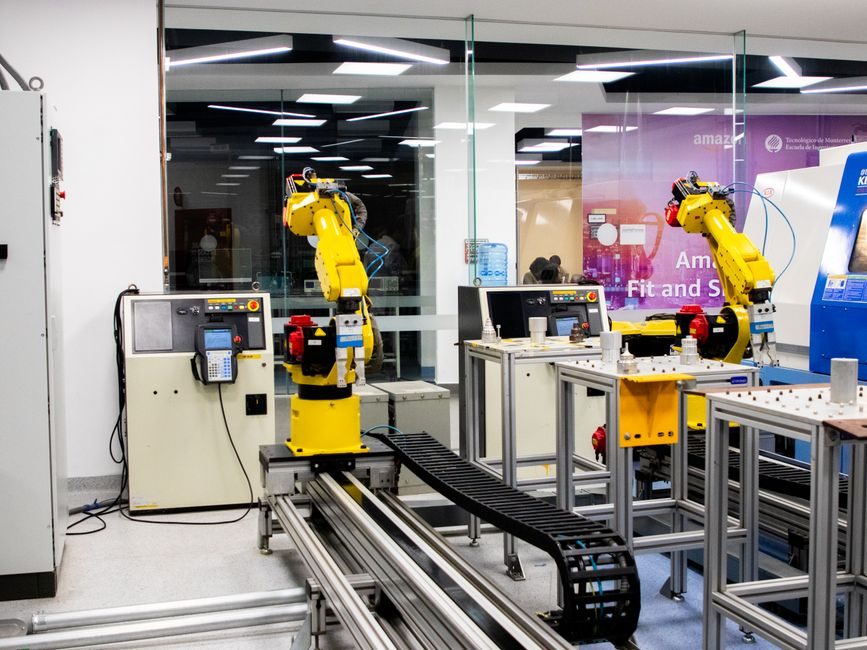
A robotic transfer cell demands a gear coupling certification package that covers AGMA 9002 selection logic, ISO 14691 classification, ISO 10441 Annex B for petroleum-grade special applications, and IPSS:1-01-005-18 lubricant and marking clauses, all on top of an ISO 9001:2015 quality system [S1][S2][S4].
Gear couplings in this service are spec'd against torque bands reaching 1310 kNm with bores up to 525 mm in the SKF catalogue, and rated for 1/4° per mesh as a baseline Class I design point, with custom builds running 7-1/2° per mesh [S3][S6].
Standard Stack: AGMA 9002, ISO 14691, ISO 10441
AGMA 9002 governs flexible coupling selection, with terminology, service factor tables, and application examples that map directly to a transfer cell's start-stop, reversing actuator drives [S1]. For an electric motor driving a uniform load, the baseline service factor is 1.5; moderate shock raises it to 2.0, heavy shock to 2.5, and internal combustion or variable torque loads to 2.5+ per the same table [S1].
ISO 14691 defines four performance classes: Type A torque-limiting, Type B misalignment-compensating, Type C torsionally flexible, and Type D combined; gear couplings sit primarily under Type B [S1]. The ISO 14691 testing envelope covers torque capacity, misalignment capability, torsional stiffness, and fatigue resistance, and that is the audit line auditors will look for on the test report [S1].
ISO 10441:2007 Annex B (normative) is the standard clause that applies to gear couplings and explicitly replaces the 8.1 requirements of the parent document; Annex B.1.2 is candid that gear couplings are not normally recommended for new applications, with exceptions for large axial displacements where metallic disc or diaphragm couplings become impractical [S2]. A robotic transfer cell, where bores are modest and misalignment budgets tight, typically falls into that "not normally recommended" zone, which makes the certification trail even more important [S2].
Material, Heat Treatment, and Tooth Geometry Evidence
Hub material calls land on EN 10083-3 42CrMo4, EN 10084 16MnCr5 case-hardened stock, and EN 10250-4 alloy-steel forgings for heavy-duty ratings, with ISO 6336 referenced for gear material heat treatment and ASTM E140 for hardness conversion [S1]. Amerigear's published Class I build uses AISI 4140 heat-treated steel with nitrided gear teeth and twelve-point Grade 8 fasteners, with custom options including 1045, 4340 Nitrided, Nitralloy, 8620 or 9310 carburized materials, and Inconel or aircraft hardware for elevated-temperature service [S3].
Tooth geometry evidence is the second audit pillar: fully crowned tips matched to the root radius of the internal sleeve teeth, crown-chamfered flanks to clear sleeve fillets, and precision-hobbed or shaped gear teeth, with magnetic particle inspection on all parts [S3]. For a robotic transfer cell, the specifier should require the supplier to document tip-crown radius, involute profile, and the per-mesh misalignment rating (1/4° standard, up to 7-1/2° in custom builds) on the certificate [S3].
Bore and keyway evidence ties to ISO 286 (tolerances and fits), DIN 6885 (parallel keys), IS 2048 (keys and keyways), and BS 4235 (metric keys), while flange patterns should reference ISO 5211 and any project-specific bolt-circle datum [S1]. For a transfer cell, the bore typically lands in the small-to-medium range, well under the 525 mm upper limit of the SKF catalogue line, but the certifier should still confirm bore tolerance class and keyway dimension against the drawing [S1][S6].
Lubricant, Marking, and ISO 9001:2015 Documentation

IPSS:1-01-005-18 requires the coupling to be lubricated with grease of consistency No. 2 as per IS 508:1987, with a graphite content of 10 to 20 percent, and obliges the manufacturer to indicate the grade and quality of lubricant with each coupling [S4]. The same standard mandates peripheral marking on the casing with the manufacturer's name or trade mark, and that is the line item a transfer cell QA inspector will physically check on receipt [S4].
ISO 9001:2015 is the baseline quality system, and Lovejoy's published F-series installation guide explicitly cites ISO 9001:2008 certification and warns that couplings are built to the shaft details provided by the purchaser, with the manufacturer disclaiming responsibility for mis-specified input data [S8]. For a transfer cell, the purchasing specification should pin shaft tolerances, fit class, and lubricant grade on the PO so that the supplier's ISO 9001:2015 traceability chain holds [S8].
Non-destructive testing evidence should reference ISO 9934 for magnetic particle, ISO 3452 for dye penetrant, and ISO 16810 for ultrasonic inspection, with the test report cross-referenced to the coupling serial number [S1]. Inspection and dimensional evidence should reference ISO 2768 for general tolerances, ISO 10360 for CMM calibration, and ISO 17025 for the testing laboratory's competence, the same three standards that auditors look for in a transfer cell FAT package [S1].
Service Environment: ATEX, IECEx, and API 671 Cross-Checks
Where the transfer cell sits in a zoned area (paint booths, solvent stores, hydrogen charging), the coupling certifier must add ATEX 2014/34/EU and/or IECEx evidence to the file, and the audit will check that the equipment group and temperature class match the zone classification on the area drawing. API 671 is the relevant coupling standard for special-purpose petroleum and petrochemical service, and RINGFEDER's published guidance is explicit that disc and diaphragm couplings are mainly recommended, while gear couplings, quill shafts, and elastomeric couplings are permitted but not commonly used [S5].
API 671 also requires the coupling to be designed for a minimum number of start-stop cycles and for the specified peak torque, with operating speed, nominal torque, and peak torque as the three decisive selection criteria [S5]. For a robotic transfer cell, those three numbers plus the service factor from AGMA 9002 (1.5 uniform, 2.0 moderate shock, 2.5 heavy shock) form the calculation backbone of any certifier's review [S1][S5].
For background on how adjacent power-transmission components are specced in robotics-adjacent service, this gear coupling selection breakdown lays out the same AGMA/ISO logic in a more general context, and the helical gear reducer selection map covers the gear-train side of the same drivetrain. A complementary gear pump duty reference is useful where the transfer cell includes a hydraulic lubrication skid, since the same material and inspection standards apply.
Supplier Audit: Verifying the Certificate Is Real and In Scope
The first verification step is to confirm the ISO 9001:2015 certificate is current and the scope statement explicitly covers flexible coupling manufacture, not just "general engineering" [S8]. The second step is to match the test lab's ISO 17025 accreditation scope to the specific tests quoted (torque, fatigue, MPI), because a generic lab accreditation does not automatically cover all methods on the certifier's checklist [S1].
The third step is a cross-check against the purchase order: bore diameter, keyway dimensions, lubricant grade (IS 508 No. The lubricant shall be graphited grease of consistency No. 2 with 10 to 20 percent graphite content per IPSS:1-01-005-18, and the coupling shall be marked on the periphery of the casing with details including the manufacturer's name or trademark [S4]. The fourth step, where ATEX/IECEx applies, is to verify the EU type-examination certificate or IECEx certificate of conformity (CoC) covers the exact coupling model and size, not just the product family.
Common failure points at transfer cell incoming inspection are: missing graphite-content declaration on the lube cert, bore tolerance class not stated, MPI report not tied to the serial number, and the AGMA 9002 service factor not documented against the driven equipment's load classification [S1][S4][S7]. Specifiers who want a deeper dive on coupling reliability practices, including lubricant and alignment discipline, will find the Machinery Lubrication reliability guide useful as a cross-reference for FAT sign-off [S7].
Acceptance Criteria and Trackable Signals
Accept the coupling when the certificate package carries: an ISO 9001:2015 certificate with coupling manufacture in scope; an ISO 17025 test report covering torque, misalignment, and fatigue per ISO 14691; AGMA 9002 selection calc with documented service factor (1.5 to 2.5+ depending on load class); ISO 10441 Annex B compliance statement; IPSS:1-01-005-18 lubricant and marking confirmation; and ATEX/IECEx or API 671 evidence where the area classification demands it [S1][S2][S4][S5].
Trackable signals to monitor through 2026 include any ISO 10441 revision activity beyond the 2007 second edition, any tightening of ATEX 2014/34/EU equipment-group boundaries affecting gear coupling categories, and any update to IPSS:1-01-005-18 lubricant-grade tables, since each of these would force a re-audit of existing supplier certificates. For adjacent driveline spec work, the timing pulley RFQ spec for packaging retrofits is a useful parallel on how to structure a purchase-spec checklist when a transfer cell is being upgraded alongside a packaging line.