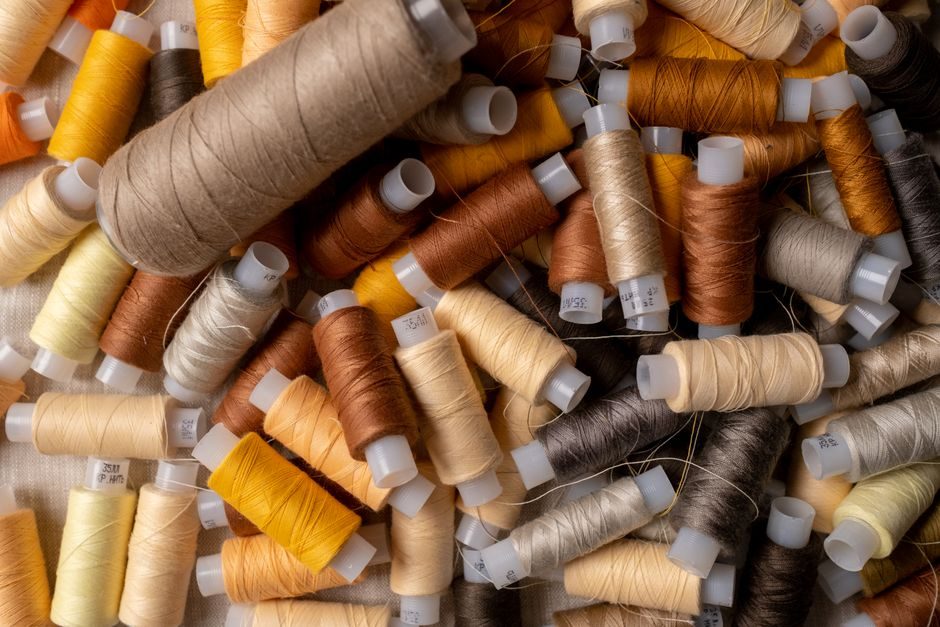
In July 2026, E-glass fiber roving trades in a FOB band of US$ 0.80–3.50/kg on Chinese wholesale listings, with 500 kg MOQ at the entry tier, while woven fiberglass cloth is quoted at US$ 1.60–4.20/m² [S1][S4].
Buyers navigating pultrusion, FRP pipe, electrical laminate and composite-panel supply chains need a clear ladder from fiber type (E / S / C / AR) and filament diameter (5–24 µm) through to roving tex, yarn construction and surface sizing, all governed by ASTM D578 for yarn designation and ISO 2078 for glass type [S1][S4]. For a baseline on the glass fiber family of materials, start with the chemistry and filament mechanics before chasing price.
Glass Type and Filament Diameter: Where the Spec Starts
E-glass remains the default for 80%+ of commercial reinforcement rovings, with tensile strength typically 1.7–2.0 GPa on individual filaments and a softening point near 846 °C; S-glass / S-2 glass lifts tensile strength to roughly 2.5–4.0 GPa and the softening point above 1,050 °C, used where stiffness-to-weight or impact resistance dominates cost [S1].
Filament diameter is the first numeric gate: standard E-glass roving is drawn at 9–13 µm, fine yarns at 5–7 µm for thin laminates, and coarse 17–24 µm rovings for pultrusion where wet-out speed and tensile load both matter [S1]. Buyers should reject any datasheet that lists only "micron" without a tolerance band, and should request filament diameter per ISO 2078 plus a tex or yield (yards/lb) per ASTM D578 for every roving spool.
Roving, Yarn and Cloth: Translating Form into Cost
Direct roving for pultrusion and filament winding is sold in 5–25 kg spool weights with a MOQ floor of 500 kg on China-side wholesale platforms; the same data point shows e-glass yarn at US$ 6.00–6.20 / kg for 500 kg MOQ from Zhejiang-based audited suppliers as of 09 June 2026 [S1].
Woven fiberglass cloth is a different cost object: a 152 g/m² plain-weave cloth (style 1G152S4 on a globaltextiles listing dated 08 June 2026) carries its own FOB per-square-metre pricing rather than per-kg, because weight-per-area, weave and surface finish (silanized vs. starch-sized) drive the invoice more than raw fiber mass [S4]. Sizing chemistry — silane for polyester / vinylester / epoxy, starch for weaving-only fabrics — is the hidden lever; mismatched sizing is the most common cause of dry spots in hand lay-up and wet-out failure in vacuum infusion.
FOB Cost Stack: What US$ 1–4 / kg Actually Buys You

Published China-side FOB bands in June 2026 cluster between US$ 0.80 and US$ 3.50/kg for direct roving and US$ 1.60–US$ 4.20/m² for cloth, with the gap between the floor and ceiling driven almost entirely by tex, glass type, and the silane system specified by the converter [S1][S4].
On top of the FOB number, landed cost for a 40' HC container adds ~US$ 0.20–0.40/kg for sea freight, US$ 0.05–0.12/kg for inland haulage, plus import duty and inspection; insulation-grade textile yarn from Chinese suppliers quoted at US$ 6.00–6.20/kg is a 2–6× premium over bulk roving, and the premium is justified only when the application requires specific tex, twist, or thermal-end-use certification (e.g. electrical-grade cloth per NEMA LI-1). For comparison discipline, see the Optical Glass 2026 Price & Cost Guide — the buying logic on FOB vs. landed vs. spec-tiered pricing is identical, only the unit changes from m² to kg.
Selection Criteria: Matching Form to Process
Five decision criteria separate a clean RFQ from a 4-week back-and-forth: (1) glass type per ISO 2078 (E / S / C / AR / D), (2) filament diameter tolerance, (3) roving tex or yarn yield per ASTM D578, (4) sizing chemistry matched to the resin system, and (5) the standards-relevant test method — typically ASTM D2343 for tensile, ASTM D2584 for resin content, and ASTM C162 for terminology [S1][S4].
Process mapping is the shortcut buyers should demand from suppliers: SMC and BMC need chopped rovings at 3–25 mm length and 2,400–4,800 tex; pultrusion wants direct roving 1,200–4,800 tex with high integrity and a silane sized for vinylester or epoxy; filament winding for pipe and tank needs 2,400–9,600 tex direct roving with low fuzz; woven reinforcement for hand lay-up or infusion is a cloth-spec conversation in g/m² and weave pattern, not a fiber-spec conversation [S1][S4].
Quality Signals, Failure Modes and Sourcing Watch-List
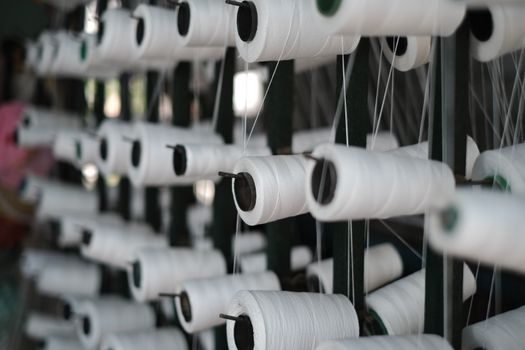
Three failure modes hit buyers more often than any spec gap: hydrolytic degradation of unprotected E-glass in alkaline environments, sizing-resin mismatch that shows up as white clouds (dry spots) in clear laminates, and fuzz / broken filaments on roving spools caused by poor binder cure [S1].
Mitigation is procedural: (a) specify AR-glass or alkali-resistant veil when the laminate contacts portland-cement or pH>9 service, (b) request the sizing trade name and TDS from the supplier and cross-check it against the resin TDS, and (c) inspect spool integrity — clean cut edges, no telescoping, no soft spots — on receipt; an ASTM D578 lot certificate is the minimum paperwork, while EN 14020-1 and ISO 9001 audit status are the next gate. On the supply side, Norway's Glassfiber Produkter published its 2026 application catalog covering oil & gas, rail, data center, fish farming, water & wastewater, and power-transmission applications, which is a useful indicator of end-market breadth for pultruded FRP profiles, gratings and cable-management systems [S2]. A separate Jinwu Glass Fiber insect-screen offering in 18×18 and 16×16 mesh, standard widths 24"–108", illustrates how the same fiber base is sold into light-end B2C channels at very different MOQ economics from roving and cloth [S3].
Standards, Sourcing Channels and What to Verify on RFQ
Governing standards to put on every glass-fiber RFQ in 2026: ASTM D578 (yarn designation), ASTM D2343 (tensile), ASTM D2584 (resin content / burn-off), ASTM C162 (terminology), ISO 2078 (glass-type designation), ISO 3598 (textile-glass roving) and, for end-use, NEMA LI-1 (electrical laminates) plus EN 14020-1 (roving) — any of these missing from the supplier's datasheet is a red flag [S1][S4].
On channels, the China wholesale marketplace in June 2026 shows Gold-Member audited suppliers (e.g. Zhejiang Top Sealing and Insulation Co., Ltd.) at US$ 6.00–6.20/kg / 500 kg MOQ for textile e-glass yarn [S1], while raise3D-style industrial-3D-printing filament — glass-fiber-reinforced PETG or PA — is a separate, specialty channel with its own diameter (1.75 / 2.85 mm) and packaging MOQ structure [S5]. For consistent FOB discipline across categories, the Carton Box 2026 Buying Guide and the Slewing Bearing 2026 Buying Guide walk through the same MOQ / spec-tier pattern that applies to glass-fiber RFQs. Lock the spec, the standards, and the sizing-resin pairing before you negotiate price — that sequence is what separates a 2026 glass-fiber purchase that arrives on spec from one that arrives on time but fails the lay-up.
Track the next signal in the back half of 2026: any post-June 2026 update to ISO 2078 glass-type classification or to ASTM D578 yield tables will reset the tex/yards-per-pound conversions on every supplier datasheet, and AR-glass price convergence with E-glass is the second watch-item for buyers serving the construction and water-infrastructure segment.
For component-level specifications, see linear guide, and crossed roller guide.