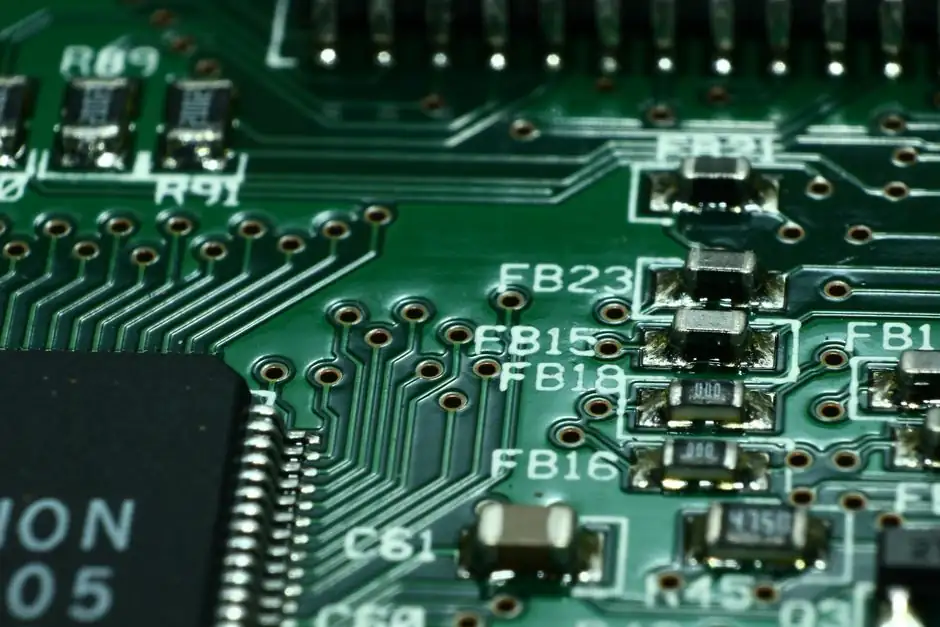
Electronics applications split nickel alloy use into three families, each tied to a measurable property window: commercially pure Nickel 200/201 (UNS N02200/N02201) for plating, lead frames, and battery contacts; controlled-expansion Fe-Ni 42 and Fe-Ni 48 for hermetic glass-to-metal and ceramic-to-metal seals; and Ni-Cr 80/20 type resistance alloys for heaters, RTDs, and precision resistors [S8][S1].
Sekonic Metals Group's published catalog lists the canonical grade map a buyer sees in 2026 sourcing: Inconel 600/625/718, Monel 400/K500, Hastelloy C-276/C-22, and the Incoloy 800/825/925 series sit on the high-temperature, corrosion end; Kovar 4J29, Invar 4J36, Permalloy 1J79, and Alloy 46 sit on the controlled-expansion and soft-magnetic end [S1]. For electronics work, that second cluster is where most spec work actually happens.
Resistivity, TCE, and Curie Point: The Three Numbers That Decide
Nickel 200 is commercially pure wrought nickel (about 99.6% Ni) with high electrical and thermal conductivity, magnetic and magnetostrictive behaviour, low vapor pressure, and low gas content, properties that make it a baseline for electronic components where purity and conductivity dominate over strength [S8]. The American Special Metals data sheet maps it to UNS N02200 and Werkstoff numbers 2.4060/2.4066, the cross-reference a sourcing engineer needs to confirm before signing a PO.
For glass-to-metal seals, Kovar 4J29 (Fe-29Ni-17Co) and Invar 4J36 (Fe-36Ni) anchor the thermal expansion match to borosilicate glass and alumina ceramics, respectively. Permalloy 1J79 (around 79% Ni, 4% Mo, balance Fe) and Alloy 46 (46% Ni, balance Fe) extend that family into the soft-magnetic regime used in transformer laminations, magnetic shielding, and sensor cores, with high initial permeability and low coercivity [S1]. Picking within this group is a question of matching the alloy's Curie temperature and saturation flux density to the operating window, not of brand name.
Fe-Ni Microcomponents: When You Need a Real Mechanical Part
Iron-nickel alloys are also a route into MEMS-scale electronics: microchannels, microwells, micromixers, and microgears have been demonstrated from an ethanol-based 85 wt% Fe-Ni composite slurry via centrifuge-assisted micromolding, with peak density of 97.3% theoretical at 1070 deg C sintering in hydrogen, microhardness 167.8 HV, Young's modulus 175.4 GPa, and linear shrinkage up to 12.5% [S3]. That is the data window a process engineer needs to budget tolerance stack-up before committing a tooling design.
The same Fe-Ni system also turns up in nanomaterials: Cr-Ni alloys have been used as catalyst precursors for carbon nanoparticle synthesis by electric arc methods, a relevant reference point if your electronics process uses carbon-nickel composites for EMI absorber, contact, or specialty resistor pastes [S5]. Read the candidate articles on Defense titanium alloy selection and Titanium Alloy Selection for Rail for the same "match the grade map to the spec chain" discipline, it transfers directly from titanium alloy to Fe-Ni controlled-expansion work.
3D-Printed Ni-Alloy Housings: When Geometry Beats Machining
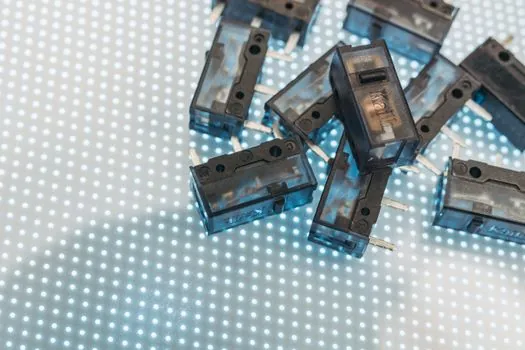
Additive manufacturing has crossed into electronics packaging. EOS's published nickel-alloy powder portfolio for industrial 3D printing (Inconel 718, Inconel 625, MaragingSteel MS1, and EOS NickelAlloy HX / HAYNES 282 equivalents) covers the same grade families a CNC shop would stock, but with the design freedom to integrate conformal cooling channels, RF-shielded internal cavities, and weight-optimized heat sinks that a milled part cannot match [S2]. For a process engineer, the trade is straightforward: LPBF (laser powder bed fusion) Ni grades hit typical density above 99.5% after HIP, with build envelopes commonly in the 250 x 250 x 325 mm range, and lead time measured in days rather than the weeks a forged-and-machined block requires.
The caution is chemistry drift: AM Ni-alloy powders must be qualified to ASTM F3055 for powder-bed fusion, and post-build HIP cycles (typically 1163 deg C, 100 MPa, 3-4 h for Inconel 718) are not optional for fatigue-loaded housings. If your electronics enclosure is purely a static RF shield, as-built AM is usually acceptable; if it sees thermal cycling or vibration, HIP plus heat treatment (AMS 5663 for Inconel 718) is the safer gate.
Material Family Comparison: Which Ni Alloy, Which Job
Three criteria separate the main electronics-grade Ni families: resistivity range, thermal expansion match window, and Curie temperature. Commercially pure Ni 200/201 sits at the low-resistivity end (around 0.096-0.10 microhm·m at 20 deg C) and is non-magnetic above 358 deg C Curie point, making it the default for plating, battery cans, and magnetostrictive transducers [S8]. Fe-Ni 42/48 and Kovar 4J29 trade conductivity for a flat TCE curve matched to borosilicate or alumina seals in the 30-400 deg C window. Ni-Cr 80/20 type resistance alloys sit at the high-resistivity end (around 1.08-1.10 microhm·m) and run non-magnetic to cryogenic temperatures, which is why they are the choice for precision wirewound resistors and strain gauges.
A 2026 sourcing decision follows the same logic as the nickel alloy reference page: identify the dominant property the application needs (conductivity, expansion, resistivity, or magnetic softness), select the family, then pick the specific UNS number inside it. Sekonic's catalog makes the same point structurally: Kovar 4J29, Invar 4J36, Permalloy 1J79, and Alloy 46 are catalogued under "Precision Alloys," separate from the Inconel/Monel/Hastelloy corrosion-and-heat group, because the property window, not the Ni content, is what defines the application fit [S1].
Failure Modes and Selection Traps

Three traps catch first-time specifiers. First, Nickel 201 (UNS N02201) is the low-carbon variant of Nickel 200 and is mandatory for service above 315 deg C because graphite precipitation in Nickel 200 will embrittle the alloy in that window; data sheets spell this out but procurement sometimes treats the two as interchangeable [S8]. Second, Kovar 4J29 needs a controlled cooling rate through 450 deg C to avoid transforming retained austenite, and cold work above 30% will shift the TCE curve away from the matched-glass window; this is documented but easy to miss if the part is being specified by a non-glass-seal engineer. Third, Ni-Cr 80/20 resistance wire oxidizes above 1100 deg C in air, and the oxide layer (mainly Cr2O3) is what makes the alloy useful as a heating element, but the same oxide spalls under thermal cycling and shortens heater life in dirty atmospheres.
A wider catalog caveat: most "nickel alloy" searches pull up Inconel 625/718 and Hastelloy C-276, the chemical-processing and aerospace grades, when an electronics application only needs the controlled-expansion or soft-magnetic window. If your enclosure is a chemical-plant housing, those are the right picks and you should read the alloy steel reference for context on the broader family; if your application is a hermetic seal, transformer lamination, or battery contact, the precision-alloy cluster is the correct starting point [S1].
Sourcing, Form, and Standards
Supplier directories published in 2026 confirm the form mix a buyer should expect: Sekonic Metals Group lists bar, rod, pipe, tube, sheet, plate, strip, foil, fasteners, flanges, and high-temperature spring wire across the full Ni-based, Co-based, precision-alloy, and titanium catalog [S1]. Jiangsu Shengpo New Materials Technology (established 2009-02-25) lists titanium tube, foil at 0.025-0.8 mm thickness, and 0.15 mm foil for industry use, with MOQ 50 kg and pricing in the US$13.90-23.90/kg band for representative titanium items, useful as a reference for what thin-gauge Ni strip and foil should also price against [S7]. American Tube Technology (720-582-4748) carries stainless steel and nickel alloy tubing in 304, 316, 17-7, 321, 347, 316LVM, and small-diameter mill formats, the canonical contact list for capillary and instrument-grade tube [S4].
Standard references: UNS N02200 (Nickel 200) and N02201 (Nickel 201) are the cross-reference codes for commercially pure Ni [S8]; ASTM F3055 covers AM powder-bed fusion of Ni alloys; AMS 5663 covers Inconel 718 bar and forging stock. The MetalStudy Forge nickel reference page, updated 2026-05-13, groups current Ni-metal-hydride, plating, and alloy-trend material in one place, useful for the battery-contact application cluster [S6]. Track the next node: ASTM committee B02 (Nonferrous Metals) is the working group for wrought Ni and Ni-alloy rod, bar, and plate, and the next catalog release from major mills (Special Metals, Haynes, VDM Metals) is the most reliable leading indicator of a 2026 H2 price shift on Inconel 625/718 and Haynes 282.