
For construction buyers specifying nickel alloys in 2026, the short list is dominated by four UNS families: Inconel (N06xxx), Monel (N04xxx), Incoloy (N08xxx), and Hastelloy (N10xxx), all currently stocked as bar, plate, pipe, sheet, and wire by mainstream Chinese and US mills [S1][S2].
Construction-relevant service envelopes generally run from cryogenic (-196 °C) up to about 1200 °C for Inconel 600-series, with Ni-Cu Monel 400 capped near 550 °C in oxidising media and Ni-Cr-Mo Hastelloy C-276 specified for wet chloride and reducing-acid streams [S1][S2]. Commercially pure Nickel 200 (UNS N02200, 99.6% Ni) remains a separate procurement path for caustic and food-grade construction, not the same supply chain as the age-hardenable Inconels [S8].
The Four Construction Workhorse Families and Their UNS Anchors
Each nickel-alloy family in current mill catalogues is anchored to a UNS designation and a Werkstoff number, and those identifiers, not the trade name, are what should appear on the MTR (mill test report) and the purchase order [S1][S2]. Inconel is the Ni-Cr family, Monel is the Ni-Cu family, Incoloy is the Ni-Fe-Cr family, and Hastelloy is the Ni-Cr-Mo family; a fifth path, Nickel 200, is the commercially pure wrought product at 99.6% Ni with UNS N02200 and W.Nr. 2.4060 / 2.4066 [S8].
For the construction buyer, the practical translation is: Inconel 600/625/718 for high-temperature strength and oxidation, Monel 400/K500 for hydrofluoric acid and seawater, Incoloy 800/825 for petrochemical heater tubes and moderate chloride service, Hastelloy C-276/C-22 for the most aggressive reducing and chloride-bearing wet streams [S1][S2]. Sekonic's 2021 product list (still mirrored by 2026 distributors) explicitly carries Inconel 600, 601, 625, 690, 718, 725, X-750, 751, 722, 706, 230; Monel 400, K500, R-405, 404, 450, 502; Incoloy 800/800H/800HT, 825, 926, 020, 028, Alloy 31; and Hastelloy B/B2/B3, C-4, C-22, C-276, C-2000, G-30, G-35 [S1].
Service-Limit Comparison: Where Each Grade Earns Its Premium
The cheapest stainless that survives the duty is almost always the right answer for a construction MRO, so the role of the nickel alloy family is to fill the gap where 304/316/2205 fail. A reasonable 2026 comparison for buyers: [S1]
Monel 400 (UNS N04400) is the only common nickel alloy that handles hydrofluoric acid and anhydrous HF at moderate concentrations, and it is also specified for seawater and brackish water structural trim where 316L pitting becomes a maintenance issue [S1][S2]. Inconel 600 (N06600) is the classic 1093 °C oxidation-resistant grade for furnace hardware, heat-treatment baskets, and exhaust manifolds; Inconel 625 (N06625) adds Mo for wet corrosion and is weldable without post-weld heat treatment, which is why it dominates new-build chemical-plant fabrication [S1][S2].
Incoloy 800H/800HT (N08810/N08811) is the standard construction alloy for ethylene-pyrolysis furnace tubes and hydrogen reformer outlet pigtails because the controlled (Ti+Al) content gives a minimum creep-rupture strength at 760-980 °C that 304H cannot match; Incoloy 825 (N08825) extends that to wet sulfuric and phosphoric acid service with the addition of 2% Cu and 3% Mo [S1][S2]. For the upper corrosion bracket, stainless steel 254SMO and 2507 are often bid as a cheaper alternative, but neither substitutes for Hastelloy C-276 (N10276) in 10-15% HCl, wet chlorine, or strongly oxidising chloride slurries [S1].
Fabrication and Welding Constraints That Drive Cost
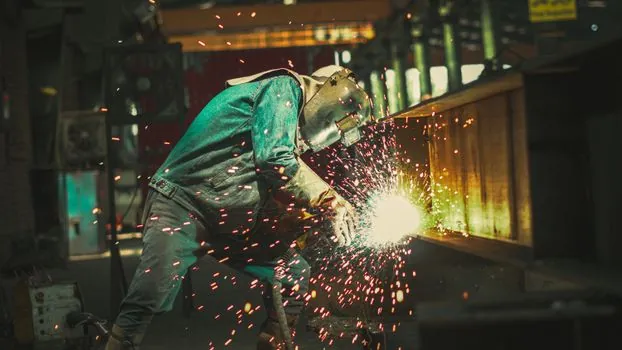
Construction nickel alloys are not drop-in replacements for carbon steel in the fabrication shop, and the welding procedure is where most construction projects get nickel-alloy selection wrong. The Nickel 200 grade is a notable example: it is supplied in a hot-worked, annealed, or stress-relieved condition, and the cold-worked tempers used for strip and wire must be considered against the service environment to avoid stress-corrosion cracking in caustic [S8].
For the Inconel family, matching filler metals (ERNiCr-3 for 600, ERNiCrMo-3 for 625, ERNiCrMo-4 for C-276) are widely stocked as cut-length wire, spooled wire, and coated electrodes by the same mills that supply the parent plate, and Sekonic's 2021 catalogue lists these as separate welding-products SKUs rather than as a sub-line under the parent alloy [S1]. Buyers who skip the matching-filler step and weld Inconel 625 with a 309L stainless filler usually pass a hydrostatic test but fail a 1000-hour intergranular-corrosion screen, which is why the Inconel 625 product line is usually specified as plate + ERNiCrMo-3 filler + matching PWHT in a single procurement package [S1][S2].
Construction Applications: Where Nickel Alloy Actually Wins the Bid
Five construction application clusters reliably justify nickel-alloy premiums in 2026: (1) HF alkylation units in refineries, where Monel 400 plate and weld-overlay are still the default; (2) sulfuric acid plant dampers, ducting, and outlet towers, where Incoloy 825 or Hastelloy C-276 is bid against fibreglass and rubber-lined carbon steel; (3) seawater cooling and firewater systems in coastal plants, where Monel 400 and Inconel 625 are alternatives to super-duplex 2507; (4) waste-heat-recovery and ethylene-cracker hot sections, where Incoloy 800H/HT and Inconel 601 are the standard tube and sheet materials; (5) flue-gas desulfurisation absorbers and outlet ducts, where Hastelloy C-22 plate competes with C-276 in the most chloride-loaded absorbers [S1][S2][S7].
Outside these clusters, the bid should normally go to 2205, 2507, 254SMO, or 904L, which is why the alloy steel reference path matters as much as the nickel-alloy path for a spec writer: defining the floor first (duplex or superaustenitic) and reaching for the nickel alloy only when the corrosion or temperature calculation rules it out is faster and cheaper than the reverse [S1][S2].
Supply, Standards, and What the MTR Must Show
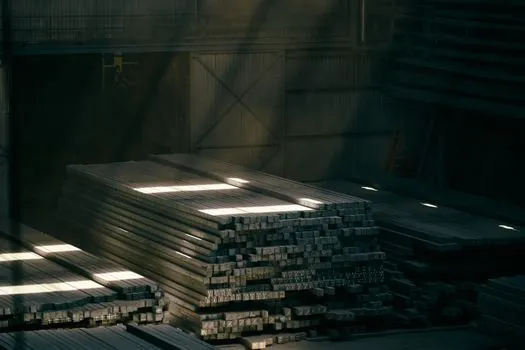
Mainstream Chinese mill programmes as of 2026 carry Inconel 600/601/625/690/718/725/751, Monel 400/K500, Incoloy 800/800H/800HT/825/926, and Hastelloy B/B2/B3/C-22/C-276/C-2000/G-30 in plate, sheet, strip, bar, pipe, wire, flange, and fastener form, with ASTM/ASME/EN/UNS dual certification on the most common thicknesses [S1][S2]. The product forms list at Huaxiao (2026-08) confirms the same Inconel/Hastelloy/Monel/Incoloy family split plus dedicated high-temperature alloy strip and precision strip lines, which is the same segmentation a European stockist would use [S2].
For procurement, the minimum MTR data that should be in hand before any nickel-alloy plate or bar is released to a construction site is: UNS number, Werkstoff number, ASTM/ASME specification (B168 for Inconel plate, B164 for Monel bar, B424 for Incoloy 825 plate, B575 for Hastelloy plate, B160 for Nickel 200 bar), heat number, solution-anneal condition, grain size if 800H/HT, and product-analysis values for Ni, Cr, Mo, Fe, Cu, Ti, Al, C [S1][S2][S8]. The 2024-04 Springer study on Zn-Ni electroplating and the 2015-06 study on Fe-Ni micromolding both confirm that nickel-bearing coatings and micro-components track the same Ni-Cr-Fe-Mo-Cu composition logic as the bulk alloys, which is why the Inconel chemistry reference applies across scales [S5][S6].
Selection Workflow and Failure Modes to Avoid
A defensible 2026 selection workflow is: define the corroding medium (acid type, chloride ppm, oxidising or reducing, free halogen), set the maximum service temperature including upset cases, set the minimum required pitting-resistance equivalent (PREN) or critical pitting temperature (CPT), then compare on that envelope against 316L, 904L, 2205, 254SMO, and the candidate nickel alloy [S1][S2]. The most common construction-side failure mode is not picking the wrong alloy but picking the right alloy in the wrong temper: cold-worked Nickel 200 cracks in caustic above ~315 °C, and cold-drawn Monel 400 K500 can suffer hydrogen embrittlement if the cathodic-protection design is wrong, both of which are avoided by reading the MTR's condition-of-supply field before cutting [S8].
For buyers comparing Monel 400 vs Inconel 625 vs Incoloy 825 vs Hastelloy C-276 on the same wet chloride service, the four-way comparison is: HF resistance (Monel 400 best), seawater/brackish (Monel 400 and Inconel 625 both strong), sulfuric/phosphoric (Incoloy 825 and Hastelloy C-276), wet HCl and oxidising chloride (Hastelloy C-276), and price-per-kg (Monel 400 lowest, Hastelloy C-276 highest, often 3-5x the Monel 400 base) [S1][S2][S7]. A useful cross-reference for buyers who also touch stainless is the titanium alloy page, since grade-2 titanium and grade-12 titanium occasionally win a bid over nickel alloy in chloride service at a lower unit cost, even though they cap out around 315 °C.
Trackable signals for the next procurement cycle: (1) confirm with the mill whether the plate is dual-certified to ASTM B168 and ASME SB168 before placing the PO, since the two diverge on traceability and test-frequency language; (2) for any HF or hot caustic service, hold the MTR to solution-annealed condition with grain-size evidence, not just "as supplied"; (3) the 2024-04 Springer work on Zn-Ni alloy coatings (S6) and the 2026-07 Chemical and Petroleum Engineering review (S7) are useful evidence trails if the engineering record later needs to justify the alloy pick to a third-party reviewer.
Background reading: Welding safety glasses shade selection and ADF spec map for 2026 fabs.