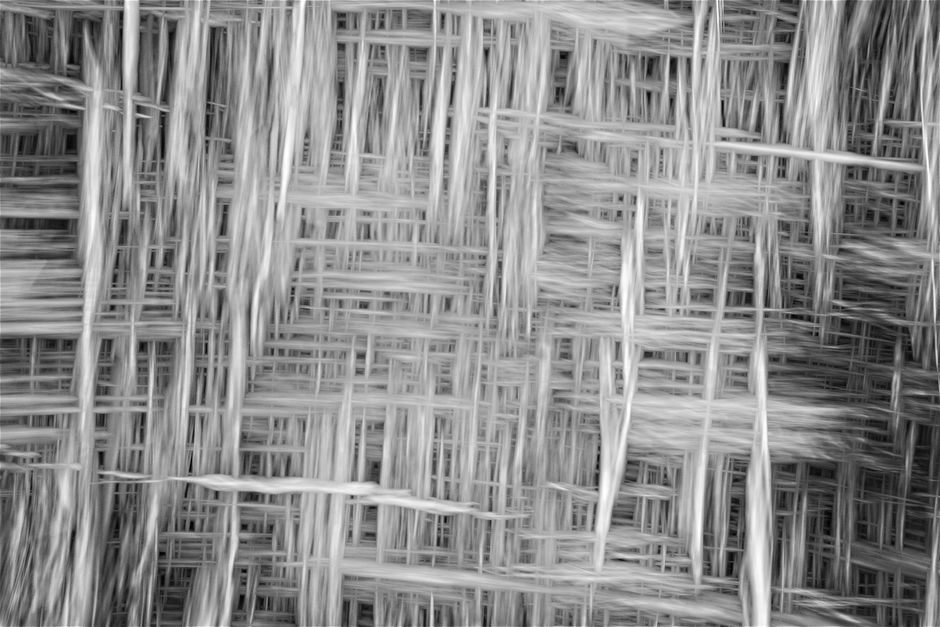
Glass fiber is a man-made inorganic filament drawn from molten glass, with individual filament diameters "each of which is around several to a dozen micrometers" per Nippon Electric Glass [S2]. The same filament is sold as reinforcement, filter media, electrical insulation, and optical waveguide stock, and the family is best understood through composition, form, and end-use classification.
On a buying specification the meaningful decision points are tensile modulus, temperature ceiling, chemical durability, dielectric constant, and price per kilogram. Industrial buyers routinely confuse marketing grades ("E-glass", "S-glass") with the underlying ASTM filament-property envelope, and that confusion is the single most common source of rejected composite layups and filter-media failures.
Composition-Based Classification: A-, C-, D-, E-, S-, and AR-Glass
Glass fiber families are defined by oxide recipe, not by filament diameter, and the recipe drives modulus, temperature, and chemical resistance. E-glass is the general-purpose reinforcement grade, sized for electrical insulation and structural composites; it accounts for the majority of reinforcement-grade shipments worldwide. S-glass is a higher-tensile, higher-temperature formulation used in aerospace and defense laminates where the operating envelope exceeds E-glass capability [S2].
C-glass (chemical) is formulated for acid-corrosion resistance and shows up in chemical filtration media. A-glass is the high-alkali soda-lime recipe used where electrical and mechanical demands are modest. D-glass targets low dielectric constant for high-frequency PCB substrates. AR-glass (alkali-resistant, typically with ZrO₂) is engineered to survive the alkaline pore solution of Portland cement, which dissolves unprotected E-glass filaments; see the concrete-fiber encyclopedia entry for the substrate-side failure mode this combats. Beyond these named grades, specialty variants such as R-glass, T-glass, and quartz-purity fibers extend temperature and loss-tangent envelopes for radar and aerospace applications.
Form-Based Classification: Filament, Staple, Chopped, Milled, and Yarn
Filament form is the primary specification axis after composition, and form determines handling, resin wet-out, and part geometry. Continuous filament is wound as roving, woven into cloth, or chopped in-line. Staple fibers are short, twisted, and processed on textile-style lines for needled mats and veils [S2].
Chopped strands cut to 3–25 mm feed compression-molding compounds, sheet molding compound (SMC), and bulk molding compound (BMC). Milled fibers, ground to 50–300 µm, function as filler and crack-arrestors in resins and thermoplastics where reinforcement is secondary to dimensional stability. Yarn counts are typically expressed in the TEX system (grams per 1000 m), and a 2400 TEX roving is a common structural reference. For woven reinforcements, the architecturally adjacent topic of glass-curtain-wall relies on E-glass scrims in the same family of filament products.
Functional Use Classification: Reinforcement vs Filtration vs Electrical vs Optical

End-use classification partitions the same filament into four overlapping but specification-different worlds. Reinforcement grades feed FRP, wind-turbine blades, and pultruded structural profiles; here the key parameters are tensile strength, modulus, and sizing chemistry matched to the resin system. Filtration grades appear as glass-fiber filter media and membranes, used as "a preliminary filtering step to avoid clogging" in coarse particulate removal and pre-filtration assemblies, per GlobalSpec's industrial directory listing [S1].
Electrical grades prioritize dielectric strength, dissipation factor, and dimensional stability at temperature, serving PCB substrates, motor insulation, and transformer spacers. Optical grades include the ultra-low-loss fibers drawn for telecommunications and the polished optical-glass blanks used in lenses and prisms. The general glass-fiber encyclopedia page indexes the full taxonomy; engineers comparing reinforcement fibers against polymer or carbon alternatives will also want the carbon-fiber entry to weigh modulus and density trade-offs.
Filament Diameter, Tex, and Mechanical Property Envelopes
Filament diameter in commercial E-glass rovings ranges roughly from 5 µm to 24 µm, with 9–17 µm dominant in structural reinforcement. Tensile strength of virgin E-glass filament is in the order of 3.4 GPa, with tensile modulus around 72–76 GPa; S-glass filament pushes strength toward 4.6 GPa and modulus above 86 GPa per typical vendor data sheets, while density stays near 2.54–2.60 g/cm³ for E-glass and ~2.49 g/cm³ for S-glass [S2].
Two practical rules of thumb follow from these envelopes. First, smaller-diameter filaments are more flexible and improve filtration surface area but drop in individual-filament strength; larger-diameter filaments carry higher load per filament but reduce wet-out and form rougher fabrics. Second, sizing — the silane or polymer coating applied during forming — controls resin–glass adhesion and is part of the specification, not a packaging detail. The adjacent guide on PID vs Gas Detector: Spec-First Selection Map for VOC and Toxic-Gas Monitoring shows the same "coating defines function" pattern applied to sensor selectivity.
How to Read a Glass-Fiber Data Sheet: Selection Criteria
A spec-first filter for buying a glass-fiber product uses four criteria in this order: (1) glass family and oxide composition, (2) filament diameter and TEX/yardage, (3) sizing chemistry matched to the matrix or process, and (4) form factor (roving, mat, cloth, chopped, milled). Any datasheet that omits composition and sizing should be treated as a generic placeholder [S2].
The comparison below lines up the three most specified reinforcement families against the four decision criteria buyers most often weigh:
<b>E-glass vs S-glass vs AR-glass — decision criteria</b><br>E-glass: lowest cost per kg, tensile strength ~3.4 GPa, modulus ~75 GPa, softens near 850 °C, poor alkaline durability — fits general FRP, wind blades, marine.<br>S-glass: 30–40% higher tensile, modulus above 86 GPa, higher temperature ceiling, ~3–5× E-glass cost — fits aerospace, defense, high-pressure tanks.<br>AR-glass: ZrO₂-stabilized against alkali attack, strength close to E-glass, modest temperature ceiling — fits GFRC panels, concrete reinforcement, see concrete-fiber for substrate context.
Limitations, Failure Modes, and Sourcing Standards
Three failure modes drive warranty disputes. (1) Alkaline attack on E-glass in concrete or wet alkaline environments — specify AR-glass or polymer-coated E-glass. (2) Stress corrosion cracking under sustained load in humid acid environments — relevant for CWC tanks, pool shells, and chemical-process piping. (3) Thermal failure of E-glass above its softening point, which forces S-glass or quartz-purity fibers for sustained service above ~500 °C.
Standards most often invoked at the buyer/specifier interface are ASTM D578 for glass-fiber yarn and roving designations, ASTM D2343 for tensile properties of reinforcement fibers, and ISO 2078 for textile-glass yarn designation. For electrical and PCB applications, NEMA grade designations (G-10, G-11, FR-4) define the laminate level, not the fiber itself. Optical-grade fibers follow ITU-T G.65x series for telecommunications and ISO 10110 for optical-component drawings. Filtration media typically reference ISO 16889 for multi-pass filtration performance and ASTM F795 for filter-media classification. Buyers should request the underlying standard on the certificate of conformance, not just the trade name.
Application Routing: Which Glass-Fiber Subtype for Which Job

Routing a requirement to the right subfamily keeps the spec short. Reinforced plastics, wind blades, and pultruded profiles → E-glass roving or cloth, S-glass only where temperature or specific stiffness demand it. Chemical-plant filtration and pre-filtration of aggressive streams → C-glass or surface-treated E-glass filter media [S1]. PCB laminates and high-frequency electronics → D-glass or low-loss E-glass variants, validated against NEMA G-10/G-11/FR-4 grades. Concrete and cementitious reinforcement → AR-glass with proven ZrO₂ content ≥ 16%. Aerospace primary structure → S-glass or higher-grade R/T-glass, with full traceability per aerospace material standards.
For engineers building a sourcing map, treat glass fiber the same way the Ball Screw Types and Classifications: A Spec-First Engineer's Map article treats ball screws: lead with composition, follow with form, and end with application envelope. A request for quotation that opens with "E-glass" rather than "E-glass, 2400 TEX roving, 17 µm filament, epoxy-compatible silane sizing" is the first signal that the supplier will quote you on guesswork.
Trackable next signals for 2026 sourcing: (1) suppliers disclosing ZrO₂ content percentage on AR-glass datasheets rather than the binary "alkali-resistant" claim; (2) recycled-glass-content E-glass rovings entering structural-grade qualification trials; (3) tighter ITAR-controlled allocation of S-glass and quartz fibers to aerospace and defense buyers. Confirm these against the relevant ISO/ASTM standard on the certificate of conformance before down-selecting.