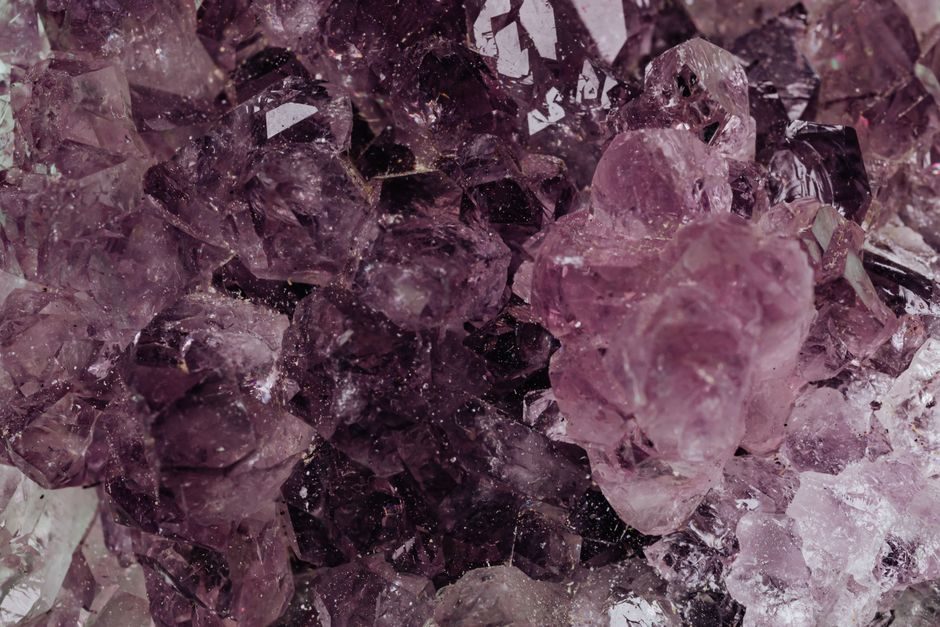
Total cost of ownership for quartz material — natural quartz, fused quartz, and synthetic fused silica — routinely lands 3-7x the unit invoice price when energy, scrap, requalification, and downtime are loaded, because high-purity transparent quartz is energy-intensive to melt (temperatures exceed 1700 °C for Type I fused silica) and the finished part is brittle to machine [S2]. The category covers everything from photovoltaic crucibles and semiconductor wafer carriers to optical windows, quartz tubes for diffusion furnaces, and high-purity feedstock rods pulled into ingots. A pragmatic TCO comparison therefore starts with grade, then application, then geometry.
The two published reference points process engineers lean on are: Gartner's often-cited five-year TCO ratio in which capital hardware and software represent only 25 % of lifetime cost [S2], and the USPS Supplying Principles framing of TCO as a method for surfacing costs hidden during budget planning — purchase, use, maintenance, support, and disposal [S1]. Translated to a quartz line item, that means engineers should resist pricing on $/kg and instead price on $/qualified-part-over-service-life.
Quartz Grade Stack and Where Each Pays Back
The cost stack begins with the feedstock: natural quartz (lascas) at the bottom, fused quartz from natural powder in the middle, and Type I / Type II / Type III synthetic fused silica at the top — with Type IV fused quartz (natural-derived, high-OH) sitting between natural and Type I on cost [S1]. Synthetic fused silica (Type III) carries 2-4x the price of standard fused quartz because the vapour-phase deposition route (SiCl₄ oxidation) uses chlorine chemistry and high-purity gases, while Type II fused quartz is melted electrically from sand and skips the vapour step.
For solar and lighting applications where the upper UV transmission requirement is modest, Type II fused quartz and Type IV fused quartz dominate the bill of materials; semiconductor diffusion tubes and optical-grade windows grade up to Type I or Type III. The cost driver pattern is consistent: every purity tier adds a gas-handling, melt, or finishing step that compounds in energy and yield loss. Engineers choosing fused quartz for semiconductor and solar process tubes should map grade to part-critical surfaces first, then price the rest of the assembly against lower-purity quartz where it will not compromise yield.
Cost Drivers, Ranked by Magnitude for Quartz
Energy for melt and annealing is typically the largest single operating-cost lever, not raw feedstock: pulling a fused-silica boule or producing fused quartz at 1700-2000 °C in graphite or tungsten crucibles consumes roughly 6-12 kWh per kg of finished material depending on furnace design and re-melt cycles. Scrap and yield is the second-largest driver — quartz is brittle, has a low fracture toughness (≈0.7-0.8 MPa·m^½ for fused silica, lower than soda-lime glass), and edge chipping on machining is the single biggest reason machined quartz parts fail first-article inspection.
Certification and requalification (OH content, trace metals in ppb, bubble count per ASTM or SEMI standards, transmission curves) is the third driver, and inspection cost does not scale linearly with part — a small custom window may need the same metrology budget as a 300 mm wafer carrier. Logistics and packaging — quartz is heavy, fragile, and ships in foam-crated wooden boxes with vibration recorders — regularly add 2-5 % to landed cost for transcontinental movements [S1][S2]. Finally, service life in the application: a diffusion tube rated for 6-12 months at 1100-1200 °C will set the maintenance interval and stock-holding cost, and a UV-grade window that solarises faster than rated will force unplanned chamber openings.
Comparing the Three Quartz Families on Decision Criteria

Engineers should weigh four criteria when picking between natural quartz, fused quartz, and synthetic fused silica: purity, thermal shock resistance, transmission, and total service life. Purity climbs sharply from natural (≥99.5 % SiO₂ with alkali and Al contaminants) through fused quartz (≥99.9 %) to Type I/III synthetic (≥99.9999 % with metal impurities in single-digit ppb), and price climbs with it. Thermal shock resistance is high for all three — fused silica has one of the lowest thermal expansion coefficients of any engineering material at ≈0.55 × 10⁻⁶ /K, roughly 20x lower than borosilicate — but long-term devitrification (cristobalite formation above ≈1100 °C) is what limits high-temperature service life, not thermal shock. [S1]
UV and IR transmission is where Type III and Type IV synthetic grades earn their premium: Type III synthetic fused silica transmits down to ≈160 nm in the deep UV with very low fluorescence, which is why photolithography lens blanks and excimer-laser windows are essentially never cut from natural material. For solar crucibles and halogen lamp envelopes where deep-UV transmission is irrelevant, Type II fused quartz (natural-derived, high OH, around 150-200 ppm) gives 80-90 % of the performance at roughly 40-60 % of the cost. The decision rule is straightforward: pull the application temperature, the operating environment (vacuum, halogen, alkali vapour), and the required transmission window first, then ask the vendor for grade options against that triple — not the other way around.
Total Cost of Ownership Across a 10-Year Service Window
A 10-year TCO model for a quartz-intensive process line — for example, a PV ingot puller or a semiconductor diffusion furnace bank — typically splits into ~25-35 % initial purchase (feedstock + finished parts), ~30-40 % scheduled replacement (tubes, crucibles, windows, boat liners on a defined PM cycle), ~15-25 % unplanned downtime and emergency replacement, and ~10-15 % inspection, requalification, and scrap disposal [S1][S2]. Engineers who price only the initial purchase will understate the bill by a factor that mirrors the Gartner desktop finding where capital is 25 % of five-year cost and operations are 75 % [S2].
Two real engineering levers move that ratio. The second is preventive replacement vs. failure-driven replacement: an emergency tube change in a hot furnace cell typically takes 4-24 hours of cell downtime plus energy for the thermal cycle, and on a 300 mm semiconductor line the hourly cell cost is measured in tens of thousands of dollars — so inspection cost that prevents one unplanned event pays back the entire metrology budget for the year. A useful analogue is the way variable-speed drives reduce lifetime cost by smoothing motor duty — both are cases where the right spec up front collapses the maintenance tail.
Failure Modes and Inspection Gates
The three failure modes that drive quartz TCO above the purchase line are devitrification (surface crystallisation to cristobalite above ≈1100 °C in humid or alkali-bearing atmospheres), thermal shock cracking (typically on heat-up, not steady-state, and usually at the geometric transition from thick to thin sections), and contamination-driven lifetime loss (alkali leaching from natural-grade quartz into a silicon melt, raising defectivity). A robust TCO model must price inspection for each: visual + bubble-count per SEMI C28 or equivalent for tubes, FTIR for OH content, ICP-MS for trace metals on first article and on periodic samples. [S1]
For shop-floor engineers building the TCO spreadsheet, the practical gates are: incoming material with a certificate of analysis (COA) and a bubble-count spec; first-article dimensional and surface inspection before any thermal cycle; scheduled mid-life inspection of high-temperature parts; and a documented replacement-trigger (maximum hours at temperature, maximum thermal cycles, or a measured transmission floor). Each gate costs something in metrology and labour, and each one prevents a more expensive downstream failure — the same logic the USPS manual applies to exposing hidden costs in budget planning [S1].
Selection Criteria: Who Pays for Premium, Who Does Not
Premium synthetic fused silica pays back in three application classes: deep-UV optics (photolithography, excimer laser windows), semiconductor diffusion and plasma-etch chamber parts that must stay below single-digit ppb metal contamination, and high-purity photovoltaic crucibles where lifetime ingot quality compounds. It does not pay back for halogen lamp envelopes, general laboratory glassware, fibre-optic jacketing (where polymer coatings dominate), or decorative and construction-grade engineered stone — for those, standard fused quartz or natural quartz is the correct economic answer. [S2]
A useful internal rule is the "purity × temperature" matrix: if the part runs above 1000 °C in contact with a metal, semiconductor, or halogen chemistry, step up at least one purity tier; if the part runs below 600 °C with no contact-sensitive chemistry, stay at the lowest grade that meets dimensional and surface specs. Engineers mapping quartz material types and classifications should layer the TCO model on top of that grade map rather than pricing the grade in isolation — the lifetime saving from picking the right grade is bigger than any unit-price negotiation.
Trackable signals to watch over the next 6-12 months: published OH-content and devitrification-rate data for newer Type II variants, any movement in SiCl₄ and HCl gas pricing that flows through to Type III synthetic, and standardisation activity around SEMI C28-grade inspection for fused quartz. None of these will move the headline $/kg number much, but each one will move the operating tail of the TCO curve where the real money sits.
The underlying component specifications are covered under total station, and copper material.