Five manufacturers, Schneider Electric, ABB, Siemens, Eaton, and Mitsubishi Electric, recur across every credible 2026 ranking of circuit breaker suppliers, anchoring both the low-voltage and high-voltage segments of the global circuit breaker market [S1][S2][S3].
The molded case circuit breaker (MCCB) market is projected to grow from approximately USD 10.64 billion in 2024 to USD 17.22 billion by 2032 [S2], while according to a research report by Transpire Insight, the high-voltage circuit breaker market is projected to expand from USD 10.20 billion in 2026 to USD 20.13 billion by 2035 at a 9.55% CAGR [S5].
Breaker Families and Where Each Supplier Stands
Suppliers segment across four primary product families: miniature circuit breakers (MCBs, typically 1A to 125A, residential and light commercial), molded case circuit breakers (MCCBs, 16A to 1600A, industrial feeders), residual current circuit breakers (RCCBs, 16A to 100A, personnel protection), and high-voltage circuit breakers (72.5 kV and above, substation and grid) [S2][S3][S5].
In the MCB tier, the leading 2026 ranking lists Siemens (Germany), Eaton (Ireland/USA), Legrand (France), Mitsubishi Electric (Japan), and Hager (Germany), with Chinese suppliers CNTN, HIITIO, Tosunlux, Delixi, and Laiwo concentrated in Zhejiang and competing on cost-competitive IEC 60898-1 compliant units [S4][S7]. For MCCBs, Schneider Electric, ABB, Siemens, Eaton, HIITIO, and Mitsubishi Electric dominate, with HIITIO’s HCM2 series spanning 16A to 1250A under IEC 60947-2 and GB/T 14048 dual certification [S2]. In the RCCB segment, Schneider Acti9 iID (16A to 100A, 10mA to 300mA sensitivity, IEC/EN 61008-1 and UL 1053), Siemens 5SV, ABB F200 (rated -25°C to +55°C), Eaton xPole, and Legrand DX3 are the recurring flagship lines [S3]. For HV equipment above 72.5 kV, Hitachi Energy, Mitsubishi Electric, Toshiba, Siemens Energy, and ABB are the named tier-one vendors [S5].
Selection Criteria Engineers Should Lock Down First
Four parameters determine whether a supplier is fit for purpose: rated current and frame size, breaking capacity (Icu/Ics in kA), certifications for the destination market, and digital-integration capability [S1][S2][S3].
Breaking capacity matters most for industrial panels: Chinese MCB suppliers typically publish 6 kA to 10 kA short-circuit ratings for residential lines, while IEC 60947-2 MCCBs from tier-one suppliers commonly reach 36 kA, 50 kA, or 70 kA at 415 V depending on frame [S2][S4]. Certifications split by region: IEC 60898-1 governs MCBs in most of Europe and Asia, UL 489 covers North American MCBs, IEC/EN 61008-1 governs RCCBs, and CCC is mandatory for the Chinese domestic market [S3][S4]. For high-voltage grids, IEC 62271 and the new SF₆-free gas interruption standards (driven by Hitachi Energy’s EconiQ launch in January 2026) are now decisive specifications for new utility tenders [S5]. Engineers planning coordinated protection across multiple plants should consult the circuit breaker sizing and selection spec map to align frame rating, 125% continuous-load rule, and short-circuit coordination before shortlisting vendors.
Supplier Comparison on Decision Criteria
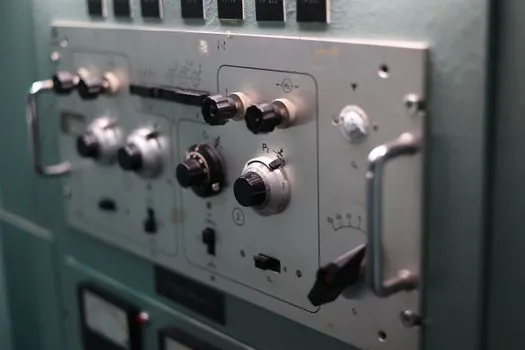
On digital integration, Schneider Electric leads through its EcoStruxure IoT platform that pairs with its Acti9 and ComPact MCCB lines, enabling real-time monitoring and predictive maintenance across more than 74 R&D centers and 100+ operating countries [S2][S3].
On raw product breadth, ABB and Siemens offer the widest cross-family coverage from residential MCBs up to 800 kV HV breakers, making them the default for utilities and EPC contractors building greenfield projects [S1][S5]. On price-performance for OEM and panel-builder buyers, HIITIO, CNTN, Delixi, and other Zhejiang-based MCB/MCCB manufacturers offer 10% to 30% lower unit costs against tier-one brands, with IEC 60898-1 / IEC 60947-2 certification documented in vendor datasheets [S2][S4]. On extreme-environment reliability, ABB F200 RCCBs and Mitsubishi Electric industrial lines are explicitly rated for -25°C to +55°C operation, which is a key filter for outdoor switchgear and heavy-industry panels [S3]. On military and harsh-environment applications, dedicated suppliers catalogued by Defense Advancement cover aircraft, vehicle, marine, and ruggedized infrastructure breakers, with qualification typically aligned to MIL-SPEC shock, vibration, and temperature envelopes [S6].
Where Each Supplier Type Fits, and Where It Does Not
Tier-one Western and Japanese suppliers (Schneider, ABB, Siemens, Eaton, Mitsubishi, GE, Legrand) are the right fit for: utility substations, data centers, large commercial builds, and any application where multi-year warranty support, local field service, and digital platform integration are non-negotiable [S1][S2][S5].
They are often the wrong fit for: high-volume residential MCB sockets, low-cost OEM equipment sold into price-sensitive markets, and short-lead prototype runs where engineering support costs exceed material savings. Chinese MCB and MCCB suppliers (CNTN, HIITIO, Tosunlux, Delixi, Laiwo, Chint) are the right fit for: residential distribution boards, OEM panel builds, solar PV string protection, EV charging hardware, and energy-storage DC protection, where IEC 60898-1 or IEC 60947-2 certification is acceptable and unit cost dominates [S2][S4]. They are the wrong fit for: projects requiring UL 489 listed MCCBs for North American site commissioning, mission-critical substation HV breakers above 72.5 kV, or installations in explosion-hazardous areas where ATEX/IECEx certification is mandatory and only tier-one documentation is accepted by the AHJ. Military-grade programs should be sourced through the dedicated military-grade circuit breaker supplier channel or specialist defense catalogs rather than adapted commercial lines [S6].
Standards, Failure Modes, and Sourcing Watchpoints
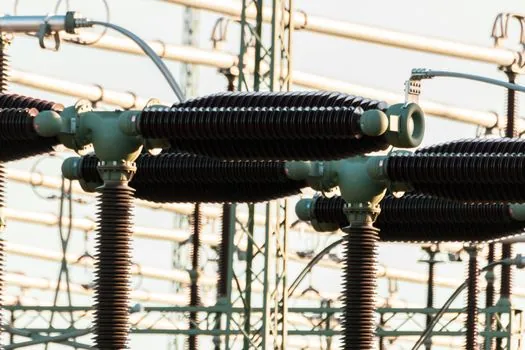
Common sourcing failures trace to three root causes: mismatched certification marks, undersized breaking capacity, and ignored ambient derating. A breaker certified to IEC 60898-1 (household) is not equivalent to one certified to IEC 60947-2 (industrial) even at the same current rating, because the test sequences, Ics/Icu ratios, and calibration points differ [S2][S4].
Thermal-magnetic breakers derate above 40°C ambient, and RCCBs with Type AC characteristics nuisance-trip on modern electronic loads with DC residual components, so Type A or Type B must be specified for EV charging, PV, and variable-frequency drive circuits [S3]. For HV gear, the transition away from SF₆ insulation is now a contractual requirement in several European tenders following Hitachi Energy’s January 2026 EconiQ expansion and Siemens Energy’s February 2026 digital substation awards [S5]. Buyers should also verify that any Chinese-supplied MCB carries a valid CCC certificate number traceable on the CNCA database, since unmarked “IEC-compliant” units remain common in the grey market [S4]. For plant-level coordination studies, complementary industrial valve and circuit protection integration guides help align breaker selection with downstream actuator and motor protection requirements.
Market Direction and Trackable Signals
The two most trackable forward signals for the rest of 2026 are the rollout of SF₆-free HV breakers by Hitachi Energy, Siemens Energy, Toshiba, and ABB into European and Asia-Pacific utility tenders, and the price gap between Zhejiang-based MCB/MCCB exports and tier-one equivalents as raw copper and silver-contact costs fluctuate through the second half of the year [S5].
Engineers sourcing for Q4 2026 builds should request current CCC and IEC test certificates with each bid, confirm breaking-capacity curves at the actual installation altitude (above 2000 m most breakers derate 5% to 15%), and lock digital-integration protocol (Modbus TCP, IEC 61850, or EcoStruxure) at the spec stage rather than after panel assembly.
The underlying component specifications are covered under lamps and light fittings.