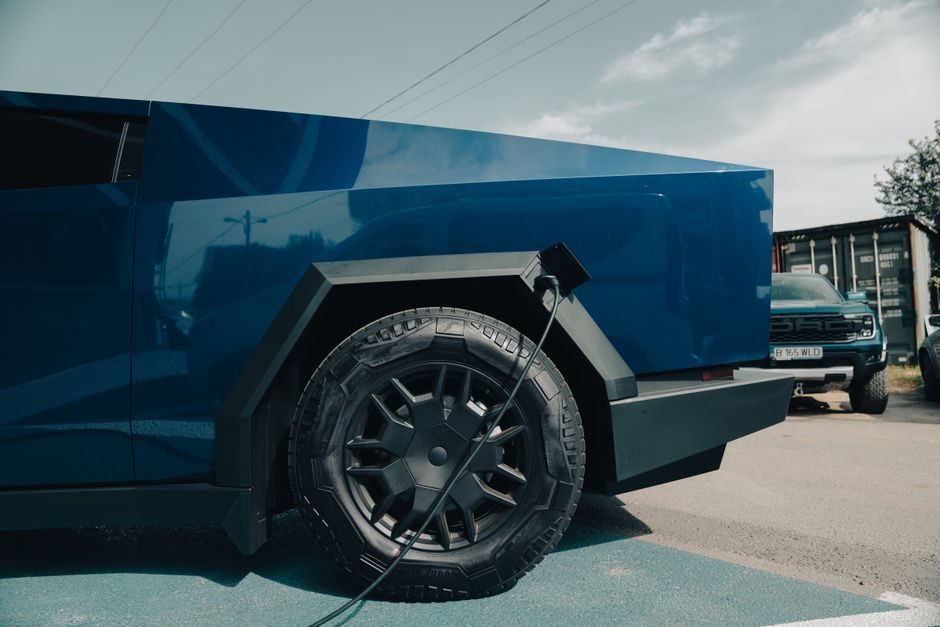
China anchors global electric vehicle manufacturing: in 2023, Chinese car manufacturer BYD surpassed Tesla and took the lead in the global EV market by selling over 3 million vehicles, a lead the company has continued to extend through overseas plant builds [S4].
Capacity expansion is now visible on three continents, anchored by Chinese OEMs, Korean cell suppliers, and European/US legacy plants; downstream, the EV plastics market is projected to grow from USD 3.9 billion in 2025 to USD 45.8 billion by 2035, registering a compound annual growth rate of 28.0%, with Battery Electric Vehicles holding a 38.2% market share and polypropylene leading the resin split [S1].
China: the manufacturing base and the export hub
China remains the single largest EV production cluster, combining OEM assembly, battery cell output, and a dense plastics/component supply tier; LG Energy Solution, for example, had built over one third of its global production capacity inside China, citing fast-growing local demand as the driver for further expansion [S6].
The scale of the Chinese supply base is what makes the 28.0% CAGR in EV plastics possible — polypropylene-intensive battery packs, housings, and interior trim require compounding capacity that only an integrated Chinese tier-1 base can deliver at the volumes implied by the 38.2% BEV share figure [S1].
Korea, Japan, and Southeast Asia: cell-first capacity
South Korean cell makers have positioned more than one third of their global cell capacity inside China to serve local OEMs, while keeping cathode, separator, and high-nickel chemistry IP in Korea [S6]. Japanese OEMs continue to anchor hybrid and FCEV-adjacent lines, but BEV share of the global EV market sits at 38.2% as of the 2025 baseline, signalling that pure-BEV lines in Japan are still scaling rather than dominating [S1].
Southeast Asia is now the second-front expansion zone: Chinese OEMs are breaking ground in Thailand, Indonesia, and Vietnam to convert ASEAN ICE supply chains into EV lines within a 24-36 month window, with the same SKD-then-CKD ramp pattern BYD used to bring the Dolphin Mini to market in Brazil in 15 months from groundbreaking [S7].
Europe: legacy-OEM retooling versus Chinese transplants
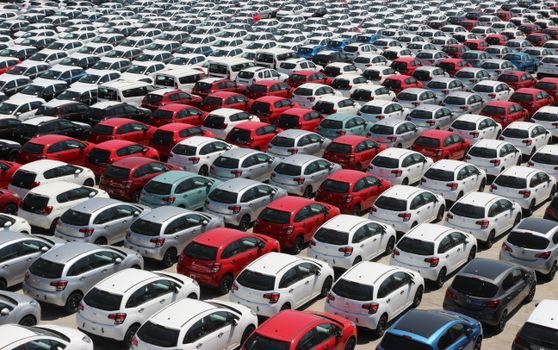
European capacity is split between VW/Stellantis/Renault retooling of legacy MQB and CMP platforms into BEV-dedicated lines, and Chinese-owned plants in Hungary and Spain that bypass the EU CBAM tariff debate by shipping CKD kits from China and assembling locally; the EV plastics demand pull from these lines is one of the main reasons the 2025-2035 CAGR is forecast at 28.0% rather than the 18-22% typical of legacy automotive plastics [S1].
For a specifier weighing where to source EV-grade components, the working assumption in 2026 is that anything in the battery pack housing, high-voltage busbar insulation, or thermal management loop is best quoted with the China tier-1 base as the price anchor, with EU capacity reserved for crash-structure and homologation-critical parts.
North America: IRA-anchored capacity, still ramping
US capacity is gated by the Inflation Reduction Act's battery sourcing rules, which is why Korean and Japanese cell makers are building dedicated lines in Georgia, Tennessee, and Kentucky rather than shipping from Asia; Canada is positioning itself as the critical-minerals link in the same chain, with nickel and lithium processing anchored in Quebec and Ontario. [S1]
Mexico is the third leg, with legacy Tier-1s wiring harness and plastics moulding capacity along the Bajío corridor to feed both US and South American EV plants; this is the same corridor where storage cage and pallet-box specifiers are seeing parallel demand from new EV parts warehouses opening in 2026.
Latin America: SKD-then-CKD, with Brazil as the test case
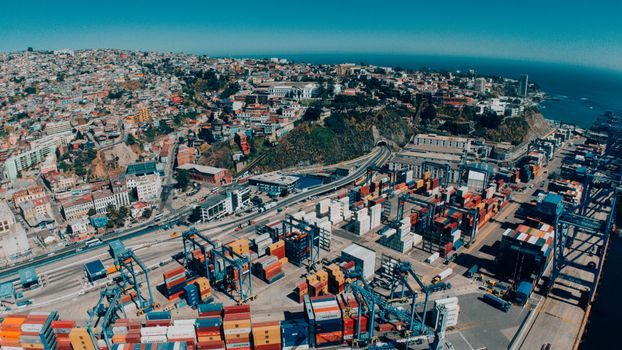
BYD's Camacari plant in Brazil is the template: 15 months from groundbreaking to first vehicle off the line, starting under SKD (semi-knocked-down) assembly, then transitioning to full local manufacturing including stamping, welding, painting, and an increased share of Brazilian-made components [S7].
The Dolphin Mini is the first locally manufactured all-electric vehicle in Brazil, and the plant's initial production volume is small relative to Chinese output, but the 38.2% BEV share of the global EV market means every regional SKD plant is now a strategic foothold in a market that is structurally converting away from ICE [S1][S7].
Cell and battery capacity: the binding constraint
EV production capacity is rarely OEM-limited; it is cell-limited. Global cell capacity needs to roughly double from 2025 levels to support the 10-million-unit 2025 sales target and the 25-million-unit 2030 sales projection cited by senior cell-maker executives in 2021 — a target that has since been pulled forward by Chinese capacity additions [S6].
For industrial buyers, this means EV plastics suppliers in the 2025-2035 window are not sizing moulds against today's automotive run-rate; they are sizing against the USD 3.9B to USD 45.8B plastics spend arc, with the largest growth concentrated in polypropylene-rich pack components and structural foam [S1].
How to use this map for 2026 sourcing decisions

For specifiers building a sourcing strategy around global EV production capacity, the decision matrix in 2026 is short: (1) battery cells — anchor in China or Korea with IRA-compliant US volume as a hedge; (2) plastics and moulded components — anchor in China for price/lead-time, with Mexico and Eastern Europe as tariff-arbitrage hedges; (3) final assembly — match the end market, with SKD-then-CKD ramps in Brazil, Thailand, and Indonesia as the new regional hubs modelled on BYD's 15-month Camacari build-out [S7].
The downstream storage and intralogistics demand from these new plants is already visible: warehouse specifiers for new EV parts hubs in Mexico, Hungary, and Thailand are running the same storage cage and pallet-box selection logic that auto-tier buyers ran in 2020-2022, with mesh, load rating, and MOQ as the three decisive levers. For machine-tool capacity that feeds EV gigafactories, the machine-tool upstream and downstream supply chain spec anchors — spindle power, table load, and CNC controller class — are the same numbers EV tier-1s are quoting against in 2026.
Limits and watchpoints
The 38.2% BEV share figure is a 2025 baseline forecast and will shift as PHEV and range-extender variants re-enter the European and US mix [S1]. The EV plastics market is projected to grow at a 28.0% CAGR from 2025 to 2035, with Battery Electric Vehicles (BEV) leading the segment at 38.2% share in 2025.
Trackable signals for the rest of 2026: (a) whether BYD's Camacari plant reaches its 50,000-unit/year SKD run-rate by Q4 2026; (b) the next Korean cell-maker capacity announcement tied to the IRA Section 45X production credit; (c) the first EU-built Chinese-OEM vehicle to come off a Hungarian or Spanish line without CBAM exposure [S7][S6].
For component-level specifications, see electric actuator, electric ball valve, and electric pallet truck.