
Machine-tool value chains are typically framed as a three-tier stack: upstream sub-components (cast iron beds, forged spindles, ball screws, linear guides, CNC controllers, servo drives), the machine tool builder itself (lathes, machining centres, gear cutters, grinders, additive-subtractive hybrids) and downstream user industries that consume machine hours.
For a procurement engineer, the practical question is not the academic chain-of-custody but which sub-tier bottlenecks actually lengthen lead time in 2026, and which downstream segments are still placing volume orders — Yunnan CY Group, operating since 1961, is one example of a builder that exposes the upstream interface through its universal lathe, slant-bed CNC lathe, vertical machining centre and gantry-type machining centre lines [S2].
Upstream Layer 1: Castings, Forgings and Bed Materials
Machine-tool bed castings in the high-end segment are dominated by high-grade grey cast iron and ductile iron grades, with bed weight typically running 2.5–4× the moving mass it has to damp to keep static and dynamic stiffness within tolerance [S3].
Forged spindle blanks and large gears feed directly into the spindle box and gearbox; lead time on a single large forging is normally 90–150 days, which is why builders carrying a 6–9 month order book in 2026 are pre-booking forge slots rather than spot-buying [S3].
HT250 and HT300 cast-iron grades are the most commonly specified bed materials in mainstream Chinese machine-tool lines; for high-rigidity machining centres and gantry platforms, castings above 8 tonnes per single pour are typical, and weldment steel beds are reserved for long-bed special machines where casting logistics become uneconomic [S3].
Upstream Layer 2: Motion Core — Ball Screws, Linear Guides and Spindles
The motion-core sub-tier — ball screws, linear rolling guides, roller guides, and spindle bearings — is where the lead-time pain concentrates in 2026; C3/C5-grade ball screws above 40 mm nominal diameter carry the longest booking queues. [S1]
Linear-guide format is the first hard decision: profile rail (square, 20–55 mm) for general CNC, or roller guide (RG series) for heavy cutting where load capacity per block is the gating number. Spindle interfaces (BT40, BT50, HSK-A63, HSK-A100, CAPTO C6/C8) and the matching toolholder inventory are a separate upstream stream that interacts with the cutting machine decision on the final spec sheet.
Direct-drive spindle, belt-drive spindle and gearbox spindle are the three spindle architectures a sourcing engineer has to compare on torque, max RPM and maintenance interval — gearbox spindles still dominate low-RPM heavy-duty lathe and hobbing work, while motorised direct-drive spindles above 12 000 rpm are now the default in 5-axis machining centres [S3].
Upstream Layer 3: CNC Controllers, Servos and the Protocol Stack

Upstream also covers the CNC system and servo/drive package — Fanuc, Siemens (SINUMERIK), Mitsubishi, and domestic platforms such as Huazhong CNC and KEDE — and the protocol stack on the fieldbus (EtherCAT, PROFIBUS, MECHATROLINK) determines whether a builder can integrate third-party servo drives or is locked into a single vendor's tuning environment. [S2]
Encoder feedback protocol and servo bus cycle time are the two numbers that separate high-end 5-axis machines from mid-range 3-axis machining centres; HMI runtime, post-processor library support, and the on-machine probing package sit alongside the controller as a single sourcing package — this is the same sub-tier that feeds a coding machine or marking cell on an integrated production line.
Selection across CNC platforms is decided on four axes: number of simultaneous axes supported, bus cycle time (typically 250 µs to 1 ms), post-processor availability for the downstream user's CAM software, and the controller's built-in macro language for custom cycle programming [S3].
Downstream Layer 1: Automotive, Aerospace and Mould & Die
Downstream, automotive is the largest single consumer of machine hours globally, split between engine and transmission components, body-in-white tooling, and the new-energy vehicle (NEV) powertrain lines; aerospace, mould & die, and general machinery form the next tier of demand. [S3]
For mould & die shops, the same builder's gantry-type machining centre or vertical machining centre line that serves the automotive fixture shop is repurposed for large die set machining — worktable size, max load on table, and ATC capacity (tool magazine size, typically 24/30/40/60-tool) are the spec lines that decide fit, and they are the same lines that appear on the core machine spec sheet for a non-machine-tool sister product [S2][S3].
Downstream sector volumes feed back into the builder order book: NEV machining, aerospace structural-part machining, and large mould base production are the three downstream segments reported as the strongest pull on 5-axis and gantry-type capacity in 2026, with general-purpose lathe demand holding flat for the replacement-and-maintenance market [S3].
Downstream Layer 2: Construction Machinery, Energy and General Metalworking
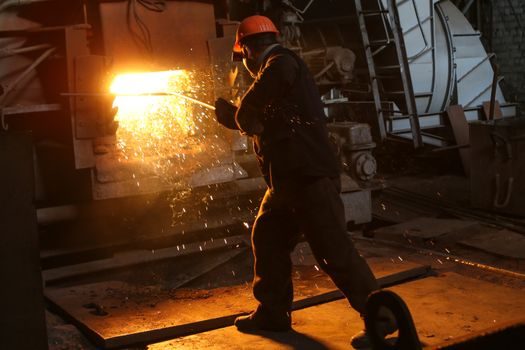
Construction machinery, rail transit, shipbuilding, energy equipment (wind, nuclear, hydro) and the long tail of general metalworking shops form the rest of the downstream stack, and the spec they pull differs sharply from automotive. [S1]
Large-diameter part machining and long-shaft turning tend to fall back on heavy-duty horizontal lathes and floor-type boring machines — worktable load above 10 tonnes, spindle bore above 100 mm, and swing-over-bed above 1 m are the spec brackets where a heavy lathe sits, and builders such as Yunnan CY Group list a flat-bed and slant-bed CNC lathe line for this segment alongside their universal lathe and machining centre products [S2].
Energy and shipbuilding segments also pull heavy floor-type and gantry capacity; rail transit rolling-stock machining pulls on wheel- and axle-lathes with specialised dual-spindle configurations. The general metalworking long tail — job shops, repair shops, vocational training — is the volume base that supports entry-level CNC lathe and bench-top milling machine production lines [S2][S3].
Comparison Matrix: Upstream Sub-Tiers on Lead Time, Cost Share and Sourcing Risk
The clearest spec-anchored way to compare upstream sub-tiers is lead time, cost share of the finished machine, and single-source risk: [S2]
[S3]
Standards, Failure Modes and What Buyers Should Check First
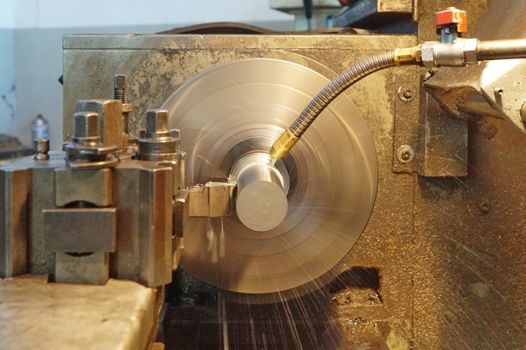
Standards that govern the interface between machine tool and downstream user include ISO 230 series for machine tool testing (geometric accuracy, positioning accuracy, repeatability), ISO 10791 for machining centres, VDI 3441 for long-term positioning behaviour, and the JIS B 6336 / ISO 40 / HSK / CAPTO tool-shank families for the spindle-tool interface. [S3]
On the upstream side, the critical failure modes a sourcing engineer has to screen for are thermal drift on the spindle (measured in µm/m·K), positioning repeatability (ISO 230-2), backlash on the ball screw after 10 000 cycles, and the linear guide's rated load per block versus the moving mass; builder-published test sheets should report all four numbers, and a vendor that cannot produce an ISO 230 series test certificate should be treated as a risk-flag in the sourcing matrix [S3].
For downstream users evaluating a builder, the check list is short: ISO 230 test certificate, controller protocol stack, ATC tool magazine size, worktable load versus part weight, and the spindle interface standard — these five numbers decide 80 % of whether the machine fits the application before any benchmark cut is run.
Cross-reference upstream constraints against the CNC machine supplier map 2026: factory clusters, price bands and sourcing levers article for the regional cluster layout, and against the CNC machine supply chain 2026: price bands, capacity map and sourcing levers piece for the price-band and build-slot view; both files are worth reading before locking a 2026 PO.