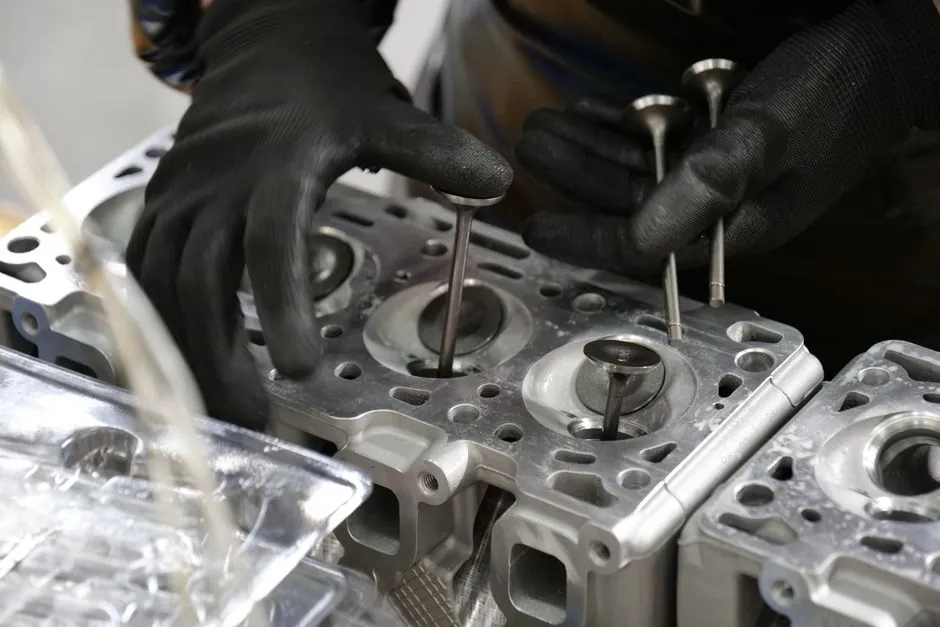
Globe valves suit desalination duties requiring controlled throttling, with SWRO pressure sections identified up to 10.0 MPa and low-pressure sections at or below 1.0 MPa [S2].
Selection depends on process stage, chloride exposure, fluid temperature, allowable pressure drop, and actuation requirements across pretreatment, UF, SWRO, BWRO, and EDI service [S2][S3].
Define the valve duty before selecting a globe valve
A globe valve is appropriate where gradual flow regulation or accurate throttling is required, rather than where a tight quarter-turn isolation function is the primary requirement. Desalination applications include flow control, pressure regulation, isolation, backflow prevention, and switching between operating conditions [S3][S5].
Seawater desalination systems use different valve types and materials for each stage, from pretreatment through reverse osmosis and final polishing, because high salinity, strong corrosion, and scaling risks demand carefully engineered solutions.
For comparison, a concentric or double-eccentric butterfly valve and a gate valve suit broader on-off isolation duties, while a globe valve is justified when the process requires a controllable throttling characteristic. For a deeper material and pressure comparison, see Ball Valve Selection for Desalination.
Match materials to chloride exposure and pressure
Material selection must cover the body, trim, stem, seat, packing, and exposed fasteners, because seawater can attack mixed-material assemblies at different rates.
Seawater-service valve selection must consider pressure and size in addition to materials, durability, and long-term reliability.
Titanium is also presented as a corrosion-resistant option for demanding seawater duties [S3].
Compare globe, butterfly, gate, and ball valves
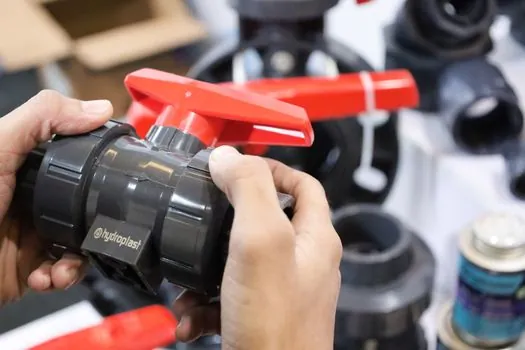
Globe valves provide a strong throttling case but have a larger pressure loss at wide opening than quarter-turn isolation valves. Butterfly-valve options include centric, high-performance double-offset, and triple-offset designs, while the valve supplier's range also includes gate, ball, globe, check, strainer, and control valves.
The practical comparison is therefore based on four criteria: throttling accuracy favors the globe valve, low pressure drop favors butterfly, gate, or ball isolation, large-bore access favors gate construction, and seawater corrosion resistance depends on body, trim, and seat selection rather than valve family alone [S2][S5].
Apply process-stage limits without over-rating
Valve selection for pretreatment and ultrafiltration must account for high salinity, chloride content, corrosion, and scaling risks. A globe valve in these lines should therefore use a robust seat, stem packing suitable for the service medium, and an internal geometry that can be inspected and cleaned [S3].
For SWRO control duty, the valve pressure rating must be matched to the actual process-line condition. The high-pressure designation alone is insufficient; closure force, actuator sizing, seat leakage, and material compatibility must be checked against the minimum differential pressure expected during closure.
For BWRO and EDI sections, the fluid is less aggressive than raw seawater, but pressure and clean-service requirements still govern trim selection [S2]. Chemicals such as antiscalants, cleaners, or biocides require a second compatibility check because a seawater-rated metal does not automatically suit every process chemical [S4].
Specify trim, sealing, and closure performance
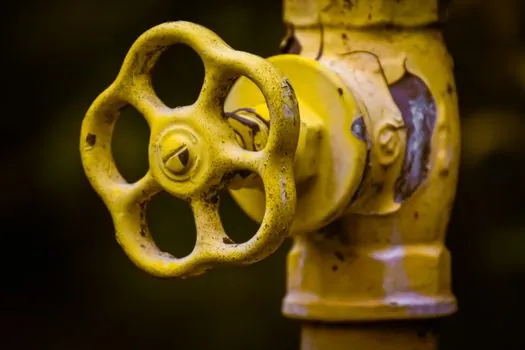
A seawater globe valve should have a defined trim grade, seat material, stem material, packing arrangement, and permissible leakage class, rather than a generic stainless-steel description.
Valve size must be selected from the maximum required flow coefficient, line velocity, and allowable pressure drop, with sufficient oversizing to avoid excessive throttling at minimum stable flow. The assessment should also include cavitation, erosion, and trim erosion because throttling can increase velocity and produce damaging two-phase flow [S3][S5].
For throttling applications, globe control valves are the more precise product category because trim characterization, actuator response, and positioning are part of the functional requirement. A manual globe valve remains appropriate where variable positioning is unnecessary or the final control element provides regulation elsewhere.
Choose actuators and accessories for the installation
Actuation should follow the control strategy: manual operation for infrequent local isolation, electric multi-turn operation for a globe valve, or pneumatic rack-and-pinion or scotch-yoke action for automated throttling [S3][S4]. Electric and pneumatic systems must be checked for fail position, response time, available actuator torque, and the pressure drop at the worst operating condition.
Exposed coastal, wet, or flooded locations require enclosure protection suited to the environment, with IP68 or IP67 actuator protection identified for relevant wet installations [S4]. Additional requirements can include limit switches, positioners, solenoid valves, air preparation, and manual override, but each accessory must be compatible with the selected service and voltage or pneumatic supply.
Connections also form part of the datasheet review. Project valves can use flanged, wafer, lugged, threaded, or grooved ends, and selected desalination configurations include bolted-bonnet OS&Y and bellows-seal globe-valve constructions [S1][S4]. For installation convention, compare the globe valve envelope with adjacent piping before ordering actuators or accessories.
Validate ownership criteria before the purchase order
A complete desalination globe-valve datasheet should identify nominal size, pressure class or allowable working pressure, body and trim grades, seat and packing materials, end connection, operating temperature, medium, maximum pressure drop, leakage requirement, actuator details, and coating or lining requirements [S3][S4].
Do not select a globe valve where full-bore, rapid, low-loss isolation is the sole duty; choose a ball, butterfly, or gate valve instead. Globe valves also carry higher throttling loss than optimized isolation valves, so their use should be justified by control performance rather than by size alone [S2][S5].
The shortlist logic is direct: use a globe valve for controlled seawater or treated-water throttling, specify Duplex 2205 for general seawater exposure or Super Duplex 2507 for critical high-pressure service, verify trim and seats against chloride and chemical exposure, and size the actuator for the maximum closed differential pressure [S4][S5].