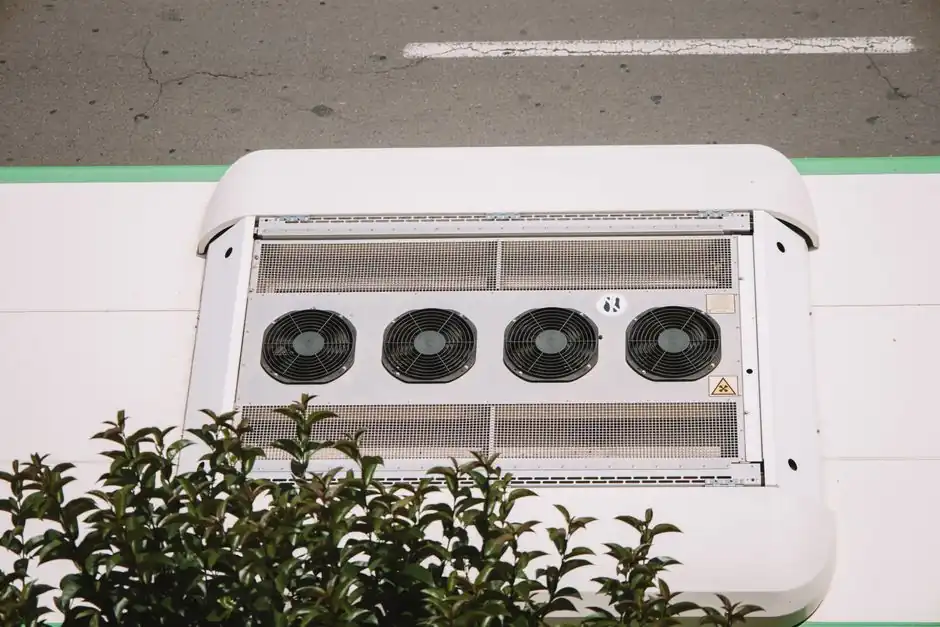
Select an HVAC globe valve sized to the calculated valve Cv and available pressure drop, not pipe size alone, because undersizing limits capacity while oversizing promotes cycling and wire drawing [S2].
Globe valves suit water, water-glycol, and steam services requiring throttling or accurate shutoff, with straight-pattern, angle-pattern, and three-way designs available from DN15 to 600, and DN500 and larger designs for demanding high-pressure steam and hydrocarbon service [S5].
Choose the Valve by HVAC Duty
A globe valve uses a stem and plug that move linearly to regulate flow, making it suitable for modulating control, throttling, steam, water, and water-glycol service [S2]. The plug and seat create a restricted flow path, so a globe valve generally needs more pressure drop than a full-port ball valve for the same nominal pipe size [S2].
The selection guide identifies straight-pattern (globe), angle-pattern, and three-way globe valve designs [S5]. Three-way globe valves are used where flow must be routed or blended between two paths, making them candidates for balancing service when the selected construction and Cv range match the circuit.
Do not select a globe valve merely because the system needs isolation. The relevant globe control valve is normally the better choice for continuous modulation because its flow path is designed to provide a controllable characteristic.
Compare Globe and Ball Valve Options
The size relationships above are application guidance, not universal rules. Final sizing must use the manufacturer’s flow coefficient and installed system data [S2].
Size Against Cv, Pressure Drop, and Authority
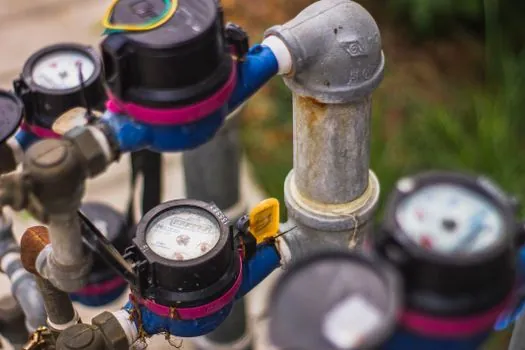
Correct sizing of the control valve for the actual expected conditions is essential for good control [S2]. A valve must have sufficient pressure drop for flow to pass, and the greater the available drop at a fixed opening, the greater the resulting flow [S2].
Do not calculate the Cv from the nominal pipe diameter alone. For each candidate, verify maximum Cv, flow characteristic, end connection, and actuator action against the design point.
A larger available pressure-drop percentage generally improves control: the governing engineering guidance states that control improves as the valve’s share of total pressure drop increases relative to the line and process coil [S2]. The related method for selecting by duty, Cv, and authority is detailed in HVAC control valve selection by duty, Cv, and authority.
Check the maximum expected flow, minimum load, valve travel, and actuator close-off capacity together. An undersized valve cannot meet capacity, while an oversized valve may hunt, expose the seat and plug to wire drawing, and make stable low-load control harder [S2].
Match Body, Trim, and End Connections
Select the body material for the medium and temperature, then verify that the trim is compatible with pressure, temperature, and required shutoff.
End connections are not interchangeable without checking dimensional, pressure-temperature, and installation constraints.
Pay particular attention to trim geometry and seat leakage, not just the body alloy. Whisper Trim and Cavitrol anti-noise and anti-cavitation trims are available for most designs [S5]. For steam or other flashing media, verify the manufacturer's trim limits rather than assuming a general-purpose seat is adequate.
Check Shutoff, Leakage, and Actuator Compatibility
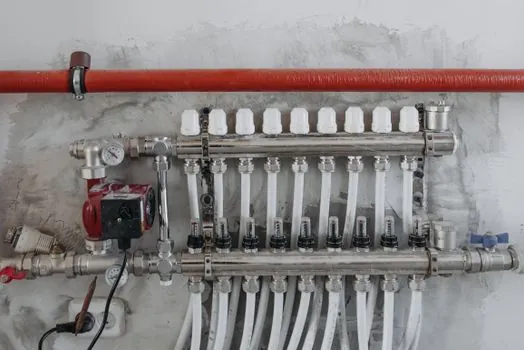
Specify shutoff class separately from regulating performance because a valve can control flow effectively yet fail the required isolation criterion.
For a modulating HVAC duty, Class VI can be relevant where very low leakage is specified, but it does not replace a check of pressure, temperature, media, and actuator requirements [S5]. Verify whether the actuator can close against the valve's maximum differential pressure. A spring-return actuator also needs enough spring force for fail-closure travel, while a fail-open arrangement must provide adequate opening torque across the valve range [S2].
Linear-stroke globe valves can use spring-and-diaphragm, electric, or pneumatic arrangements, depending on size and design. Published low-flow families list spring-and-diaphragm actuators with 16, 32, 54, or 70 square-inch diaphragm areas, as well as electric options on applicable models [S5]. Match actuator travel, connection geometry, fail position, and control signal to the valve and positioner.
Set Limits for Steam and Water-Glycol Service
Use the pressure-temperature rating for the exact material, seat, end connection, and size combination. The guide includes examples from 10.3 bar CWP, equivalent to 150 psig CWP, up to 207 bar CWP, equivalent to 3000 psig CWP, for specific low-flow designs [S5]. These figures are model-specific and must not be transferred to another valve body.
Steam service favors globe valves because the straight-pattern globe is listed for steam, water, and water-glycol media, while characterized ball valves are identified for water or water-glycol only [S2]. For glycol systems, confirm compatibility with seals, packing, trim, and actuator components. For steam, establish the maximum pressure and temperature, expected condensate conditions, and required minimum shutoff before selecting the trim.
Isolation valves and regulating valves serve different functions. Use a globe valve for throttling, but do not count it as the only isolation device unless its leakage class, actuator fail action, and maintenance strategy satisfy the shutdown requirement. This distinction reduces the risk of accepting an expensive control-valve specification for a duty that only requires tight on/off service.
Apply a Practical Selection Sequence
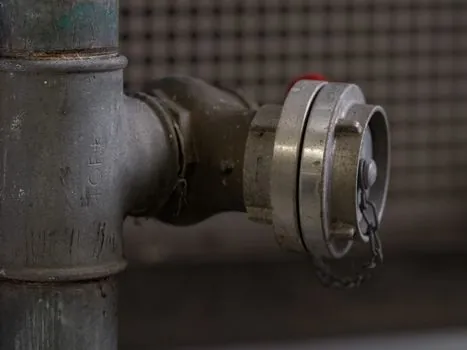
Use a six-step sequence: define the duty as modulation, throttling, or isolation; establish design and extreme flow rates; calculate required Cv from system pressure drop; screen globe versus characterized ball or other isolation options; verify material, trim, seat, actuator, and limits; then confirm the ordered model against the manufacturer's published curve and sizing procedure. [S2]
The shortlist for continuous water or water-glycol modulation should emphasize correct Cv, usable authority, low-load performance, actuator close-off, and required shutoff class [S2]. For steam, retain globe construction and require a documented pressure-temperature and trim limit [S2][S5]. For simple full-pipe isolation, compare the installed pressure loss and lifecycle cost of a globe valve against a full-port ball or butterfly valve rather than defaulting to globe [S2].
Before purchase, obtain the specific valve's dimensional drawing, capacity table, shutoff class, actuator sizing, material certificates, and installation instructions. The final selection should document the calculated Cv, design pressure drop, maximum differential pressure, medium, temperature, fail position, and leakage requirement rather than relying on the generic term “globe valve.”