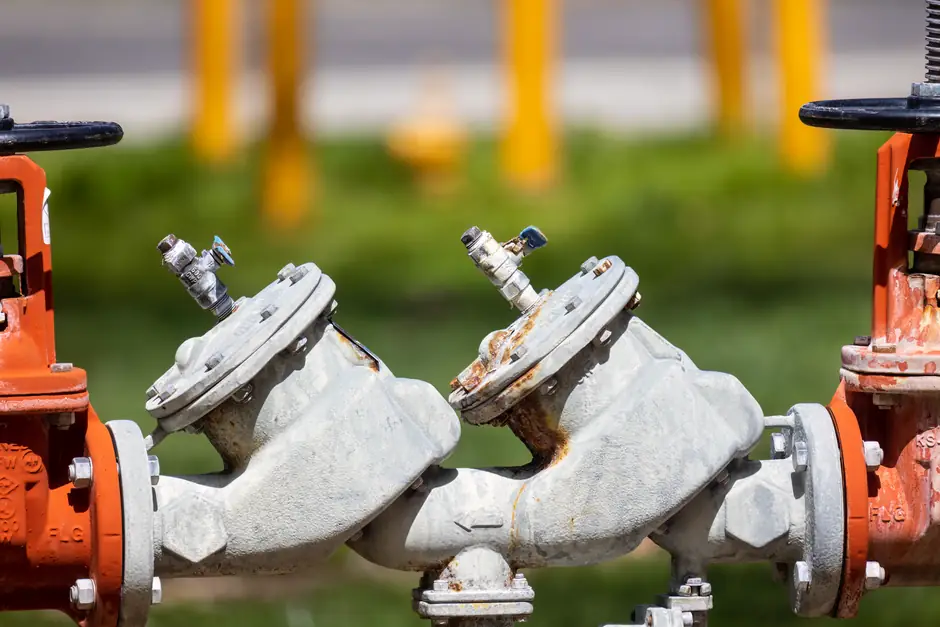
Direct-acting valves suit lower-flow and lower-pressure duties, while pilot-operated valves use system pressure to handle larger orifices and higher flow rates [S3][S4].
Water-treatment selection must reconcile valve geometry, Cv or rated flow, pressure differential, fluid temperature, wetted materials, electrical supply, failure position, and drinking-water certification [S2][S5].
Direct-Acting, Pilot-Operated, and Direct-Lift Designs
Direct-acting construction applies electromagnetic force directly to the sealing mechanism, so the available coil force limits pressure and flow performance [S4][S5]. This construction is appropriate for small orifices, lower flow rates, and lower differential pressure, and it is used in appliances such as washing machines and dishwashers [S3].
Pilot-operated construction uses the pressure energy of the medium to move the main diaphragm or piston after the pilot stage changes state [S4][S5]. Internally piloted valves require a minimum differential pressure to open and close reliably [S4]. They are the practical choice for industrial water systems, irrigation, and other duties requiring greater flow or pressure, but they should not be selected where the available differential can fall below the manufacturer's minimum operating value [S3][S4].
Direct-lift valves combine both operating principles through a flexible link between the plunger and diaphragm, acting directly at low pressure and as a pilot-operated mechanism at higher pressure [S5]. For a criterion-based comparison, direct acting is the default for compact, low-flow service; pilot operation supports high flow and high differential pressure but adds a minimum-pressure requirement; direct lift provides a compromise across changing pressure. Always compare the published valve Cv against the calculated duty, not the nominal port size alone [S4][S5].
Ports, Flow Paths, and Valve Function
A 2/2-way valve has two ports and two flow states, making it the normal choice for on/off isolation or flow control [S2]. A 3/2-way valve has three ports and two flow states, allowing a supply to be switched between zones or sources [S2]. With a direct-acting solenoid valve, the seat seal is attached to the solenoid core, and the seat orifice is closed in the de-energized condition and opens when the valve is energized [S4].
Proportional valves are appropriate when the required duty includes variable flow rather than simple on/off operation [S2]. Their control signal, minimum stable flow, response characteristics, and achievable turndown must be checked separately from the nominal maximum flow because a full-size on/off Cv does not establish proportional performance [S2].
The available sizing reference covers 2-, 3-, and 4-way general-purpose valves in brass and stainless steel, with sizes from 1/4 to 2 in NPT and Cv values as high as 38 [S5]. Those are catalogue limits, not universal application ratings. A water-treatment specification should state required flow at design pressure, permitted pressure loss, valve action, and connection standard so that a supplier can size the correct orifice.
Pressure, Cv, and Hydraulic Sizing
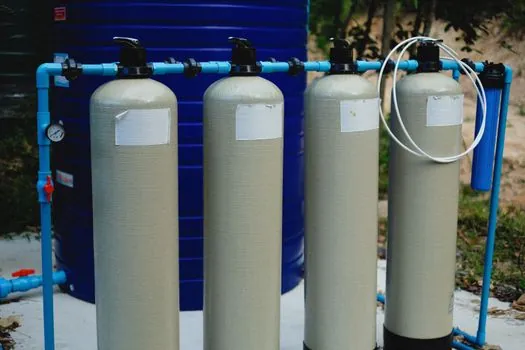
A valve must provide at least the calculated Cv and must tolerate the maximum operating differential pressure [S5]. In the referenced liquid example, a requirement of 2 GPM with 10 psi available pressure resulted in a calculated minimum Cv of 0.66 and a minimum operating differential of 10 psi. A general-purpose stainless steel valve with Cv 1.5 was considered sufficient when its media and temperature compatibility were also acceptable [S5].
For water service, document design flow, upstream and downstream pressure, minimum differential pressure, and the maximum pressure that may occur during a closed-valve condition [S2][S5]. The governing differential can change during filling, drainage, or supply-pressure excursions, so one operating point does not establish suitability. For more than one solenoid valve, check each valve's worst-case duty rather than applying one common Cv.
The general-purpose selection reference identifies brass and stainless steel bodies, continuous-duty coils, and NEMA 4 coil enclosures with a 1/2 in conduit port on its SV-100 and SV-200 series [S5]. These designations define a particular reference family, not a universal specification. Any equivalent valve must still meet the calculated Cv, differential-pressure limit, fluid rating, electrical requirements, and applicable certification.
Body, Seal, and Water Compatibility
Common water-service body materials are stainless steel, brass, and PVC, but each covers a different pressure and temperature envelope [S2]. The cited selection guide gives stainless steel limits up to 180 °C and 250 bar, brass up to 140 °C and 140 bar, and PVC up to 60 °C and 16 bar [S2]. These are product-family limits from the cited source, not guarantees for every alloy, PVC formulation, or valve size.
Seal temperature can govern the assembly even when the body has a higher nominal limit [S2]. NBR is identified for general water service up to 60 °C in typical conditions and sometimes 90 °C, while it is not recommended for ozone or strong acids [S2]. EPDM and FKM are also used in water applications [S2]. For chlorinated, ozonated, alkaline, acidic, or hot-water service, require compatibility evidence for the exact wetted seal and diaphragm compounds.
Stainless steel, brass, and PVC are listed as valve body materials for water-service applications [S2]. Potable-water installations also require the valve's complete wetted material set to be covered by the relevant certification, not merely its stainless-steel body.
Coil, Electrical Duty, and Fail-Safe Action
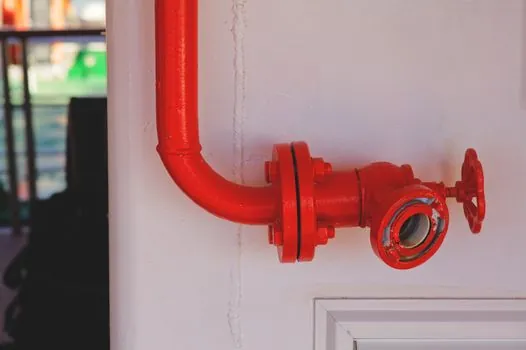
The solenoid coil must match the control voltage, frequency, insulation class, wattage, duty rating, and enclosure environment [S2][S8]. The cited general-purpose SV-100 and SV-200 reference specifies continuous-duty coils and NEMA 4 enclosures for its listed series [S5]. A continuous-duty designation reduces thermal risk compared with intermittent duty, but it does not remove the need to check voltage, coil current, connector type, and ambient temperature.
Valve function must be stated as normally open or normally closed according to the de-energized condition, and it must be tied to the treatment logic [S2][S4]. A normally closed valve gives fail-closed isolation when the coil loses power; a normally open valve gives fail-open flow. For chemical dosing, that choice can determine whether dosing continues or stops during a power failure, so it requires a process risk assessment rather than a purchasing preference.
Minimum differential pressure applies to pilot-operated valves [S4]. Direct-acting valves remove that opening requirement but impose a coil-force and orifice-size limit [S4][S5]. If water pressure is unreliable, compare a direct-acting valve against a pilot-operated model and confirm whether a self-contained or externally piloted design is needed. The air release valve is not a substitute for the feed isolation valve, although both may be used elsewhere in a treatment skid.
Drinking-Water Certification and RO Installations
Potable-water valves require certification for the intended application, not an unsupported statement that the product is lead-free [S1][S3]. The RO selection guidance identifies NSF/ANSI 372 for weighted-average lead content, NSF/ANSI 61 Annex G for drinking-water leachate and low lead content, NSF/ANSI 169 for special-purpose food equipment and devices, and NSF/ANSI 42 for drinking-water treatment units [S1]. The required certification depends on jurisdiction, use, and the component being evaluated.
NSF/ANSI 61 is identified as a drinking-water materials requirement in the broader selection guidance, but non-potable irrigation, wastewater, and industrial services do not automatically require it [S3]. Potable and non-potable duty should therefore be separated during specification. For RO skids, confirm certifications for the exact model, material grade, seal set, and intended service before ordering replacement assemblies.
Both normally open and normally closed composite versions can support the required RO operating sequence, and a source should therefore be able to document the selected failure position rather than treating composite construction as a single universal configuration [S1]. For comparison with modulating equipment, select water-treatment control valves by duty when the requirement is proportional or throttling control rather than a simple energized-open or energized-closed function.
Application Fit and Failure Modes
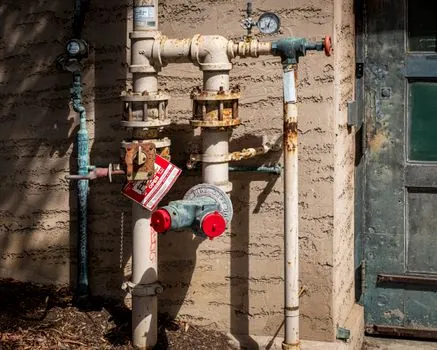
Direct-acting valves are the sensible mainstream choice for small dosing lines, sample valves, tank-filling points, and compact equipment with limited flow and pressure [S3][S4]. Pilot-operated valves fit large water-transfer, filtration backwash, irrigation, and industrial equipment duties where high flow or differential pressure makes the coil-powered approach impractical [S3].
Do not choose a pilot-operated valve when the system can operate below its minimum differential pressure, and do not choose a direct-acting valve merely because its port size matches the pipe when the required Cv exceeds the magnetic capacity of the coil [S4][S5]. Do not use a proportional valve as a substitute for a fully rated on/off isolation valve unless the process explicitly accepts its control range and resolution [S2].
The main field failure modes are coil burnout from incorrect electrical service, diaphragm or seal damage from incompatible media or excessive temperature, incomplete opening from insufficient differential pressure, and valve selection by nominal port size without Cv verification [S2][S4]. For treatment chemicals, confirm chemical compatibility for every wetted component, including the pilot passage, diaphragm, O-ring, shading ring, and coil encapsulation [S5][S8].
Purchase Specification and Acceptance Checks
A purchase specification should state valve type, 2/2 or 3/2 function, normal position, Cv at the stated differential pressure, minimum operating differential, maximum working pressure, connection type and size, fluid temperature range, body and seal materials, voltage, wattage, duty, enclosure rating, and required certifications [S1][S2][S5]. Specify whether the service is potable, process water, wastewater, irrigation, chemical injection, or RO pretreatment.
Factory and site acceptance should confirm model code, coil voltage, port markings, flow direction, pressure rating, certificate scope, and manual override where applicable [S1][S2]. A pivoted-armature design may provide manual override as standard, but that feature must be specified rather than assumed across all constructions [S4].
The shortlist logic is straightforward: choose direct acting for low-flow service where minimum differential pressure is uncertain, choose pilot operation for high Cv or high differential pressure, and choose proportional control only when variable flow is required [S2][S3][S4]. Hold the shortlist only when the selected model satisfies the calculated duty, material compatibility, temperature and pressure limits, electrical specification, failure position, and applicable drinking-water certification.