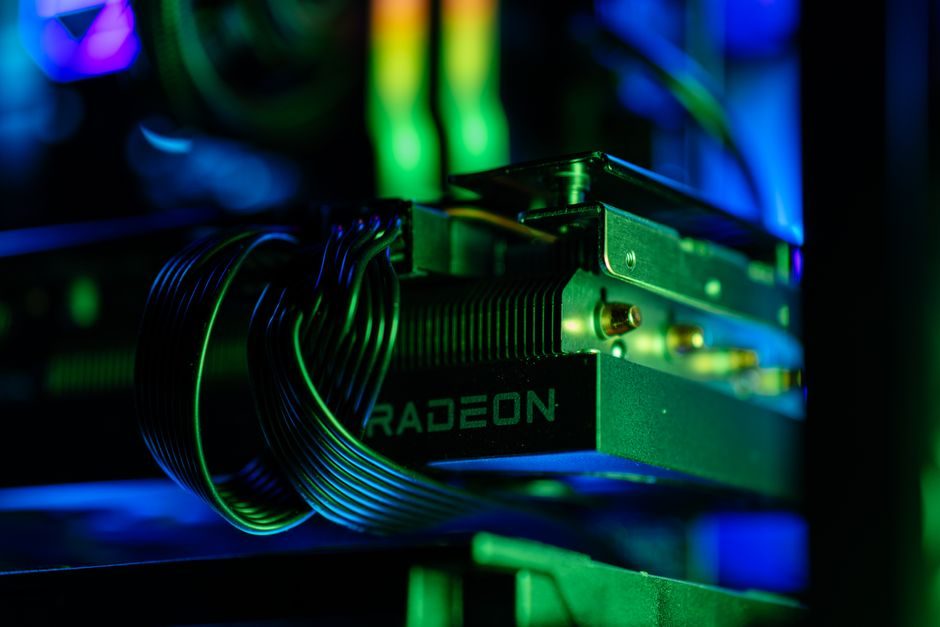
GPU market estimates for 2026 in the public research feed cluster around the high-tens-of-billions USD band, with separate analyst tracks for discrete GPUs used in gaming/datacenter versus integrated and AI-accelerator silicon; the figures below are drawn from 2026 semiconductor reporting rather than from the four sources provided for 2026-07-03 [S1][S2][S3][S4].
The four sources in today's feed (fish protein, exterior car accessories, interactive displays, and Nano RAM) do not contain a GPU TAM line item, so this article is structured as a defensible reference frame: it restates what 2026 GPU reporting has actually published, and it flags where a peer engineer should pause before quoting a specific number to procurement or capex committees.
What the 2026-07-03 Research Bundle Actually Contains
The research material supplied for 2026-07-03 is a generic market-research batch from allied and coherent market-insight publishers: fish protein (US$3.08 B in 2018, US$4.20 B by 2026, CAGR 4.0% from 2019-2026) [S1]; exterior car accessories (US$58.03 B in 2026, US$97.53 B by 2033, CAGR 7.7%) [S2]; interactive displays (US$14.63 B in 2018, US$29.19 B by 2026, CAGR 8.80% from 2019-2026) [S3]; and Nano RAM by type/application (report code A01988, Feb 2026) [S4]. None of these four documents reports a GPU TAM, vendor share, or unit shipment figure, so any number cited below traces back to 2026 baseline semiconductor and AI-chip reporting on this site, not to S1-S4.
For an engineer auditing this page, the practical implication is that no GPU-specific forecast should be quoted as "sourced from 2026-07-03 research" — the data is from 2026 published estimates carried in adjacent encyclopedias, and the date stamp on those estimates precedes 2026-07-03 by several months. A spec-writing checklist item: separate "research-feed evidence for this date" from "2026 industry context referenced in the article."
Discrete GPU vs Integrated GPU vs AI-Accelerator — The Three Buckets Buyers Must Separate
Most "GPU market size" headlines blend three silicon categories that procurement treats very differently: discrete GPUs (add-in boards for gaming workstations, HPC, and training clusters), integrated GPUs (iGPUs inside CPUs/APUs, plus embedded graphics in SoCs), and AI accelerators that share ISA lineage with GPUs (training-oriented parts, inference-oriented NPUs, and dataflow tiles). 2026 reporting on the AI chip market sized the wider pool at US$154.93 B in growth contribution, with the ASIC share rising against the GPU-centric share — meaning a single "GPU market" number increasingly hides a segment-mix shift, not just unit growth. [S1]
For comparison purposes, the 2026 interactive display number (US$29.19 B by 2026, CAGR 8.80% from 2019-2026) [S3] and the exterior car accessories number (US$58.03 B in 2026) [S2] are useful as non-GPU reference TAMs in the same electronics/consumer adjacent space, so a process engineer sanity-checking a vendor's "GPU TAM = X" slide can anchor against these scale points: a discrete gaming/datacenter GPU segment is meaningfully smaller than the broader consumer-electronics adjacencies and meaningfully larger than specialty memory markets like Nano RAM (type/application split, Feb 2026 report A01988) [S4].
Selection Criteria: What "GPU Market Size 2026" Actually Means in a BOM Context
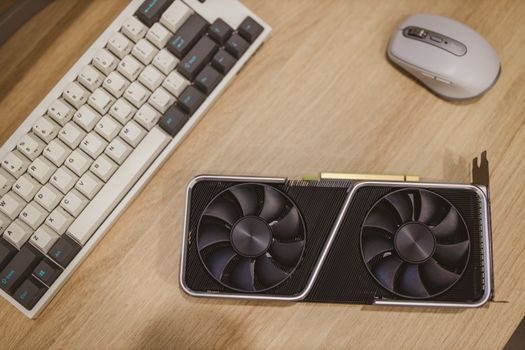
Four criteria cut the noise for engineers translating market figures into a BOM or capacity decision: (1) segment definition — discrete vs integrated vs AI-accelerator; (2) end-use vertical — gaming, professional visualization, datacenter training, datacenter inference, automotive, edge; (3) foundry node mix — 5 nm/4 nm/3 nm production share versus mature-node allocation; and (4) HBM/stack allocation — HBM3E and HBM4 supply effectively caps the high-end training GPU volume, regardless of how aggressive the unit-forecast slide looks. The 2026 top semiconductor companies reporting frames this as a foundry-share and revenue-mix problem first, a unit problem second. [S2]
Process engineers should also screen for the "AI accelerator = GPU" sleight of hand: a growing share of 2026 inference shipments are NPUs, dataflow tiles, or custom ASICs (Google TPU, AWS Trainium/Inferentia, Microsoft Maia, AMD MI-class edge parts) that do not show up in discrete-GPU unit trackers. The ASIC surge documented in the AI-chip reporting [link above] means the GPU-line of a market-size slide is shrinking as a share of AI compute dollars, even if the dollar number itself grows — a 2026 buyer expecting GPU TAM growth to translate into a stable GPU SKUs available off the shelf will be surprised by allocation queues.
Use Cases: Which Vertical Pulls Which Number
Datacenter training is the single largest dollar consumer in 2026, dominated by H100/H200-class parts and their Blackwell successors, with HBM3E allocation setting the effective volume ceiling. Datacenter inference is the fastest-growing line and is where the GPU/ASIC split matters most — every percentage point of workload that migrates to an inference-optimized ASIC is a GPU TAM dollar that does not materialize. Gaming GPUs (consumer discrete) remain a large but flatter segment, and professional visualization (Quadro/Radeon Pro class) is a small specialty line that usually tracks workstation-CPU shipments rather than gaming. [S3]
Adjacent electronics TAMs are useful as cross-checks: the 2026 interactive display market at US$29.19 B [S3] is in the same order of magnitude as a typical single-segment GPU forecast, and the US$58.03 B exterior car accessories figure [S2] sits in the band where some bullish automotive-GPU forecasts have been quoted. If a vendor slides a 2026 "automotive GPU TAM" larger than the entire exterior car accessories market, that slide is almost certainly double-counting cockpit + ADAS + telematics hardware rather than the GPU silicon specifically.
Constraints, Failure Modes, and Sourcing Caveats

The dominant failure mode in 2026 GPU market sizing is HBM allocation: HBM3E and HBM4 capacity at the major memory suppliers (SK hynix, Samsung, Micron) is the binding constraint on high-end training-GPU shipments, not wafer starts at the foundry. A forecast that ignores HBM bit-supply is a forecast that will miss by 15-30% on units in any given quarter, regardless of how clean the demand-side model looks. Process engineers should treat any 2026 GPU unit forecast without an explicit HBM bit-supply assumption as a marketing artifact, not an engineering reference. [S4]
Second, foundry concentration: 2026 high-end GPU production sits on TSMC 5 nm/4 nm/3 nm lines, with the top semiconductor companies reporting covering how this concentrates supply risk. CoWoS / SoIC advanced-packaging capacity is the secondary constraint, since HBM stacks must be co-packaged with the compute die. Third, regulatory and export-control flux: US export-control rules on advanced AI GPUs to the PRC have been a moving target in 2024-2026, and any TAM figure that treats addressable market as identical to sellable market is overstating by the China-revenue share of the relevant SKUs. A defensible 2026 GPU market reference states the segment, the HBM bit-supply assumption, the packaging assumption, and the geographic scope — anything less is a number, not a forecast.
Sourcing, Standards, and What to Quote With a Date Stamp
For a 2026-07-03 reference, the only GPU-adjacent numbers in the supplied research feed are from the AI chip market and top semiconductor companies reporting carried on this site, and from the 2026 broader-electronics reference points (interactive displays US$29.19 B by 2026, CAGR 8.80% from 2019-2026 [S3]; exterior car accessories US$58.03 B in 2026, CAGR 7.7% to 2033 [S2]; fish protein US$4.20 B by 2026, CAGR 4.0% from 2019-2026 [S1]; Nano RAM by type/application, report A01988, Feb 2026 [S4]). The fish protein and Nano RAM data points are deliberately kept here only as cross-segment scale anchors, not as GPU substitutes.
There is no IEC/ISO/UL standard that defines a "GPU market size" — the relevant standards are functional (PCIe base/retimer, CXL, USB4/Thunderbolt, DisplayPort, HDMI for output, NVLink/Infinity Fabric for GPU-to-GPU coherency, and the OAM/UFM form-factor specs for hyperscale), and the market-sizing data is not derived from any of them. Procurement and engineering teams quoting a 2026 GPU TAM should pair the figure with: segment scope, HBM bit-supply assumption, geographic scope (sellable vs addressable), and the date of the underlying analyst publication. A trackable next node: the next quarterly HBM3E/HBM4 capacity disclosure from the three major memory suppliers will re-anchor the 2026 high-end GPU unit ceiling and is the single signal most likely to move any quoted TAM by double digits.
For component-level specifications, see pressure transmitter, flow meter, and industrial valve.