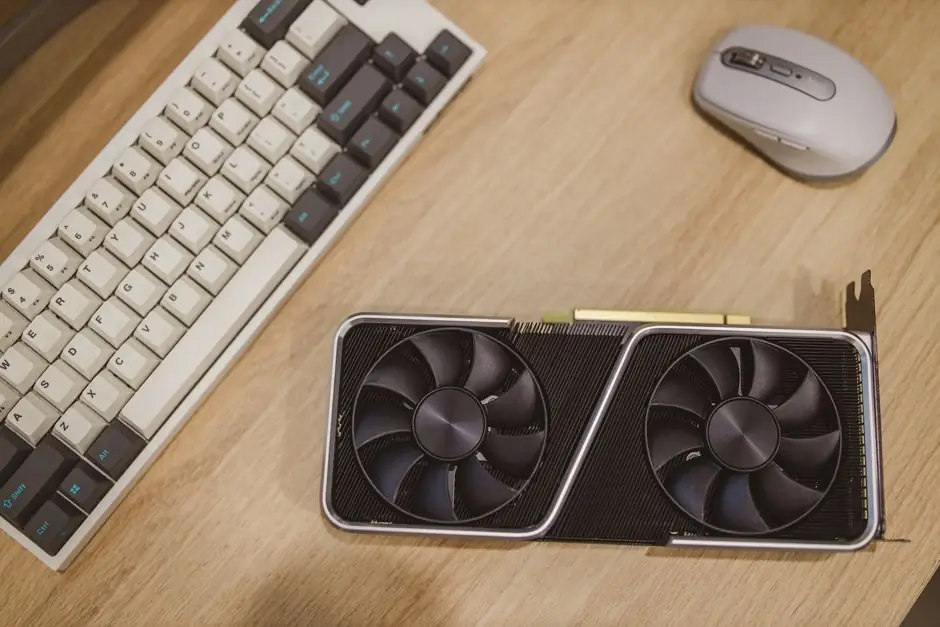
On-demand GPU capacity is effectively sold out and even older-generation chips are renting at levels not seen since 2024, while Blackwell PRO SKUs carry 3-7 month lead times and new H100 80GB SXM cards list at $25,000-$35,000 [S1][S2][S3].
Unlike the 2021-2022 crypto-driven cycle, this shortage is structural: high-bandwidth memory (HBM), TSMC N3 wafer capacity, and hyperscaler power budgets are all constrained at once, with spot DRAM prices up roughly 8x since early 2025 [S1][S2].
Where the Shortage Sits: HBM, TSMC N3, and Power
HBM is the single largest chokepoint: AI accelerators cannot ship without it, and DRAM makers are reallocating wafer capacity from commodity DDR to HBM stacks, which has dragged spot DRAM pricing up by roughly 8x since early 2025 [S1].
Foundry supply is equally tight. TSMC N3 capacity, which underpins most current AI accelerators, is approaching full utilization through at least 2027, and new EUV-equipped fabs take years to come online [S1]. The implication for buyers is that any "supply catch-up" story has to clear HBM and N3 simultaneously, which is why [S2] reports lead times lengthening rather than easing as of March 2026.
Power is the third leg. Hyperscalers are signing multi-year infrastructure deals ahead of deployment, and competing AI labs (Anthropic and Google have both rented capacity from xAI) are partnering to secure compute rather than waiting for new silicon [S1]. For a spec-side view of how the cloud-rental side is responding, see the GPU price index 2026: cloud rental surge versus retail volatility tracking file.
Demand Side: Agentic Workloads Push Token Counts 100x-1,000x
Traditional chatbot requests consume relatively small amounts of compute; agentic systems, particularly coding agents, consume orders of magnitude more tokens because they reason iteratively, run tools, and re-query models, in some cases 100x-1,000x more tokens per task than a single chat turn [S1].
Enterprise adoption is still in early innings across legal, financial, and healthcare workflows, so demand is not flattening even as unit shipments grow, which is the textbook condition for sustained pricing power on the supply side [S1].
Fusionww's March 2026 sourcing data shows the highest-pull SKUs are Nvidia H200 NVL PCIe, H100 NVL PCIe, L40S, L4, RTX 4000 Ada, RTX A6000, and T400 4GB, confirming that demand is concentrated in inference and training silicon, not consumer gaming parts [S2].
Price and Lead-Time Snapshot, March 2026
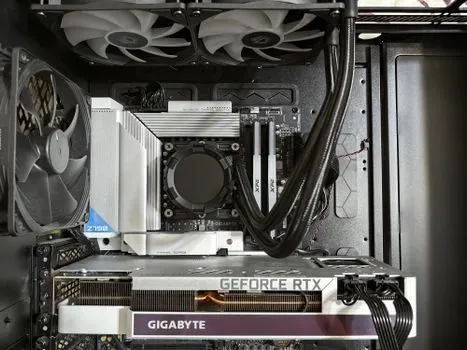
Real-time sourcing data from March 2026 puts L20 48GB at $4,000-$4,100 (10-15 units), L40S 48GB at $8,610-$8,900 (20-70 units), RTX 5000 32GB at $4,500-$4,770, RTX 4000 Ada 20GB at $1,385-$1,420, RTX 6000 Ada 48GB at $7,400-$7,800, RTX PRO 4000 24GB at $2,000-$2,100, and RTX PRO 6000 96GB at $9,450-$9,800 [S2].
New H100 80GB SXM cards list at $25,000-$35,000 with used units at $18,000-$22,000, while A100 80GB is discontinued new and trades at $12,000-$18,000 used, and A100 40GB sits at $7,000-$10,000 used [S3]. Bulk H100 wait times shortened from 6+ months to 2-3 months through 2025, but Blackwell PRO lead times moved in the opposite direction, hitting 3-7 months by Q1 2026 [S2][S3].
Allocation is "highly unstable across distributors," so pricing is tied to allocation timing and ship-to location, with spot-market sourcing becoming the norm for tier-2 and tier-3 buyers [S2].
Buying vs. Renting vs. Reselling: A Comparison
For a data-center buyer needing H100-class throughput today, renting on-demand is effectively sold out and older-generation rentals have re-rated to 2024 highs, so committed multi-year capacity (or a partner-hosted deal) is the only reliable path [S1][S2].
For a budget buyer who can tolerate Ampere, used A100 80GB at $12,000-$18,000 is the lowest-risk entry point, but expect 6-12 months of additional depreciation as Hopper and Blackwell expand [S3].
For consumer inference and fine-tuning, the RTX 4090 used market at $900-$1,400 (versus $1,600-$2,000 new) is the sweet spot, with the RTX 5090 launch in early 2025 still pulling 4090 prices down [S3].
For resellers and data-center liquidators, consumer GPUs lose 40-50% of value within 12 months of a successor launch, while data-center GPUs retain value longer thanks to AI demand but still drop 50-60% across a full generation transition [S3].
Risks, Failure Modes, and What Could Break the Cycle
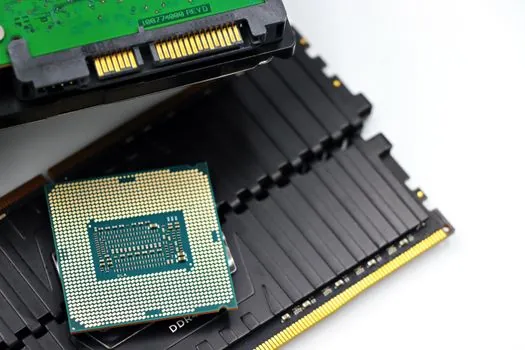
The cycle is structural, not speculative: AI demand is long-term and sustained, unlike the 2021-2022 crypto mining spike that unwound when coin economics flipped [S2]. Three things can break the logjam: a new HBM fab ramp (SK hynix, Micron, Samsung), TSMC N3 or N2 capacity easing, and incremental grid power for hyperscale campuses, and none of the three is on a 2026 timeline [S1].
Secondary-market risk is real. Data-center GPUs have often run at sustained compute load for months, so buyers should request serial numbers, runtime hours, thermal-throttling history, and RMA records, and run nvidia-smi plus a sustained memory test, because HBM errors can develop under heavy use and are not always immediately apparent [S3]. Used-pricing near 50-70% of new is the rational sweet spot; anything tighter does not justify the warranty trade-off [S3].
Depreciation risk is also one-sided. H100s hold value near-term but will depreciate sharply when Rubin-architecture GPUs arrive in late 2026 to 2027, so any depreciation model should be anchored to that event, not to historical Ampere curves [S3].
Trackable Signals Into Q4 2026
Watch the HBM allocation statements from SK hynix, Micron, and Samsung in their Q3 2026 earnings for any capacity release, watch TSMC N3 utilization disclosures for an inflection below 95%, and watch hyperscaler capex commentary for signs that the multi-year infrastructure commitments are being pulled forward rather than renewed [S1].
Side note for spec-driven sourcing teams: this is a useful case study in how a single component (HBM) can dominate the lead-time and price of a much larger assembly (an AI accelerator board), the same way a specialty fastener or sealing element can govern a construction-machinery-and-equipment bill of materials when supply tightens. Cross-link for context: the same supply-chain-dynamics pattern shows up in power-supply and dc-power-supply allocations when a single commodity (magnetics, semiconductor wafers) tightens, which is the pattern currently visible in HBM and N3.