
EUROBAT released the fourth edition of its Battery Innovation Roadmap in Brussels on 17 June 2026, projecting lithium at roughly 80% of the European battery market (about 6 TWh) and lead-acid holding a stable 650 GWh beyond 2035 [S2].
Innovation paths under lithium now branch from LFP into LMFP, from high-nickel NMC toward energy-density ceilings, and from liquid electrolytes toward solid-state, while sodium-ion is positioned as a complementary chemistry rather than a lithium replacement [S2][S3].
Chemistry generations and the LFP-to-LMFP shift
The 2022 chemistry-generation map placed production at Generation 3a (LFP) and 3b (high-nickel NMC), with Generation 3c expected before any post-2030 step-change [S4]. LFP overtook NMC globally in 2023 with a 40%+ share of EV batteries, driven by cell-to-pack architectures from BYD and Tesla standard-range packs [S3].
EUROBAT's 2026 roadmap calls out the transition from LFP to LMFP (lithium manganese iron phosphate) as the active innovation front inside the lithium family, with high-nickel chemistries continuing to serve energy-dense packs and solid-state deferred to a long-term horizon [S2]. The practical upshot for spec writers: a 2026 lithium battery purchase should match the cathode family to the duty cycle, not assume LFP equals LFP across vendors and vintages.
Solid-state, lithium-sulfur, and the post-lithium options
Fluoride-ion is cited with a theoretical energy density up to 7x current lithium technology, lithium-sulfur is flagged as the most mature "beyond Li-ion" chemistry with potential above 600 Wh/kg, and magnesium-ion is described as having comparable energy density to lithium-ion with two electrons per ion, but with greater side-reaction risk [S4].
For procurement teams, the operating rule is simple: solid-state is pre-commercial for most industrial buyers, sodium-ion is the first credible lithium-adjacent alternative for stationary storage and light mobility, and lithium-sulfur remains a research bet with cycle-life constraints [S2][S4]. Any spec calling for "solid-state" today should pin the energy-density target, the cycle count, and the safety certification, otherwise the term covers everything from pilot cells to productised packs.
Cell-to-pack integration and the 1 TWh production milestone
CATL's Qilin Battery (June 2022) hit 255 Wh/kg at the cell and 72% volume utilisation, then the Shenxing LFP (August 2023) became the first 4C LFP cell delivering 400 km in 10 minutes, with mass production starting Q1 2024 [S3]. Global battery demand crossed 1 TWh in 2024, with EV cells contributing over 950 GWh, and weekly 2024 demand exceeded total annual demand from a decade earlier [S3].
The structural lesson for industrial buyers: pack-level energy density is now a packaging problem as much as a chemistry problem, which is why cell-to-pack and cell-to-body designs have eaten the mass-market EV segment and why a load cell sizing workflow for stationary racks is not the right frame for traction-battery selection.
Price, raw materials, and the lithium-carbonate swing
Battery-grade lithium carbonate spiked to about $80,000/tonne in late 2022, roughly 10x the 2021 baseline, then collapsed more than 80% through 2023 to around $13,000/tonne as Australian, Chilean, and Chinese supply caught up with moderating EV demand [S3]. BloombergNEF's 2025 pack-price record low of $108/kWh sits downstream of that carbonate crash and the LFP cost curve [S3].
For sourcing teams, the swing implies that any multi-year CAPEX model with a hard-coded lithium price is wrong by construction, and that the EV charger supply chain conversation overlaps battery raw-material exposure in copper, aluminium, and electrolyte solvents, not just lithium.
Critical-mineral status and national roadmaps
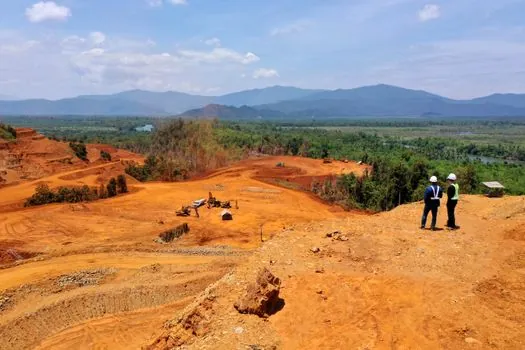
Lithium sits on the critical-minerals list of eight major economies (US, EU, Japan, Canada, Australia, China, South Korea, India) and is one of only three minerals appearing on all eight lists alongside tungsten and cobalt [S5]. The IEA forecasts lithium demand for clean energy growing roughly 17x between 2022 and 2045 in its net-zero scenario, the fastest of any critical mineral [S5].
India's IISD lithium-sourcing roadmap (September 2023) flags that Indian firms have played a negligible role in the lithium battery supply chain to date, with state-owned KABIL positioned as the policy instrument for overseas mine access [S5]. The European parallel is the EU Battery Regulation, which EUROBAT identifies as a primary innovation driver through carbon-footprint, responsible-sourcing, lifetime, and circularity mandates [S2].
Recycling, second life, and circularity targets
Harper et al. (2023) frame the lithium-ion circular economy roadmap around three end-of-life pathways, recycling, second-life stationary use, and re-manufacturing, with safety treated as an integral design constraint rather than an add-on [S6]. EUROBAT's roadmap aligns with that by mandating full circularity across all chemistries via the European Battery Regulation [S2].
For buyers, the operational ask is trackable: a 2026 lithium battery procurement spec should include a recycled-content floor, a documented second-life path, and a take-back clause tied to the same OEM, since the regulatory clock on these is already running under EU rules [S2][S6].
Decision criteria: which lithium chemistry for which duty
Three criteria sort the 2026 lithium options cleanly: energy density (Wh/kg), cycle life, and cost per kWh. High-nickel NMC leads on energy density, LFP/LMFP lead on cycle life and cost, and sodium-ion slots below LFP on energy density but competes on raw-material cost and stationary use-cases [S2][S4]. A four-row comparison is the cleanest way to capture this:
LFP/LMFP, energy density 160-200 Wh/kg class, cycle life 3,000-6,000 cycles typical, cost per kWh lowest of the lithium family and the BNEF 2025 $108/kWh record is anchored on LFP-dominant packs [S2][S3]. High-nickel NMC, 250-300 Wh/kg class at the cell, 1,000-2,000 cycles typical, higher $/kWh than LFP, favoured where range and mass dominate [S3][S4]. Sodium-ion, 100-160 Wh/kg class, cycle life improving but below LFP, lower raw-material cost, EU roadmap projects 8% market share by 2035 mostly in stationary and light mobility [S2][S4]. Solid-state, target energy density 350-500 Wh/kg, pre-commercial for most industrial buyers, EUROBAT treats as long-term [S2][S3].
For grid-tied storage, the spec converges on LFP or LMFP with cycle life and $/kWh as the binding constraints; for traction, energy density pulls the spec toward high-nickel NMC unless the duty cycle is urban delivery, where LFP's cycle life wins; for cost-sensitive stationary, sodium-ion is the chemistry to watch through 2027 as commercial volumes scale [S2].
Trackable signals over the next two quarters: EUROBAT's full technical annex to the June 2026 roadmap, the EU Battery Regulation implementing acts on recycled-content thresholds, and any LMFP mass-production line commissioning from a tier-1 cell maker, since LMFP scale is the most concrete 2026 indicator that the LFP-to-LMFP transition is moving from roadmap to shipment.
Spec-level background on the components involved: pressure transmitter, flow meter, and industrial valve.