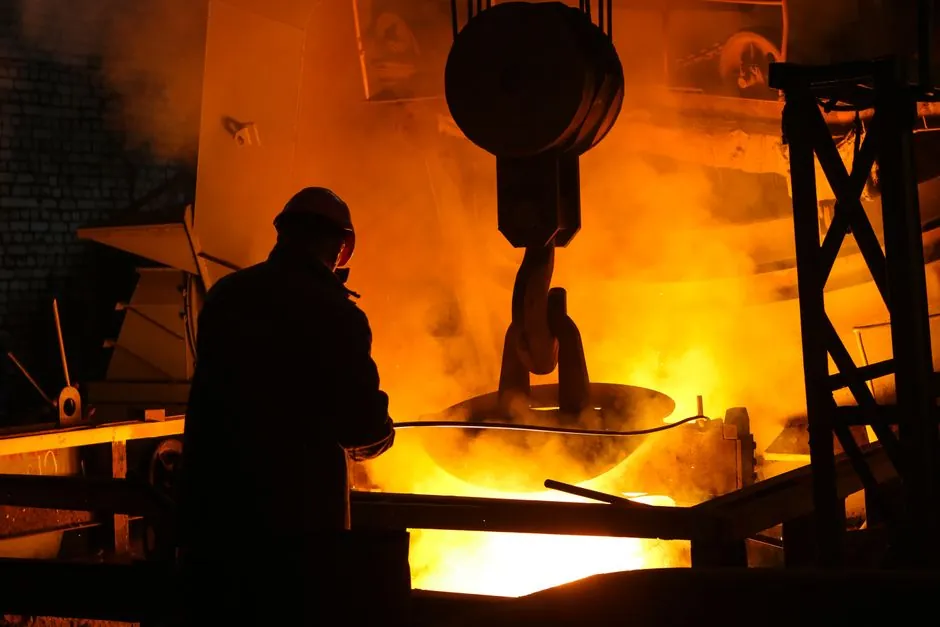
A properly manufactured clay-bonded or isostatic graphite crucible survives 80 to 150 melting cycles on aluminium in production service, while a hobbyist-grade clay-graphite unit can fail in 20 to 30 pours in the same application [S4][S5]. The gap is not marketing: it tracks directly to graphite content, binder composition, and operator-side thermal-shock discipline, not to the word "graphite" on the label.
For non-ferrous melting at 660-1100°C (aluminium, brass, bronze, zinc), crucible selection is essentially a three-way decision between pure graphite, clay-graphite, and silicon-carbide-graphite composites. The wrong pick inflates cost-per-pour and can contaminate the melt, particularly in aerospace and automotive aluminium specifications [S1][S4].
What "Graphite" and "Clay-Graphite" Actually Contain
Graphite crucibles are not pure carbon blocks: they are composites of natural or synthetic graphite (derived from petroleum pitch and coke) bonded with fireclay, carbonaceous fillers, or silicon carbide [S1]. Clay-graphite grades typically run 35-50% graphite content; silicon-carbide-graphite composites sit at 25-40% graphite with SiC substituted for part of the clay binder to lift thermal conductivity [S4].
Pure (isostatic) graphite crucibles carry the highest fixed-carbon content and the lowest impurity levels, but they oxidise rapidly in air above roughly 400°C, and that oxidation is the dominant wall-thinning mechanism in any air-breathing furnace [S1][S2]. Clay-graphite sacrifices raw conductivity for oxidation resistance: the ceramic binder slows burnout but caps thermal performance, and adds silica to the melt if a new crucible is not properly fired before first use [S3][S4].
Cycle Life: Numbers From the Field
Cycle-life data converges across independent sources: 80-150 cycles for a properly fired clay-bonded or isostatic graphite crucible on aluminium, against 20-30 cycles for an entry-level clay-graphite unit used by a hobbyist without controlled pre-heat [S4][S5]. The 4-6x spread is the single most important buying signal in this category, because it inverts the apparent price advantage of cheap crucibles.
Higher melt temperatures shorten life sharply. Bronze at 1090°C is more aggressive than aluminium at 700°C, and the same crucible running copper or brass will not match its aluminium cycle count [S1][S5]. Slag chemistry matters equally: aggressive dross from contaminated charge material erodes the inner wall chemically, on top of the mechanical and thermal stress each cycle imposes [S5].
Why Pure Graphite Burns Out Faster Than Clay-Graphite
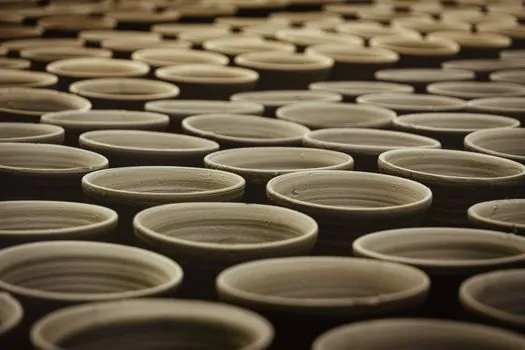
Graphite's hexagonal layered structure gives molten aluminium a contact angle greater than 90°, which is why the metal beads up rather than wetting the wall [S4]. That non-wetting property is the real reason pure graphite crucibles are valued for aluminium: cleaner pours, less carbon pickup, and faster cycle times versus clay-bonded alternatives. The trade-off is oxidation: at 600-800°C in air, a bare graphite wall loses mass measurably per shift [S2][S4].
Clay-graphite composites add a ceramic phase that physically shields carbon from oxygen, slowing burnout, but that same binder is more brittle and contributes silica to the melt if the wall cracks.
Decision Matrix: Pure Graphite vs Clay-Graphite vs SiC-Graphite
Three decision criteria separate the options in practice:
1. Operating temperature. Below 800°C (aluminium, zinc): clay-graphite is the cost-per-pour winner for production; hobby users should still spec a tempered clay-graphite and accept 20-30 cycles [S3][S4]. 800-1100°C (brass, bronze): pure graphite or SiC-graphite composites justify the premium because clay binder softens and oxidises faster at those temperatures [S1][S5].
2. Melt purity requirement. Carbon pickup into the melt is a real concern with any graphite-bearing crucible. For aerospace aluminium and reactive alloys, isostatic graphite with the lowest impurity spec wins despite shorter absolute life [S1][S4]. For general foundry brass and bronze, clay-graphite is acceptable and the cost saving is large.
3. Cycle frequency and operator control. A production foundry running 5+ pours per shift per crucible with disciplined pre-heat will see the 80-150-cycle ceiling; a hobby shop charging cold metal into a hot pot will see 20-30 cycles regardless of crucible grade [S3][S5]. Operator discipline is the dominant variable in real-world life, more important than the material label on the box [S5].
Failure Modes and How to Read Them
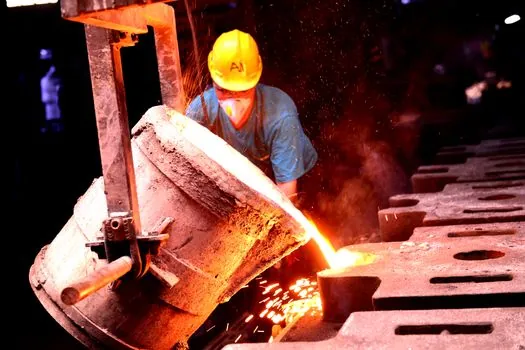
Crucibles fail by four distinct mechanisms, and the right diagnosis tells you what to change next: thermal-shock cracking from skipped pre-heat, oxidation thinning in air furnaces, chemical attack from aggressive slag, and mechanical damage from tongs or impact [S5]. Thermal shock is consistently identified as the leading killer across all graphite-bearing grades; a cold crucible plunged into a hot furnace behaves like cold glass under boiling water, except the temperature gradient is several hundred degrees [S5].
Mechanical damage is invisible at first: a micro-fracture from a tong nick becomes a crack under the combined stress of thermal cycling and molten-metal hydrostatic pressure [S5]. For clay-graphite specifically, skipping the initial "tempering" fire (a slow ramp to drive residual moisture and binder volatiles out before the first real pour) is the single most common cause of first-pour failure [S3].
Standards, Specifications, and What to Demand on the Datasheet
No single ISO or ASTM grade number governs crucible life in the same way API 6D governs valves, so the spec sheet is the controlling document. Demand four numbers from any supplier: graphite content by mass (%), maximum continuous service temperature (°C), apparent porosity (%), and bulk density (g/cm³). Lower porosity and higher density correlate with longer oxidation life in any graphite-bearing grade [S1][S4].
For precious-metal and laboratory melts, demand a fixed-carbon spec and a sulfur spec, both relevant to melt contamination; synthetic graphite from petroleum precursors is the typical low-sulfur choice [S1]. For aluminium production, the non-wetting contact angle claim should be backed by a service temperature range and an oxidation rate in air at rated temperature, since that is the actual failure metric, not graphite content alone [S4].
Sourcing, Total Cost, and Practical Sizing
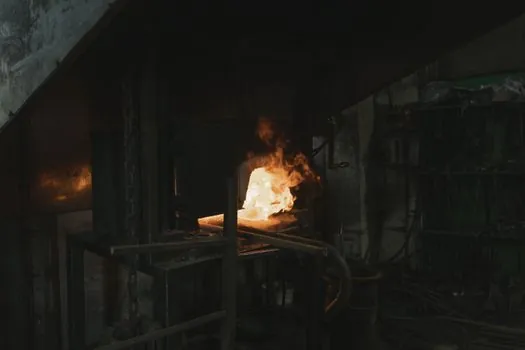
Spec a crucible by furnace crucible-furnace interior dimensions plus a 25-40 mm expansion gap, not by the metal charge weight alone, because the dominant failure mode is thermal, not load-related [S5]. For a small foundry pouring 50-200 kg aluminium per shift, a mid-grade clay-graphite at the 35-50% graphite band delivers the lowest cost-per-pour if the operator pre-heats; a gas aluminum melting furnace shop running two shifts a day will recoup the SiC-graphite premium within the first month of operation [S1][S5].
For deeper cross-reference on the gas-fired side of the same decision, the gas consumption per melt cycle in crucible furnaces spec walk is worth reading next, since cycle time and gas usage are the operating-cost multipliers that any crucible-life decision must run against.