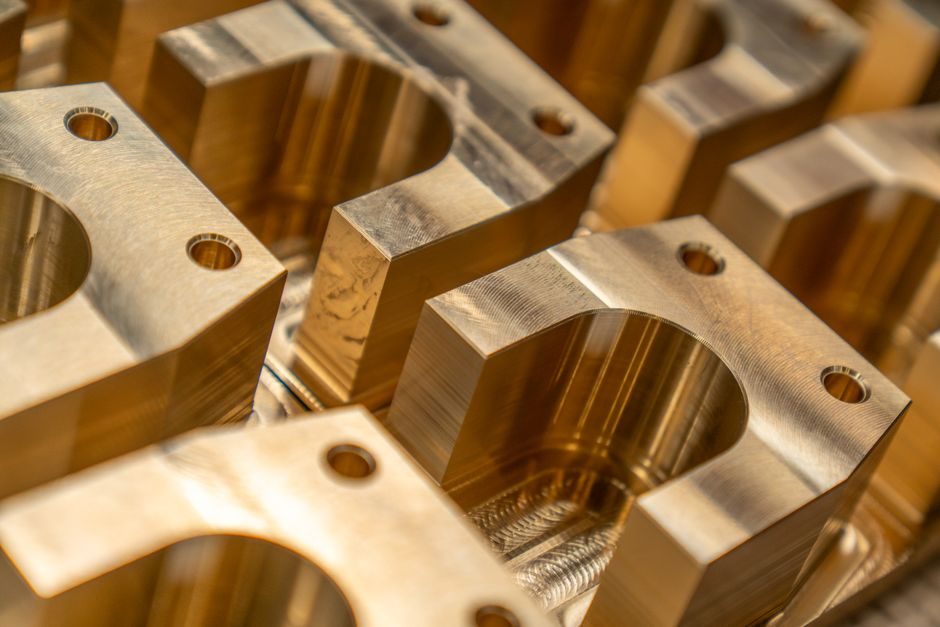
LPDC machines are defined by three orthogonal axes: chamber design (cold vs hot), pressure class (typically 0.05–1.0 bar gauge top pressure on the melt, versus 50–1,200 bar injection pressure on HPDC), and alloy compatibility (aluminum, magnesium, zinc, brass) [S1][S2].
Chit Shun Machinery markets a CSC cold-chamber LPDC platform with dual-proportional hydraulic pressure/flow control and three-stage injection, alongside a CSS hot-chamber counterpart from the same vendor, illustrating the canonical LPDC subclass split [S1].
Chamber Design: Cold vs Hot
Cold-chamber LPDC keeps the injection cylinder out of the melt bath; a ladle transfers metal into a shot sleeve per cycle, which is the required configuration for aluminum alloys (melting range roughly 580–660 °C) because molten aluminum aggressively attacks immersed steel components [S2].
Hot-chamber LPDC submerges the gooseneck and plunger directly in the furnace pot, eliminating the ladle step and shortening cycle time; the trade-off is that the immersed injection hardware must tolerate the molten alloy, which is why hot-chamber machines are restricted to lower-melting-point alloys such as zinc, magnesium, copper and lead-bearing compositions [S2].
CSC-class cold-chamber LPDC units pair the cold-chamber architecture with European-style multi-stage injection control, with hydraulic accumulators providing 2- and 3-stage pressure profiles for stable fill of thin-wall automotive castings [S1].
Pressure Class and Process Window
LPDC operates at a fraction of the injection pressure used in HPDC: a typical LPDC fill runs at 0.2–1.0 bar of pressurized air or inert gas on top of the melt in a sealed furnace, driving metal up the riser tube into a vertically-oriented die. [S1]
HPDC, by contrast, uses 50–1,200 bar injection into a horizontal die cavity via a high-speed piston, which is the reason HPDC produces thinner-wall and higher-tolerance parts, but with more entrapped gas and porosity [S4].
The CSC LPDC platform documents three-stage injection speed control with a low-pressure die-closing protective program, so the clamping system itself uses hydraulic pressure (tens of bar range) independent of the low-pressure fill circuit [S1].
Material and Alloy Mapping
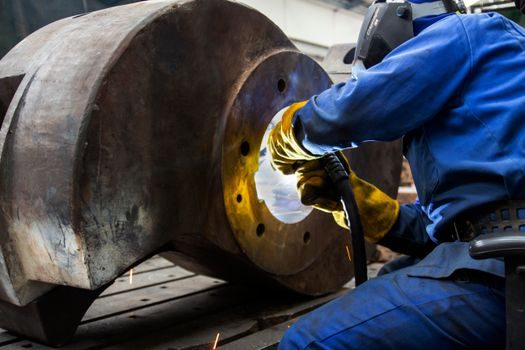
Aluminum alloys dominate LPDC output, with A360, A380, ADC 10, ADC 12, ZL102 and ZL104 listed as standard LPDC-friendly casting grades for automotive and motorcycle cart components. [S2]
Magnesium alloys (AZ91, AM60) and lead-free silicon brass have also been qualified for LPDC in published metallurgical studies, with the brass work demonstrating β-CuZn(Si,Al) and α-Cu(Zn,Si) phase formation via LPDC, expanding the alloy envelope beyond aluminum [S5].
Aluminum is the highest-volume LPDC alloy globally, and the GF Automotive "LamiCast" variant combines sand molding with low-pressure gravity fill, showing the architecture adapts to permanent, sand, and hybrid die formats.
Subclass Comparison by Selection Criteria
Across the four decision criteria that buyers actually compare on, cold-chamber LPDC and hot-chamber LPDC split cleanly: alloy range favors cold-chamber (covers Al/Mg/Si-brass); cycle time favors hot-chamber (no ladle transfer); die-cost per part is roughly comparable, while surface finish on thin-wall parts edges to cold-chamber because of better melt cleanliness from ladle filtration. [S3]
For buyers specifying equipment, the low pressure die casting machine class is the right starting point; buyers evaluating broader process options should weigh it against the die casting machine family tree, since the same vendor frequently supplies both LPDC and HPDC platforms.
Where the alloy is aluminum and the part is structural, cold-chamber LPDC (CSC-class architecture) remains the default; the aluminum die casting machine category is essentially a material-specific view of the same cold-chamber platform with revised shot sleeves and ladle metallurgy.
Machine Variants: Continuous, Tilt, and Specialty

Chit Shun Machinery's range shows the real taxonomy in the market: CSC = cold-chamber standard, CSS = hot-chamber, CM = hot-chamber variant, and CSC-continuous = cold-chamber with a continuous-feed option for high-volume lines [S1].
Beyond the basic cold/hot split, GF Automotive's LamiCast marries aluminum sand molds with low-pressure gravity fill, essentially a gravity die casting machine topology with a pressurized furnace instead of an open pour, which is a niche but documented subclass.
For magnesium-heavy work, the magnesium die casting machine class is overwhelmingly hot-chamber LPDC or HPDC, because the lower melt temperature (~650 °C) lets the gooseneck survive direct immersion, while still needing protective atmosphere to control oxidation.
Use Cases and Fit-For-Purpose Limits
Typical LPDC production parts include automotive wheels, suspension knuckles, engine blocks, cylinder heads, and motorcycle frame castings, where the 0.2–1.0 bar fill gives clean, low-porosity, heat-treatable aluminum compared to HPDC's gas-entrained structure. [S4]
LPDC is NOT a fit for thin-wall consumer electronics (use HPDC), NOT a fit for high-volume zinc toy parts (use hot-chamber HPDC or die casting under 1 second cycle), and NOT a fit for very large single parts (use sand casting with riser systems sized for static pour, not pressurized riser tubes) [S2][S4].
Where porosity control and heat-treatable weld integrity are mandatory (e.g., automotive safety nodes, vacuum-chamber work), the vacuum die casting machine subclass adds a sealed die cavity and pump train, and total cost of ownership for that class tracks to pump runtime and leak rate; the Vacuum Die Casting TCO: Pumps, Leak Rate and Downtime Drive 5-Year Spend reference breaks out the pump-vs-leak cost split buyers should model.
Limitations, Failure Modes and Standards
Failure modes specific to LPDC include riser-tube freeze-off (premature solidification in the riser stalk above 1.0 bar fill), oxide entrainment from ladle transfer on cold-chamber units, and gooseneck erosion on hot-chamber units running zinc or magnesium above 700 °C [S2].
Buyers comparing LPDC against the squeeze-casting process for higher-integrity parts can review the Squeeze Casting Machine: Process Specs, Benefits and Trade-Offs reference, which details where direct hydraulic pressure during solidification beats pressurized riser fill.
Machine-level safety and control integration is documented by the OEM (PLC, Siemens control platform, dual proportional valves, hydraulic accumulator staging) rather than a single industry standard; buyers should audit cycle-time and clamping-tonnage certificates per shipment rather than assuming a uniform cross-vendor benchmark [S1].
For new plant installations, the Vacuum Die Casting Machine Installation: Foundation, Pump Train and Leak-Rate Gates walkthrough covers foundation, pump train, and leak-rate commissioning gates that also apply in part to standard LPDC cells with vacuum-assisted dies.
Buyers cross-shopping heavy-equipment plant lines (for example, a casting facility that also runs structural-steel fabrication) can compare chassis-grade specifications against the Steel Plate Types and Classifications: A 2026 Spec Reference and Steel Rebar Manufacturing: Hot-Rolling Process, Grade Map and Fabrication Gates for plant-infrastructure material selection.