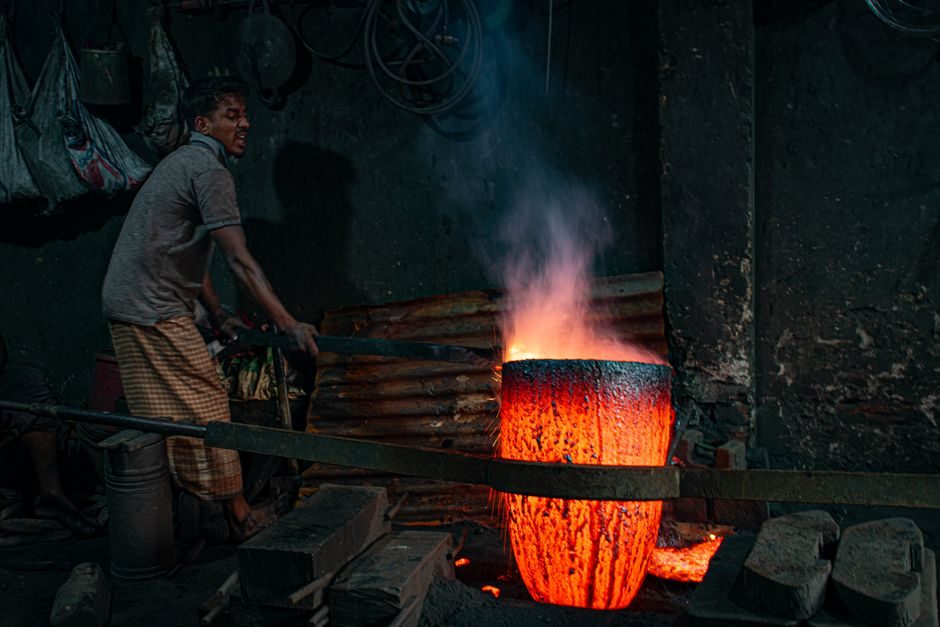
Specifying a casting cell starts with the alloy: gravity die casting is PLC-controlled, touch-screen-set, hydraulically actuated and used for brass and zinc permanent-mould work [S6], while cold chamber die casting machines from Chinese suppliers cover 300-900T clamping force and are built for aluminum and magnesium high-pressure fills [S4][S5]. Pick the family of machine first, then size the tonnage to the projected part weight — that order alone eliminates roughly half of the bad buys this industry sees.
The global die casting machine market sat at US$2,664.7M in 2020 and is projected to reach US$4,864.6M by 2030 at a 6.1% CAGR, which means more cold-chamber and gravity cell capacity is being shipped every year, not less [S3]. For buyers mapping out 2026 capacity additions, that growth is concentrated in mid-tonnage (650-900T) cold-chamber cells out of Shunde, Taizhou and Bengbu [S2][S4].
Operating Principle and Equipment Architecture
Gravity die casting fills a metal mould under gravity (or low-pressure assist) with no separate injection shot cylinder; the PLC sets cycle, hydraulic clamps hold the die, and the operator loads melt from a hand-poured ladle or a low-pressure furnace [S6]. It is functionally a permanent-mould process, not a high-pressure die casting process, and the machine is structurally closer to a hydraulic press than to a shot-end machine.
Cold chamber die casting is a true high-pressure process: molten metal is ladled into a cold shot sleeve and then injected through a plunger into a clamped die at high velocity. The Lanson and Bengbu Long Hua ranges for example are built to international standards and target automotive, electrical, and telecommunications parts where repeatable high-pressure fill is mandatory. The key mechanical difference — external shot sleeve, separate ladling step — is what makes the cold chamber the only safe architecture for alloys that attack an immersed plunger.
Alloy Fit and Process Envelope
Gravity cells are explicitly scoped to brass and zinc alloys in the Wuxi MAC and similar product lines, with PLC/touch-screen control and imported hydraulic components [S6]. Zinc and brass have low melting points and limited chemical attack on the simple steel mould, which is why a permanent-mould fill works at all.
Cold chamber machines handle aluminum and magnesium (and copper variants per Lanson), where melt temperature and metal-chemistry would destroy an immersed plunger and where high-pressure fill is needed to push alloy into thin walls. For the 0.01-100 kg aluminum part range, Chinese contract foundries such as Weiheng run cold chamber cells from 300T upward [S5]. Anyone quoting aluminum structural castings on a gravity line is either describing a low-pressure die casting cell or mislabelling the process — the two are not interchangeable.
Tonnage Bands, Clamping Force and Shot Weight
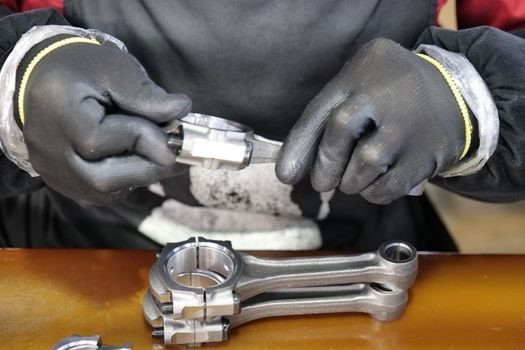
On the high-pressure side, the Lanson medium cold-chamber line sits in the 650-900T band [S4], and the Weiheng aluminum foundry maps part size to cells from 300T and up [S5]. Cold chamber tonnage is sized to projected area × specific injection pressure, and 650-900T covers the bulk of mid-sized automotive and 3C structural castings.
Gravity die casting machines are rated by table size and clamp force rather than shot weight, since fill is not pressure-driven; the Wuxi MAC line and equivalents run with imported hydraulics and PLC/touch-screen control, but the published spec sheets emphasize mould table dimensions and clamp tonnage in the tens-to-low-hundreds range, not the 650-900T band seen in cold-chamber catalogues [S6]. For a fuller primer on cold-chamber architecture, the cold chamber machine encyclopedia page covers the shot-end layout, and the broader die casting machine entry frames how both gravity and cold-chamber fit the wider machine taxonomy.
Selection Criteria: A Four-Axis Comparison
Line the two process families up against the four decisions a process engineer actually has to make: [S1]
1. Alloy — zinc, brass and non-ferrous alloys that do not attack a permanent mould fit gravity; aluminum, magnesium and copper require a cold chamber machine because the melt would destroy a submerged plunger [S6].<br>2. Tonnage / clamp — gravity cells run tens to a few hundred tons; cold-chamber cells start around 300T for aluminum and reach 650-900T for medium structural castings [S4][S5].<br>3. Part weight and complexity — gravity handles simpler geometry and heavier sections where metal flow is gravity-assisted; cold-chamber wins on thin walls, fine surface, and complex 3D geometry needing high-velocity fill [S5].<br>4. Throughput and finish — high-pressure cold-chamber gives finer surface, tighter tolerance and faster cycles; gravity gives lower tooling stress and longer die life on simple shapes.
If the part is a brass valve body under 5 kg, gravity is the correct choice. If it is a 2 kg aluminum automotive housing with 2 mm walls, cold chamber is the only correct choice. A 1 kg zinc hardware part could go either way; the deciding factors then become cycle time, surface finish requirement, and existing tonnage on the shop floor.
Use Cases by Part Family

Gravity permanent-mould cells are commonly specified for brass plumbing fittings, decorative hardware, valve bodies and zinc hardware where the mould fills cleanly under gravity and surface finish requirements are moderate. The PLC/touch-screen hydraulic architecture and imported hydraulic components referenced in Wuxi MAC-style product lines map directly to this bracket [S6].
Cold chamber cells are the workhorse for aluminum automotive structural parts, motor housings, 3C electronics chassis, telecommunications enclosures, and magnesium laptop or instrument housings — categories where Lanson, Bengbu Long Hua and Taizhou Juda all publish active catalogues [S2]. For a deeper dive on the high-pressure variant of this question, the hot-chamber die casting machine buying guide 2026 and the hot-chamber vs squeeze casting alloy/pressure logic pieces are useful cross-references where zinc or magnesium alloys could plausibly run on either architecture.
Limitations, Failure Modes and Cost Levers
Gravity die casting fails on three predictable axes: porosity when section thickness is uneven, slow cycle times on heavy sections, and limited surface definition versus high-pressure fill. The process also cannot run alloys above the brass/zinc melt-point band without specialist refractory or die materials, which is why suppliers' published scopes stay inside that envelope [S6].
Cold-chamber failure modes centre on shot-sleeve attack by aluminum and magnesium (scheduled sleeve replacement), die soldering on aluminum parts, and high initial die cost at 650-900T clamp force [S4][S5]. The market projection to US$4,864.6M by 2030 implies that 2026 lead-times on 650-900T cold-chamber cells remain long and pricing remains firm; budget for six-to-nine-month delivery on turnkey cold-chamber lines from Shunde/Taizhou/Bengbu suppliers [S3][S2][S4]. For a wider machine-buying context, the hot-chamber die casting machine price and cost guide 2026 is the natural companion for buyers sizing hot-chamber and cold-chamber cells together.
Standards, Sourcing and Specification Anchors
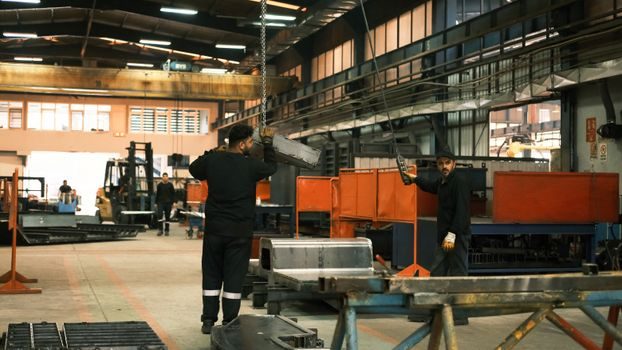
Chinese cold-chamber suppliers explicitly state their machines are "designed and manufactured according to international standards" and target automotive, electrical appliance and telecommunications end-use, with export reach across North America, South America, Eastern Europe, Southeast Asia, Africa, Oceania, the Middle East, Eastern Asia and Western Europe. For buyers writing a sourcing RFQ in 2026, the 91.6% response rate tag on Alibaba's hot-chamber supplier pool is one verifiable benchmark for the responsiveness of the wider China die-casting machine supply base [S1].
From a process-spec standpoint, the aluminum die casting machine page covers the alloy-specific machine envelope, and the gravity die casting machine entry frames the permanent-mould cell in the same taxonomy. The next decision nodes a 2026 buyer should track are: (1) confirm whether the 650-900T medium cold-chamber tonnage band has shortened lead times after the 6.1% CAGR capacity build-out [S3][S4], and (2) verify each short-listed supplier's current export documentation against the Incoterms and LC/T/T payment terms published in their made-in-china catalogue pages [S2].