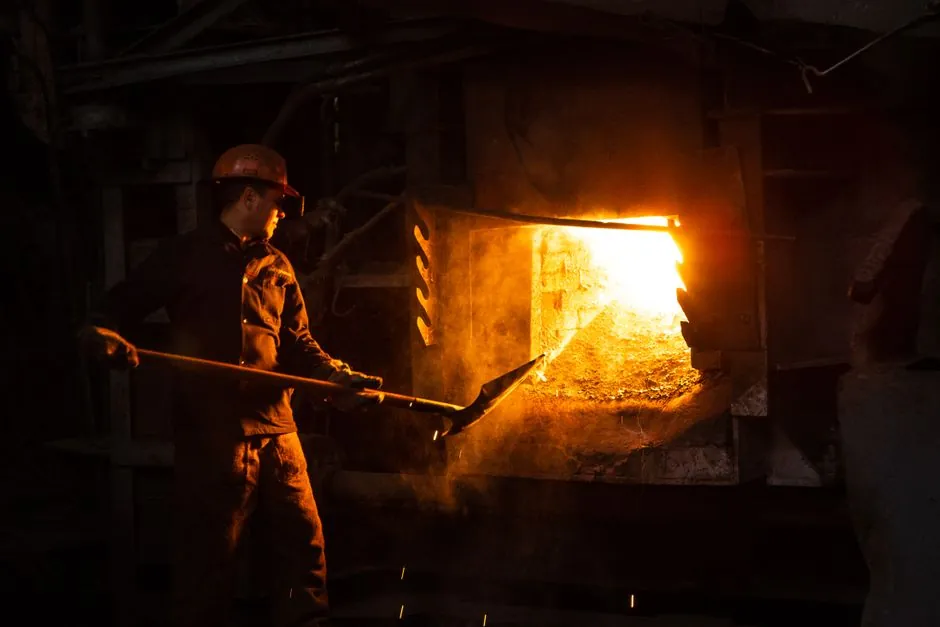
Cast iron generally refers to gray, ductile, and malleable iron with carbon content above 2%, whereas cast steel generally refers to normal carbon steel and alloy steel with carbon content below 2%.
Define the Core-Box Duty Before Choosing the Material
A hot box core box supports the cavity into which resin-coated sand is compacted and cured. Ferroloy produces resin-coated sand cores on automatic and manual hot-box machines, and applies core coatings where required [S1].
Gray cast iron and cast steel have many different physical properties. Gray cast iron is used for housings and valve bodies where stiffness is more important than tensile strength.
For reference, the equipment boundary can be compared with a hot box core machine, but the material decision belongs to the core box itself, not to the molding machine model.
Compare Cost, Strength, Thermal Behavior, and Service Life
It has good casting properties, vibration damping, wear resistance, machinability, and low notch sensitivity, but low tensile strength and elongation in ordinary grades [S3].
Gray cast iron also has high thermal conductivity and specific heat capacity, properties used in cookware and disc-brake rotors [S4]. Gray cast iron has high thermal conductivity and specific heat capacity. Heat-resisting grades and cast alloy-steel grades must therefore be selected from their own published specifications rather than assumed from the generic labels “gray iron” or “steel.”
Use Gray Cast Iron for Stable, Economical Tooling
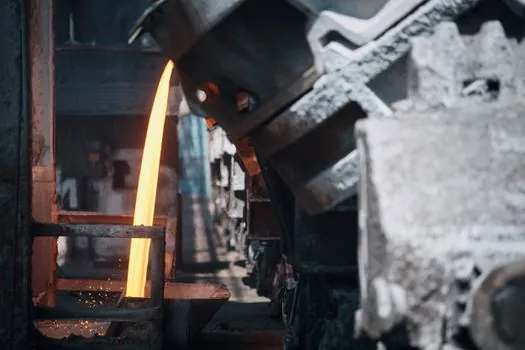
Gray cast iron is appropriate for rigid core-box frames, bases, clamping structures, and large housings where elastic deflection and damping matter more than peak tensile strength. Gray cast iron has good machinability and wear resistance, and its graphite microstructure gives it a uniform gray appearance.
Gray cast iron is used for housings, valve bodies, and electrical boxes, including applications where stiffness is more important than tensile strength.
Limits matter. Gray cast iron has very low tensile strength and elongation. Confirm section thickness, casting soundness, machining allowance, and joint interfaces against the actual core-box drawing before approving the grade.
Use Cast Steel for Severe Loading and Thermal Exposure
Neither cast iron nor cast steel is universally better, because suitability depends on the product.
Account for Ejection, Wear, and Repair Consequences

Core-box failure is often governed by local mechanics rather than average material strength. Sharp internal corners create stress concentration, moving ejector components expose edges to repeated impact, and sand flow creates abrasive wear along cavity surfaces. Gray iron’s good wear resistance, machinability, and low notch sensitivity are useful for these features [S3], but low tensile strength and elongation make it less tolerant of cracked sections or overloading [S3].
Steel offers greater tensile and dynamic-load capability, yet a welded repair can alter local hardness, alignment, and residual stress. If the box is large, costly, and mainly structural, gray iron can reduce the replacement burden. If a small failure would stop molding, damage a high-value cavity insert, or create a personnel hazard, the higher steel cost may be justified.
Do not mix materials without a deliberate interface plan. Gray iron and steel have different thermal expansion, stiffness, and damping behavior, and steel inserts or armor plates can create local load-transfer and bolting issues. A practical hybrid puts wear-sensitive steel inserts in a rigid gray iron frame only after calculating the insert fit, fastener loads, heat path, and replacement method.
Specify the Core Box as a Complete Tooling Package
A material call alone does not release procurement. The specification should identify the casting process, grade, heat treatment where applicable, machined datum scheme, cavity surface, inserts, vents, clamping interfaces, ejection components, coating compatibility, inspection method, and repair limits. Iron-foundry production commonly uses resin-coated sand with automatic and manual hot-box machines, while unusually complex cores may be 3D sand-printed by a third party and shipped separately [S1].
Tooling control also affects reliability. Ferroloy records every customer core box in its ERP tooling module, assigns each box a location, and tracks monitored activity [S1]. For a plant, an equivalent register should record box identity, casting and machining revisions, insert changes, repair history, and service dates. This is more useful than a generic material label because a repaired gray iron box and a replacement steel box can have different life-cycle economics despite having the same core geometry.
Sand molds and cores have adequate refractoriness even for steels, which require higher casting temperatures than cast irons [S2]. That fact supports the use of resin-coated sand cores, but it does not establish the safe operating temperature of every core-box material. The box temperature limit must come from the selected casting grade, coating, binder, chemical system, and machine supplier’s operating envelope.
Apply the Selection Rule by Load and Consequence
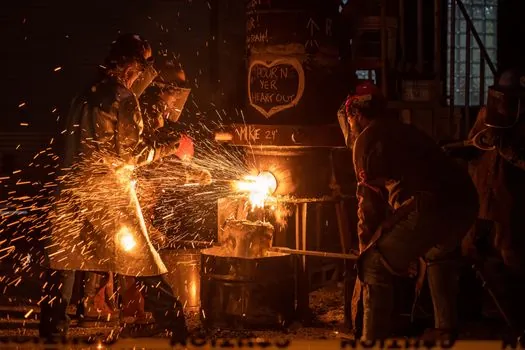
Choose gray cast iron for large, stiff, low-complexity boxes, repetitive production, modest ejection loads, and repair cost that must remain controlled. Choose cast steel for high tensile or dynamic loads, severe impact, higher-temperature duty, complex geometry, or a failure consequence that outweighs higher casting cost [S3]. Choose ductile or malleable iron only when the design needs more strength, ductility, heat resistance, or toughness than gray iron and the foundry can control its more demanding production process [S3].
The practical recommendation is to price the box as tooling, not as a casting alone. The final comparison should include material and machining cost, expected life, planned inserts, repairability, thermal operating envelope, and downtime if the box fails. For further process context, compare the hot box core machine operating envelope with the proposed box material and service conditions.
Before procurement, obtain the foundry’s material data and casting drawing, calculate local stresses and deflections, verify the machine’s maximum tooling temperature, and document the acceptance criteria for dimensional accuracy and surface condition.