
Green hydrogen accounted for less than 1% of global hydrogen production as of 2024, yet the Global Green Hydrogen Market reached US$ 12.4 billion in 2025 and is forecast to climb at a 40.5% CAGR to US$ 264.7 billion by 2035 [S4][S5].
The substitution math is blunt: industrial hydrogen from fossil fuels generated roughly 680 Mt of CO₂ in 2023, with about 60% feeding ammonia and 30% feeding methanol, both addressable today by water electrolysis paired with renewable power [S2]. Cost remains the dominant barrier, with green hydrogen running 1.5x to 6x the levelised cost of steam-methane-reforming hydrogen [S2].
Electrolyser technology split and what each stack asks of the instrumentation layer
Alkaline electrolyzers held 66.6% of the 2025 green hydrogen by-technology segment, PEM units held 28.0%, and SOEC stacks held 3.8% [S4]. The three chemistries impose very different pressure, temperature, and purity envelopes, and any Industry 4.0 architecture has to map instruments to each stack type rather than treat electrolysis as a single asset class.
A 2025 floating-solar AEM pilot reported 45.77 kWh/kg specific energy, 73.3% to 86.2% stack efficiency, 66% to 71% system efficiency, and 99.22% H2 purity, with a solar-assisted system recording 52.12 kWh/kg and a $5.84/kg hydrogen cost against a 6.9-year payback [S4]. Those numbers define the operating window that the flow, pressure, and analytical loops must resolve without drift. For a practical instrumentation map across PEM, alkaline, and SOEC stacks, the Green Hydrogen Instrumentation: Flow, Pressure, and DCS Spec Map for 2026 Electrolyzer piece lays out the field-side choices engineers are making on real builds.
Selection criteria for Industry 4.0 hardware on electrolyser skids
Selection pivots on four measurable criteria: turndown ratio under intermittent renewable input, hydrogen purity tolerance for downstream use, certification scope for hazardous-area zoning, and native Ethernet-APL or OPC UA Pub/Sub support for brownfield DCS migration. The 2025 AEM data point of 99.22% H2 purity sets a realistic upper bound for low-temperature stacks, while SOEC units push into higher-temperature regimes that change the materials and transmitter classes a plant must qualify [S4].
For duty where steam-side mass flow must be reconciled against hydrogen output, the principles covered in How to Choose a Vortex Flowmeter: Spec Map for Steam, Gas, and Liquid Duty translate directly to boiler-feed and oxygen-vent metering on SOEC skids. A pressure transmitter on the hydrogen outlet leg is the single most failure-prone instrument, because it sees wet, cyclic, high-pressure gas and must hold both ATEX/IECEx zoning and long-term stability under oxygen-decomposition-safe wetted materials.
Who benefits, and who should not specify green hydrogen yet
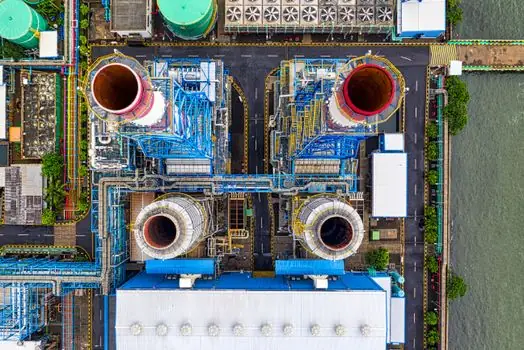
Green hydrogen is the right feedstock for ammonia and methanol plants with decarbonisation mandates, refineries under low-carbon fuel standards, and steelmakers piloting hydrogen direct reduction, because the existing process is already a hydrogen consumer and the alternative low-carbon routes remain immature [S2]. It is not yet a sensible feedstock for small-scale merchant H2 buyers in regions without renewable PPAs, since the 1.5x to 6x cost premium over SMR hydrogen has not been closed by policy support [S2].
Operators in the EU 2026 hydrogen auction cohort are a clear fit: 4.3 GWe of proposed electrolyser capacity was submitted, six renewable-hydrogen projects secured €270.6 million in grants for 381.25 MW, and fixed-premium bids ranged from €0.33 to €1.88 per kilogram of certified renewable hydrogen [S4]. Plants outside the auction framework, in jurisdictions without production tax credits or contract-for-difference schemes, should treat the cost premium as a permanent margin hit rather than a temporary hurdle.
Comparison of the three electrolyser paths on engineering criteria
On the four criteria that drive instrument and control architecture, the options line up as follows. Alkaline: 66.6% market share, lowest capex, mature turndown of roughly 30% to 100%, and modest purity headroom; PEM: 28.0% share, fastest dynamic response for direct solar/wind coupling, higher capex per kW, and the cleanest integration with flow meter skids because of its compact stack footprint; SOEC: 3.8% share, the highest electrical-to-hydrogen efficiency band, but the most demanding high-temperature pressure sensor and sealing choices [S4].
Per the Salem et al. 2026 review, the trade-off is that alkaline remains the lowest-risk choice for steady-load industrial hubs, PEM is the default where the renewable supply is variable, and SOEC is best treated as a long-horizon efficiency bet with specialised instrumentation and control budgets [S1]. The same review flags regulatory fragmentation and infrastructure limits, not stack technology, as the binding constraints on large-scale deployment [S1].
Use cases where Industry 4.0 wiring is already paying back
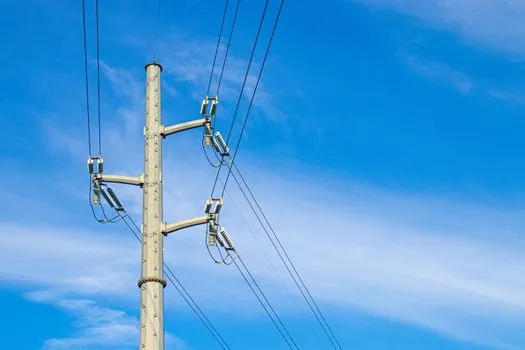
The clearest payback is on solar-assisted systems where a 6.9-year payback was reported against a $5.84/kg H2 cost in 2025, on the strength of remote telemetry, condition monitoring, and automated load-following that lets the electrolyser track PV output without on-site operators [S4]. Plant-side, real-time mass-balance reconciliation between DC current, oxygen vent flow meter reading, and hydrogen product flow meter reading is the only credible way to detect membrane leak or sensor drift before the H2 purity spec slips below 99%.
The Project Drawdown solution sheet also frames industrial green hydrogen as a deployment lever with 0.012 t CO₂-eq per unit per year at the 25th percentile, scaling to 0.016 t at the 75th, with adoption modelled from 1.3×10⁸ kg/yr (low) to 5.0×10¹⁰ kg/yr (high) [S2]. On the policy side, the IEA's June 2026 technology report on low-emission hydrogen frames high-quality carbon credits as a near-term accelerant for green hydrogen, sustainable aviation fuels, and direct air capture together [S3].
Limitations, failure modes, and certification gates
Hydrogen embrittlement, leak-driven indirect GHG impact, and the absence of harmonised standards for renewable-content verification remain the three failure modes that engineers are still pricing into every green hydrogen project. The Wikipedia synthesis, drawing on IPCC-2022, notes that the principal purpose of green hydrogen is to decarbonise end-uses that resist direct electrification, including high-temperature industrial heat, green ammonia and organic chemicals, hydrogen direct-reduction steel, shipping fuels, and long-term energy storage [S5].
Field experience reflected in industry write-ups continues to push designers toward ATEX/IECEx-certified industrial valve packages, oxygen-clean materials on the anode side, and isolation PLC architectures that survive single-point sensor failure without forcing a stack trip, all of which are still treated as best practice rather than codified standard in 2026 [S1][S4].
Signals to watch over the next reporting cycle
Three trackable signals will determine whether the 40.5% CAGR published in August 2026 is realised: the volume of EU hydrogen bank auctions cleared in 2026, the cadence of fixed-premium bids compressing toward €0.33/kg, and the publication of additional floating-solar AEM efficiency data points below 45 kWh/kg [S4]. Watch also the IEA's 2026 update of the share of low-emission hydrogen in total production, and any new evidence on alkaline electrolyzer turndown ratios in the 20% to 30% range, which would unlock direct renewable coupling without paying the PEM capex premium [S1][S5].