A 200 Nm³/h PEM electrolyzer skid with pure titanium bipolar plates and proton exchange membrane cells anchors the mid-scale green hydrogen production line tier in 2026, paired with balance-of-plant water treatment, rectification, drying, and compression modules [S2].
Architectures now span lab-scale PEM/AEM systems under 1 Nm³/h, containerized 50-200 Nm³/h industrial skids, and unbounded gigawatt-class indoor plants rated at 120 MW reference capacity, all built on a 1-to-N multi-module design philosophy [S1][S2][S4][S5].
Capacity Tiers and the 1-to-N Modular Logic
Green hydrogen production lines cluster into four discrete capacity tiers defined by stack count, rectifier rating, and BoP scope, with each tier carrying distinct deployment mechanics [S4][S5].
Lab-scale PEM/AEM units under 1 Nm³/h ship as a single small stack with low-voltage DC supply, touchscreen control, passive or fan cooling, and a desktop-friendly mass below 50 kg, targeting R&D, education, and sensor testing rather than industrial output [S5]. Small-scale 1-10 Nm³/h systems use 1-2 stacks in parallel with a 12-50 kW rectifier, PLC control, closed-loop water circulation, and Modbus or Ethernet comms, and are explicitly rated for intermittent renewable input [S5]. Mid-scale 10-50 Nm³/h systems add multi-stack layouts, a 50-250 kW industrial rectifier, variable-speed pump cooling, two-stage water treatment combining RO and EDI, plus hydrogen drying and pressure regulation [S5]. Industrial 50-200 Nm³/h containerized skids such as the 200 Nm³/h PEM unit move to titanium bipolar plates, full BoP integration, and ISO-container packaging for 40 ft transport frames [S2][S7]. Above 200 Nm³/h the architecture shifts to 1-to-N multi-module 20 MW compact units built from 5 MW stack blocks, and at gigawatt scale VERDE-GW markets a 120 MW reference indoor system sized to "1 kg H2 ≈ 11.12 Nm³" at STP [S1][S4].
Electrolyser Technology Choice: PEM, Alkaline, and AEM
Electrolyser selection between PEM, alkaline, and AEM topologies is driven by current density tolerance, purity target, and dynamic-load behaviour, not by single-nameplate efficiency [S4][S5].
Alkaline electrolysers from suppliers such as Advait Greenergy use optimized electrode structures with advanced nickel plating, next-generation diaphragm materials for higher current density, gasket-and-frame sealing inside the bipolar plate, and optimized gas-liquid flow fields for flow equalization, and are being delivered in 300 kW microgrid and 1 MW industrial builds with integrated compression to 200 bar [S4]. PEM systems at the 200 Nm³/h tier use pure titanium bipolar plates and proton exchange membrane cells to reach 99.999% (5N) hydrogen output suitable for downstream fuel cell or chemical synthesis service [S2][S7]. AEM units occupy the small-scale and lab-scale slots, with one supplier publishing parallel 1-10 Nm³/h AEM skids using the same 12-50 kW rectifier and PLC architecture as its PEM equivalents, allowing side-by-side qualification on a single platform [S5]. Procurement teams comparing the three should weigh dynamic-load response (PEM and AEM tolerate intermittent renewable input better than conventional alkaline), purity ceiling (PEM reaches 5N in one stage), and CAPEX density (alkaline remains the lowest $/kW at the 1 MW and above tier) [S4][S5][S7].
Balance of Plant: Rectifier, Water, Drying, and Compression
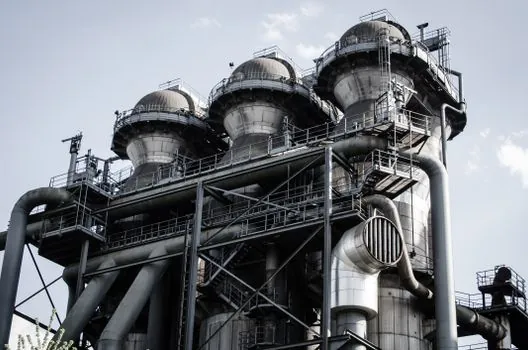
Balance-of-plant scope consistently includes rectifier, water treatment, gas drying, pressure regulation, and a central PLC, with component ratings scaling linearly with stack capacity [S2][S5][S6].
Industrial 10-50 Nm³/h PEM/AEM skids require a 50-250 kW industrial rectifier, a two-stage RO plus EDI water treatment train to meet membrane feedwater quality, a hydrogen drying and purification unit, and pressure regulation to buffer downstream compression [S5]. Above 200 Nm³/h the BoP scope is typically sold as an integrated subsystem, and one Chinese supplier publishes a dedicated 50-200 Nm³/h containerized BoP hydrogen production system line on the same catalog as its PEM electrolyzer products, signalling that EPCs increasingly treat BoP as a separate procurement line rather than a stack vendor freebie [S2]. For gigawatt builds, BoP engineering is the dominant design effort: Neometrix publishes an explicit "power to gas, gas to hydrogen" architecture in which renewable power feeds a rectifier and stack to produce raw gas, and the BoP cleans that gas to usable hydrogen, with the supplier marking the BoP scope as its own delivery boundary [S6]. The engineering implication is straightforward: at any scale above 10 Nm³/h, the BoP specification document is as long as the stack document, and the rectifier kVA rating should be sized at roughly 1.05-1.1x stack DC demand to absorb inrush and renewable ramp events.
Scale-Up Geometry: Skid, Container, and Indoor Plant
Physical packaging decisions follow capacity: skid or cabinet for under 50 Nm³/h, ISO container for 50-2000 Nm³/h, and bespoke indoor plant for multi-hundred-MW builds [S1][S4][S5][S7].
Lab-scale PEM/AEM systems ship in a desktop-friendly cabinet under 50 kg; small-scale 1-10 Nm³/h units are skid-mounted or cabinet-integrated; and 50-200 Nm³/h industrial PEM skids are packaged in a 40 ft ISO container, a frame that also defines the truck and sea-freight envelope [S5][S7]. The 200 Nm³/h PEM stack itself reaches the 99.999% purity class with a published supply ability of 100 sets per year per vendor, a useful constraint when planning multi-skid plants [S2][S7]. At the multi-MW tier Advait Greenergy operates a 30 MW electrolyser assembly plant inaugurated in February 2026 and targets December 2026 commissioning for a 100 MW manufacturing plant, with SECI awarding 300 MW of Production Linked Incentive capacity, anchoring the supply base for 1 MW to 300 MW alkaline lines in India [S4]. VERDE-GW's 120 MW indoor industrial series targets gigawatt projects where containerized logistics no longer apply and the plant becomes a fixed building with cell-level BoP rooms [S1].
Renewable Coupling and Dynamic-Load Behaviour
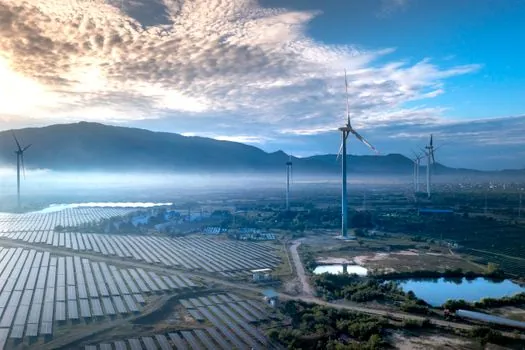
Coupling to wind or solar requires the electrolyser and BoP to accept variable DC bus input, a constraint that increasingly drives technology selection toward PEM and AEM at the small and mid scales [S4][S5].
Small-scale 1-10 Nm³/h PEM/AEM systems are explicitly "designed for intermittent operation with intelligent start-up" and ship with Modbus or Ethernet for renewable SCADA integration [S5]. At the 1 MW tier the THDC Rishikesh microgrid in India integrates 300 kW alkaline electrolyser capacity with a 70 kW PEM fuel cell and associated BoP to form a zero-carbon microgrid that absorbs on-site renewable generation, a deployment pattern that alkaline vendors now describe as a primary use case rather than a niche [S4]. KPI Green Hydrogen's 1 MW alkaline plant at Matar, Bharuch compresses to 200 bar for galvanization process duty, a flow rate and pressure combination that lets the line run as a captive industrial gas source behind a solar or wind feed [S4]. For owners weighing renewable firmness versus CAPEX, the practical decision rule is: PEM and AEM for any project where the renewable curtailment curve exceeds 30% on an annual basis, alkaline where a firm or curtailed renewable PPA keeps the load factor above 60%.
Alternative Feedstock Routes: Waste Aluminum and Silicon
A second engineering route to green hydrogen uses waste aluminum dross and waste silicon reacted with an alkaline solution, bypassing the electrolyser entirely and producing a hydrogen plus ammonia gas stream that requires downstream scrubbing [S3].
ITEC's prototype runs continuously at 5 kPa operation inside a 10 L vessel rated to 0.1 MPa design pressure and 100°C design temperature, with 200 ml/min slurry feed at 30 wt% and 70 ml/min of 8 mol/L NaOH, yielding roughly 820 L/hr of hydrogen contaminated with ammonia and a reaction time near 40 minutes for an 18.3 wt% Al / 3.3 wt% AlN feed [S3]. A skeleton-type test rig uses a transparent PVC and SUS304 reactor with a 50 mm screw pitch at 0.15-2.65 rpm and a 7.5-132.5 mm/min feed rate, with a PVC water-seal tank isolating the produced hydrogen from ambient air [S3]. The batch-type production rig processes 100 kg per batch of aluminum dross at 30.84% metal content, producing 37.3 Nm³ of hydrogen per batch or 6.6 ton/year, in a 4600 mm W x 15100 mm L x 8300 mm H envelope, with 99% purity aluminum hydroxide as a by-product measured value and ammonia removable by scrubber or low-temperature decomposition back to hydrogen [S3]. This route does not compete on capacity with PEM or alkaline water electrolysis; it competes on feedstock cost where aluminum dross and waste silicon are available at negative or zero tip fee.
Selection Criteria and Sourcing Signals
Procurement decisions for a green hydrogen production line in 2026 should be driven by four criteria: target capacity in Nm³/h, required purity, renewable duty cycle, and BoP ownership model [S1][S2][S4][S5][S6].
For lines below 10 Nm³/h, PEM and AEM skid vendors with PLC and Modbus comms are the lowest integration risk; for 10-200 Nm³/h, containerized PEM skids with titanium bipolar plates and an integrated BoP catalog line minimize EPC coordination; for 1-100 MW, alkaline suppliers with PLI-backed manufacturing capacity and integrated compression to 200 bar reduce schedule risk; and for 100 MW and above, indoor gigawatt-class plants with EPC-delivered BoP are the only practical option, though each project's BoP must be re-engineered rather than catalog-ordered [S1][S2][S4][S6]. A useful cross-check on any vendor is the published supply ability: a 100 sets/year capacity for a 200 Nm³/h PEM skid bounds a multi-gigawatt project build-out at roughly 8-10 years on a single supplier, which is why EPCs typically dual-source across the 1-to-N module design rather than buy a turnkey 1 GW block [S2][S4]. LCOH cost model and parity math tracks these capacity tiers against dollar-per-kg output and is the natural next read for any team sizing a plant. For teams also weighing compression and gas-handling BoP, vortex flowmeter sizing rules apply directly to the hydrogen stream after the drying and purification unit.
For component-level specifications, see molding line, automatic molding line, and conveyor sorting line.