The global green hydrogen market was valued at $2.5 billion in 2022 and is projected to reach $143.8 billion by 2032, a 50.3% CAGR from 2023 to 2032 [S2]. That headline growth sits on top of a 2026 reality in which announced offtake volumes already exceed what commissioned electrolyzers plus dedicated renewable capacity can deliver, so the binding constraint is the stack, the wire, and the PPA — not the molecule itself.
PEM (proton exchange membrane) electrolyzers are positioned as the primary technology for green hydrogen because of their efficiency, modularity, and ability to ride intermittent renewable power [S2]. Concentrated solar and PV-only designs have been mapped in national studies such as Turkey's solar-to-hydrogen potential [S1], while integrated hybrid configurations for transport and street lighting have been modelled for Morocco [S4] and a full supply-chain feasibility case has been published for Oman [S5]. Together these studies frame a consistent picture: the molecule is producible in many geographies, but the supply chain that links MW-scale electrolyzers to a bankable offtaker is still the choke point.
What the 2026 supply gap actually looks like
The supply shortage in 2026 is not a hydrogen-molecule shortage in the chemical sense; H2 is the most abundant element on earth. The shortage is structural and shows up in three linked gates: electrolyzer factory output, dedicated renewable MW, and signed offtake that lenders will accept [S2]. Allied Market Research sizes the 2022 base at $2.5 billion with a 50.3% CAGR trajectory to $143.8 billion by 2032 [S2], which means that for the curve to hold, capacity additions through 2026 must clear a much steeper slope than 2022–2024 delivered.
PEM is named as the workhorse for renewable integration because of its dynamic response to variable solar and wind input [S2]. Solar-resource mapping for hydrogen production has been demonstrated at country scale for Turkey, comparing three commercial electrolyzer types against excess solar generation [S1], and a hybrid solar/wind/storage/hydrogen configuration for Moroccan public transport and street lighting has been modelled end-to-end [S4]. A discrete supply-chain feasibility study for Oman maps production, storage, transport, and end-use nodes in a single case [S5]. These are the building blocks of a national hydrogen economy, but each study also flags the same enabling-layer risks: dedicated renewables, desalinated or treated water, grid interconnection, and demand-side readiness.
Electrolyzer mix: PEM vs alkaline vs solid oxide in 2026 project pipelines
PEM is the technology Allied Market Research highlights for green hydrogen scaling thanks to its compact footprint, modular build, and suitability for distributed renewable coupling [S2]. It dominates new project pipelines for variable-load operation, but it carries higher capex per kW than mature alkaline stacks and a heavier dependence on platinum-group-metal catalysts, which is a procurement risk for buyers counting on schedule.
Alkaline electrolyzers remain the lowest-cost, longest-proven option for baseload operation and continue to anchor utility-scale announcements; the Turkey study benchmarks three commercial electrolyzer families against available solar excess and shows that technology choice materially changes city-by-city hydrogen output for the same renewable input [S1]. Solid-oxide and anion-exchange variants are tracked as the long-horizon options for high-temperature industrial heat integration. For procurement teams building a 2026 shortlist, the practical decision is rarely "which is best" and almost always "which is bankable, schedulable, and serviceable in our grid context" — a question that pressure transmitter and flow meter instrumentation standards on the electrolyzer skid directly affect, because type-test certification (hazardous area, SIL, material traceability) gates skid acceptance at site.
Renewable-power gating: the real capex line is the PPA, not the stack
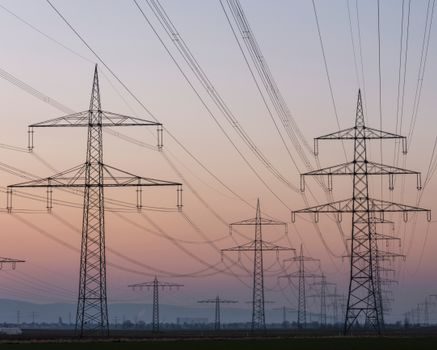
A green hydrogen project only deserves the label if the power is additional, time-matched, and verified; the European Commission's decarbonization strategy referenced in the same market study explicitly conditions renewable hydrogen on certified renewable origin [S2]. For a buyer running the numbers in 2026, the binding line item is therefore the dedicated solar/wind PPA plus grid-fee and balancing cost, not the electrolyzer module.
The Morocco hybrid case sizes a full system — solar PV, wind, battery storage, electrolyzer, fuel cell, and end-use — to power public-transport refueling and street-lighting loads, and confirms that hybrid configurations reduce curtailment but raise the control-instrumentation count [S4]. The Oman supply-chain study walks the same logic across production, storage, and transport, again pointing at enabling infrastructure as the dominant cost and risk block [S5]. For plant-side specifiers, this is where pressure sensor selection on hydrogen compression stages and flow meter selection on electrolyzer feed-water and product-gas lines move from commodity items to long-lead, certification-driven items. The solar-to-hydrogen potential mapped for Turkey shows that even a country with strong solar resource can only convert a fraction of theoretical yield into bankable H2 once land, water, and grid limits are applied [S1].
Offtake, bankability, and the 2026 contracting reality
Most announced offtake is conditional: a buyer signs an MoU for 50,000–500,000 t/yr of green hydrogen, but the contract is contingent on FID, on a renewable PPA, on a water supply, and on grant or contract-for-difference (CfD) cover from a government. The Allied Market Research framing notes that government targets, corporate decarbonization commitments, and carbon pricing are the demand-pull drivers — but the same paragraph also flags that "public-private partnerships and investment initiatives are crucial in supporting the deployment of green hydrogen projects" [S2], which is an explicit acknowledgement that commercial bankability has not yet arrived at scale.
For a 2026 buyer this translates into three operational risks: (1) contracted volume may slip because the seller's electrolyzer is late, (2) contracted volume may be re-papered if the renewable PPA falls through, and (3) certification status may change, voiding the "green" label and any associated credit revenue. APAC regional summits such as CGHA in Melbourne (5,000 attendees, 200+ exhibitors, 150 speakers, 1,000 decision-makers at the 2025 edition) are explicitly framed as the venue where these partnership and contracting gaps are worked [S3]. The trade-fair footprint — covering biofuels, hydrogen, environmental protection, electric and hybrid vehicles, and the investor community — reflects how tightly the hydrogen business is now coupled to transport, mobility, and capital-markets actors, not just to chemicals and refining buyers [S3].
Who is exposed and who is not
Exposed in 2026: refiners under binding renewable hydrogen offtake for ammonia, methanol, or hydroprocessing units; mobility operators (truck, bus, rail, maritime) that have signed hydrogen supply term sheets tied to a specific plant; fertilizer and steel project developers whose FID depends on a CfD or contract-for-difference cover; EPCs and instrument vendors waiting on a final FID that has slipped more than 12 months; investors in projects without a long-dated PPA. The pattern is consistent: a 2026 shortage penalises projects that are off-taker-led but supply-weak, and rewards projects that control their own renewable MW and water offtake. [S1]
Less exposed: brownfield sites with embedded fossil hydrogen that can blend or substitute incrementally; large utility or NOC-integrated developers with captive renewable portfolios; merchant buyers who can flex volumes and accept spot H2; ammonia and methanol plants with installed CCS or grey-to-blue conversion optionality. These counterparties can ride the shortage by deferring or substituting, while greenfield projects with hard-deadline offtakes face the full structural squeeze. For process engineers sizing upgrades, the practical gate is the industrial valve and switching power supply specification on the electrolyzer skid — both are long-lead items whose certification determines whether a stack is site-acceptable inside a tight 2026 delivery window.
Selection gates a 2026 buyer should run before signing
Five gates separate a working 2026 green hydrogen offtake from a press release: (1) an executed, time-matched renewable PPA with curtailment and balancing cost allocated; (2) a FID-cleared electrolyzer supply contract with a named stack maker, named delivery date, and a liquidated-damages clause; (3) a water-supply path with permit, offtake volume, and price escalator defined; (4) a certification scheme that aligns with the end market (e.g. EU RFNBO criteria, or a buyer-specific additionality test) and is fixed at contract signature, not at delivery; (5) a storage and transport plan with named terminals, named carriers, and a hydrogen-quality spec (ISO 14687 grade) attached. Allied Market Research cites the PEM case as the one most often selected for renewable integration [S2], but the same market study stresses that "advancements in technology and declining costs are anticipated" — meaning the spec you sign in 2026 may already be one generation behind the installed 2027 fleet.
The national-scale modelling work reinforces the same hierarchy. The Turkey study compares three commercial electrolyzer types on the same solar input and shows material city-level output differences driven by technology choice [S1]. The Morocco hybrid case demonstrates that hybridising solar, wind, battery, and hydrogen raises overall system complexity and instrumentation count, even when it reduces curtailment [S4]. The Oman supply-chain study walks production, storage, transport, and end-use as one chain and frames enabling infrastructure as the dominant risk block [S5]. None of these papers treat the electrolyzer alone as the bottleneck; the binding constraint is consistently the system around the stack.
Trackable signals to watch through the rest of 2026
Four signals will tell you whether the 2026 green hydrogen supply picture is tightening or easing before year-end: (a) the count of FID-cleared projects with executed PPAs versus the count of MoU-only announcements; (b) PEM and alkaline electrolyzer factory utilisation rates and the length of the order book at the two or three top stack makers; (c) the volume of certified renewable hydrogen molecules shipped against contracted offtake in EU and APAC pilot corridors; (d) the outcome of regional summits such as CGHA Melbourne 2026, where the 2025 edition gathered 5,000 professionals, 1,000 decision-makers, 150 speakers, and 200+ exhibiting companies across biofuels, hydrogen, environmental, and investor tracks [S3]. A divergence between (a) and (b) — many MoUs, few FIDs, full order books — is the clearest fingerprint of a continuing 2026 supply squeeze.
For related reading on the equipment side, see the Fuel Cell Stack Supply Shortage 2026 risk map and the Green hydrogen 2026 cost stack, electrolyzer mix and bankability gaps brief, which line up with the same enabling-infrastructure thesis from the downstream side.