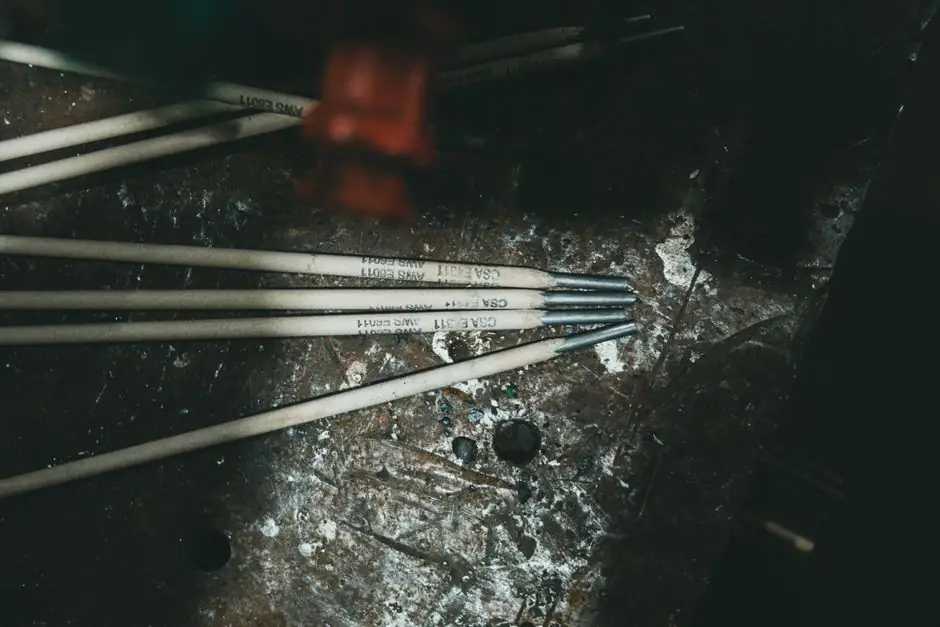
Select H13 die steel when hot wear, erosion, heat checking, or loss of surface hardness limits die life; use H11 when impact and crack-sensitive service dominate failure.
Both grades are 5% chromium hot-work tool steels, but H13 uses more vanadium for carbide-supported wear resistance, while H11 favors toughness and resistance to cracking [S1].
Decision Criteria: Wear Life Versus Crack Resistance
The core selection rule is that H13 is favored for hot surface stability and wear resistance, while H11 is favored for toughness and resistance to impact, cracking, chipping, and fracture [S1].
The grades overlap chemically. Typical carbon content is 0.32–0.45% for H13 and 0.33–0.43% for H11; chromium is 4.75–5.50% in both, molybdenum is 1.10–1.75% in H13 and 1.10–1.60% in H11, and silicon is 0.80–1.20% in both [S1]. Grade naming alone therefore does not establish suitability, because composition, heat treatment, section size, and working conditions still govern performance.
A practical comparison is straightforward: H13 gives the better starting point for hot-wear resistance and heat resistance, H11 gives better toughness and impact or shock resistance, H11 machines more readily in the annealed condition, and ESR H13 is preferable when high polishability is required for precision molds [S1].
Where H13 Fits Die Casting Dies
H13 is the default material for die casting dies exposed to repeated contact with molten metal because it combines hot hardness, wear resistance, toughness, and resistance to thermal fatigue [S2][S4]. It is used for aluminum, zinc, and magnesium die casting dies, extrusion dies, forging tools, hot-work punches, and hot shear blades [S2].
The relevant failure modes are surface degradation, erosion, washing, heat checking, and hardness loss during hot service. H13's higher vanadium level supports hard-carbide formation, improving wear resistance and resistance to softening at elevated temperature [S1]. For a die with sustained molten-metal contact, frequent thermal cycling, and a long production campaign, H13 generally provides the more defensible starting specification.
The die casting die should specify H13 against the actual failure mechanism rather than by analogy with cold-work tooling. If surface cracking, edge chipping, or impact fracture is the measured problem, moving the entire die to H11 may exchange one failure mode for another rather than solve the root cause.
When H11 Is the Better Choice
H11 is preferred when the tool experiences impact loading, severe mechanical stress, large-section geometry, or a crack-sensitive duty where fracture resistance matters more than hot-wear performance [S1][S5]. Typical applications include hot punches, forging dies, hammer and press forgings, and impact-resistant hot-work tooling [S1][S3].
H11's lower vanadium content reduces the amount of hard carbide, producing a tougher steel with better resistance to cracking and chipping than H13 [S1][S3]. H11 is the better starting choice when better machinability is important [S1].
H11 is not the default for every casting die, however. If the observed damage is molten-metal erosion or thermal-fatigue checking rather than impact fracture, H11's lower wear resistance may shorten life without removing the dominant failure mechanism [S1][S5].
Tool Component and Geometry Fit
Large sections, unsupported ribs, sharp internal corners, and mechanically loaded inserts raise stress concentration and favor the greater crack resistance of H11, while thin working surfaces subject to erosion and repeated thermal cycling can favor H13 [S1][S5]. The same die may reasonably use different grades by function if the drawing separates the cavity, core, slides, and support components.
For aluminum, zinc, or magnesium tooling, H13 remains a common die-casting choice because these applications combine hot contact, thermal cycling, and pressure loading [S2]. Where severe nitrided hot-wear resistance is required, H13 is also the stronger starting choice [S1]. The related aluminum die casting machine affects injection speed and thermal duty, so its cycle conditions should be included in the die-material review.
Heat treatment cannot be separated from the grade decision. H13 performance depends on controlled hardening and tempering, while nitriding or PVD can add surface wear resistance [S2]. Neither coating nor cryogenic treatment replaces correct substrate selection; compare the complete process specification rather than purchasing by grade name alone.
Failure Modes and Process Constraints
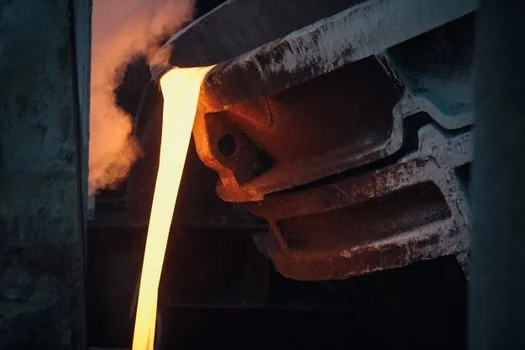
Thermal fatigue, heat checking, erosion, abrasive wear, solder buildup, corrosion, and mechanical cracking have different causes. H13 offers a combination of hot hardness, toughness, and resistance to thermal fatigue, making it suitable for tooling exposed to repeated thermal cycling [S5]. H11 provides the stronger answer when impact and crack propagation are the dominant concerns [S1][S5].
Temperature, alloy poured, cycle time, spray intensity, ejector loading, and production volume can overturn a generic material recommendation [S5]. Hot-work performance also depends on material quality, heat treatment, and maintenance rather than the designation alone [S5]. The casting ladle can affect metal temperature and contamination exposure, which in turn influence thermal loading and surface condition at the die face.
For cooling-system decisions, the comparison of copper alloy and steel cooling channels in die cast dies is relevant because cooling layout changes local temperature, cycle time, and thermal-fatigue risk, regardless of whether the die body is H11 or H13.
Procurement, Equivalence, and Heat Treatment
Confirm the material by governing designation and full specification: H13 is UNS T20813, DIN 1.2344, JIS SKD61, and ASTM A681 H13; H11 is UNS T20811, DIN 1.2343, JIS SKD6, and ASTM A681 H11 [S1]. Cross-system names are not automatic substitutes, so approval should cover chemical composition, hardness condition, melting route, inspection requirements, and working conditions [S1].
For a die casting die built around hot-wear performance, specify H13 and validate the finished working hardness under the supplier's approved heat-treatment procedure. For crack-sensitive, impact-loaded tooling, specify H11 and include fracture-critical inspection. S2 identifies heat treatment, nitriding, PVD coatings, annealing, and cryogenic treatment as processing variables, while S3 identifies carbon, chromium, molybdenum, and vanadium as the principal composition variables.
Record the selected grade, applicable material standard, heat-treatment cycle, required hardness range, coating or nitriding specification, and inspection plan on the die drawing. Review wear depth, crack depth, repair frequency, downtime, and replacement interval as separate life-cycle signals rather than judging the grade from steel price alone [S5].
The next engineering action is to map the observed failure mechanism to the dominant criterion: hot wear or heat checking points to H13, while impact, chipping, or fracture points to H11, after which grade equivalence and heat treatment must be confirmed before purchasing [S1][S5].