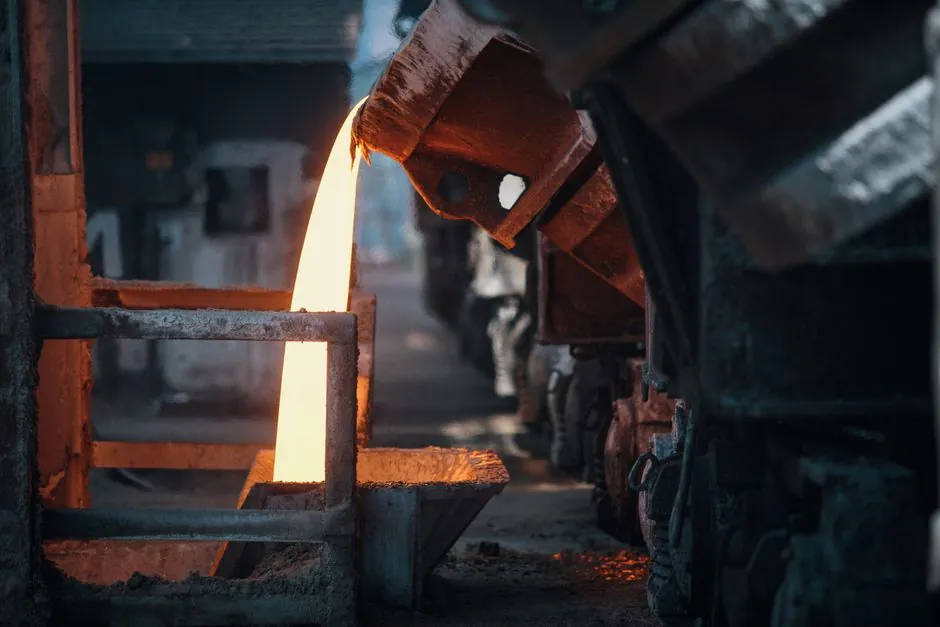
For small complex parts, gravity die casting usually wins on repeatable aluminum production and reusable tooling, while investment casting wins for stainless steel, intricate internal passages, tight tolerances, and low-to-medium volumes [S3][S5].
The decision depends on alloy, quantity, geometry, surface requirement, and post-machining need, not simply on the smallest casting process or the lowest quoted tooling price [S1][S5].
Gravity die casting versus investment casting: the process decision
Gravity die casting fills a reusable permanent mold by gravity, while investment casting pours molten metal into a single-use ceramic shell formed around a wax pattern and then broken after casting [S3][S5]. These are different manufacturing systems, so their costs, cycle behavior, and material limits must be evaluated together.
Gravity die casting suits small-to-medium parts made from aluminum and other suitable non-ferrous alloys, with good detail, thinner sections, and less machining than many conventional casting routes [S1][S4]. Investment casting also handles complex and thin-walled parts, supports ferrous and non-ferrous alloys, and can produce smooth castings without the parting-line constraint of a two-part die [S2][S4].
A practical rule is to prototype and validate a complex part with investment casting when the alloy or geometry blocks gravity tooling, then move to gravity die casting only after confirming that volume and repeatability justify a permanent die [S3][S5].
Compare the decision criteria before quoting tooling
Gravity die casting delivers better economics at medium-to-high output because one permanent mold is reused, whereas investment casting creates and destroys a ceramic shell for every part, increasing labor and cycle time [S2][S3]. One listed die-casting tooling lead time is 3–8 weeks depending on complexity and quantity, but that range describes die casting generally and does not establish a universal gravity-die duration [S4].
For a small component, surface condition should be specified as a functional requirement, not treated as a free process upgrade. Investment casting suits smaller production runs, while die casting can reduce per-unit cost as volume rises and is best suited to high-volume production.
Alloy selection sets a hard process boundary
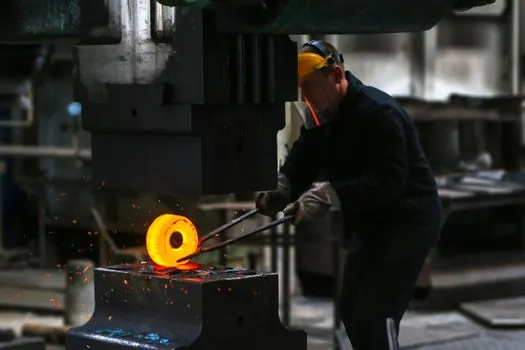
Die casting is best suited to high-volume production of non-ferrous metals, while investment casting can handle both ferrous and non-ferrous alloys. Investment casting accepts ferrous and non-ferrous materials, including stainless steel and heat-resistant alloys [S1][S2].
An aluminum requirement therefore favors gravity die casting when volume supports the die, but a stainless steel or heat-resistant-alloy requirement usually excludes that route. For these materials, investment casting, machining, or another forming process must be evaluated rather than treating gravity tooling as a universal low-cost option [S1][S3].
Magnesium and zinc are also non-ferrous die-casting options, but each alloy imposes distinct melt, tooling, and oxidation controls. The casting supplier should approve the alloy, operating temperature, tooling material, and protective atmosphere against the specific part rather than relying on a generic “non-ferrous compatible” note [S2].
Complexity and tolerance requirements split the work
Both processes can produce small intricate parts, but gravity die casting depends on a permanent tool that must open, eject, and release the casting, while investment casting derives its cavity from a consumable wax pattern and ceramic shell [S1][S3][S4]. Complex internal passages and geometries that cannot be withdrawn from a die remain the stronger application for investment casting [S3][S5].
Investment casting offers very tight tolerances, excellent surface finish, and reduced machining, which can offset its higher setup and per-part costs for a low-to-medium production program [S1][S5]. Gravity die casting provides high run-to-run dimensional consistency and good accuracy once the die is established, making it appropriate for repeatable high-volume parts [S1][S3].
Both methods can reduce machining relative to rough castings, but the final machining allowance must be set from process capability and the functional datum scheme. A tolerance chart without defined datums, surface texture, and inspection method is not a production specification.
Volume changes the process and the cost curve
Investment casting uses cheaper tooling for disposable wax patterns, suits smaller production runs, and can produce small, intricate components. Its disposable shell makes it less efficient than gravity die casting at high volume because the shell must be built, dewaxed, filled, and broken for every part [S3][S4].
Gravity die casting carries a higher upfront tooling cost, but the reusable mold reduces unit cost as quantity rises [S2][S6]. The tooling decision should therefore use the required annual and lifetime quantity, not just first-article quantity. A low-volume sample can favor a low-cost casting route, while a production release can favor a permanent tool [S5].
For lower output, selecting a gravity die casting machine should be justified by the permanent-die strategy and planned repeat use, not by assuming low-pressure manual pouring can match high-pressure die-casting consistency. Related cycle differences are covered in Gravity Die Casting vs HPDC Cycle Time and Output.
Known failure modes and production controls
Investment castings can contain ceramic shell inclusions, wax or moisture-related defects, gas porosity, and dimensional variation associated with shell build-up and pouring [S5]. Control points include repeatable wax dimensions, ceramic slurry and shell-build control, dewaxing, shell drying, metal chemistry, pouring temperature, and post-cast cleaning [S2][S5].
Gravity die castings can suffer from gas porosity, oxide inclusions, cold shuts, premature solidification, die wear, thermal fatigue, and dimensional drift as the tool heats [S1][S8]. Control points include melt cleanliness, die temperature control, smooth gating, adequate venting, controlled fill, and defined inspection of critical features. Lubrication and thermal management also support repeatable extraction and die life [S2].
The permanent die must include suitable draft, parting design, vents, gates, and ejection provisions. Without those features, a nominal shape can be castable in principle but uneconomic or defective in production. A production trial should include first-article dimensions, surface acceptance criteria, alloy verification, and a defined sample size before the process is released.
Decision guide for small complex components
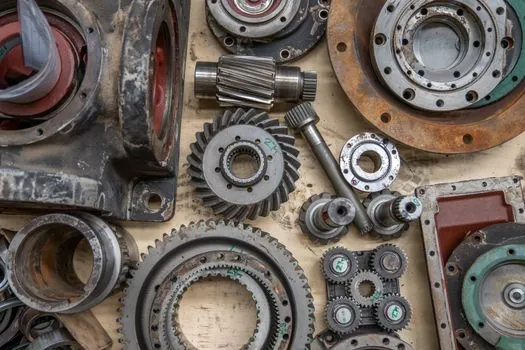
Choose gravity die casting for a small aluminum component with repeatable medium-to-high demand, a geometry compatible with die opening and ejection, and a tolerance requirement that can be held by a validated permanent tool [S1][S3][S4]. This route minimizes recurring pattern and shell preparation while supporting fast repeat cycles and reduced machining [S2][S3].
Choose investment casting for stainless steel or another heat-sensitive ferrous alloy, an intricate internal geometry that resists die withdrawal, a low-to-medium annual demand, or a requirement for excellent finish and tight tolerances with minimal machining [S1][S2][S5]. It is less attractive when unit price dominates the business case and the output is high enough for reusable tooling to amortize [S3][S6].
Final selection should be confirmed against three controlled inputs: the annual and lifetime quantity, the alloy and controlling mechanical properties, and a drawing with functional datums, critical tolerances, surface zones, and machining allowances. Request process-specific quotations that separate tooling, pattern or shell costs, material, machining, inspection, and lead time, because comparing only the first article can reverse the apparent economic ranking [S5].