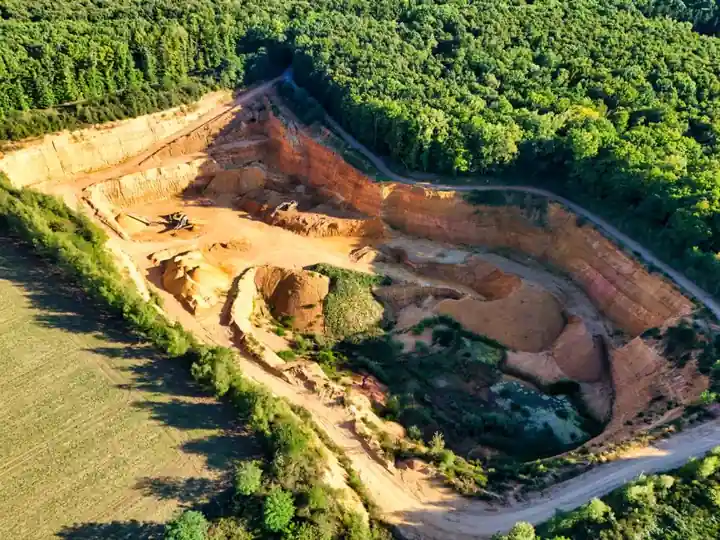
Harmonic-drive reducers in mining are now specified mostly through robotic platforms (quadruped inspection units and autonomous haulage actuators) rather than direct conveyor or crusher drives, with single-stage reduction ratios from 30:1 up to 320:1 in standard catalogue units [S5][S7].
Mining duty is a hard sell for strain-wave gearing because of dust ingress, shock loading, and continuous-vibration environments, so selection is driven by sealing class, torque margin, and service factor rather than by peak ratio [S1][S10].
Why Harmonic Drives Show Up in Mining at All
Quadruped robots equipped with harmonic drives are increasingly deployed in mining and other hazardous environment operations, where the zero-backlash characteristic of strain-wave gearing keeps camera and lidar payloads stable over rough terrain [S1]. Underground inspection robots use the same harmonic joint modules that humanoid and cobot platforms use, which means mining inherits the supply chain, frame sizes, and 100:1 catalogue ratio that dominate the broader precision-gearbox market [S1][S5].
The standard catalogue frame sizes 03/08/14/17/20/25/32/40/50/65 cover bore diameters from 8 mm up to 350 mm, and 100:1 is the most common catalogue ratio for industrial robot joints, with the UHG100-2B from Harmonic Drive AG listed as a 100 mm frame, 100:1 unit [S5]. For mining, that translates into a harmonic joint on a quadruped leg, an autonomous drill indexing head, or a pan-tilt sensor mast, rather than a primary crusher or conveyor drive.
Selection Gates That Actually Matter Underground
Selection should be data-driven, not catalogue-driven, and five gates filter a short list before price becomes a factor: reduction ratio, peak and continuous torque at the output in Nm with a 1.0 to 1.5 service factor, input speed (most catalogue units rated for 3000 to 5000 rpm continuous at the wave generator), backlash class (less than 1 arc-minute standard, up to 3 arc-minutes for economy, 0.5 arc-minute for precision, zero-backlash as the design baseline), and hysteresis or lost-motion expressed in arc-minutes [S5].
Service factor is the lever that decides whether a harmonic reducer survives a mining cycle: shock-loaded joints (drill indexing, mobile robot legs landing on uneven rock) need the 1.5 end of the range, while steady pan-tilt sensor heads can run at 1.0 [S5]. Backlash class is more important than peak ratio for inspection robots because camera stability, not speed reduction, sets the image-stitching accuracy budget; over-specifying ratio (320:1) when 80:1 or 100:1 is mechanically sufficient is the most common over-spend error in 2026 procurement [S5].
Harmonic vs Cycloidal (RV) vs Planetary in Mining
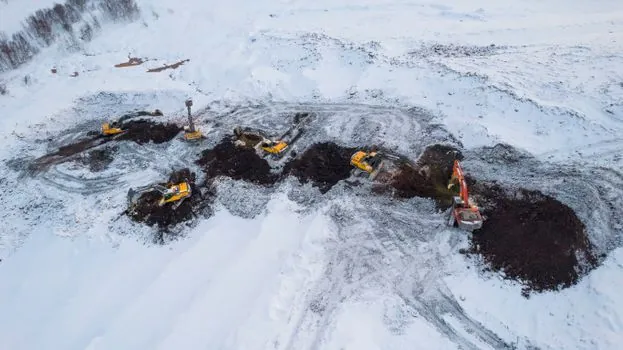
The three families solve different problems: harmonic drives offer the highest single-stage ratio (30:1 to 320:1) in the smallest package with the lowest backlash (around 1 arc-minute on standard cup units and around 90 arc-seconds on short-cylinder hat units) [S7]; cycloidal reducers (RV type) deliver higher shock tolerance and longer life at the cost of larger diameter and more mass; planetary gear reducers give the highest efficiency and the lowest cost per Nm but require a second stage to reach the same ratio and cannot match zero-backlash without a preloaded second stage [S5][S6].
For a 100 Nm continuous, 300 Nm peak, IP65 sealed joint on a mining quadruped, a 100:1 harmonic unit in a 50 mm or 65 mm frame is the size-matched answer, while the same duty on a crusher feed conveyor would more likely use a cycloidal or planetary unit. The harmonic's weak points in mining are well known: catalogues split into Coaxial, Cycloidal (RV variant), Shunting and Expansion layouts, and tooth-surface hardness is a separate lever (hardened is the industrial default, soft is reserved for low-duty or cost-driven assemblies) [S5].
For high-ratio needs beyond 320:1, two harmonics can be stacked, or the design can be paired with a planetary reducer or servo drive stage to push ratios above 1000:1 with controlled inertia, which is the path used on some larger mining robot arms that need both zero-backlash and high reduction [S5].
Sealing, Temperature and the Real Mining Failure Modes
The harmonic flexspline is a thin-walled cup or hat that carries the output, with a circular spline (ring gear) fixed to the housing, and a wave generator with an elliptical cam and a thin bearing race driving the flexspline; that thin-wall geometry is the reason sealing and dust management are the binding constraints in mining [S5]. The Devotec RV harmonic series, for example, lists reduction ratios of 30 to 160, rated torque at 2000 r/min input of 3.7 to 178 Nm, and maximum start/stop torque of 9 to 484 Nm, which puts the catalogue envelope for that supplier squarely in the small-to-medium robot-joint range rather than heavy mining drive range [S8].
Operating temperature in underground mines typically sits in the 0 to 40 °C range with localized hot spots near drilling and ventilation raises, while surface crushing plants can hit -20 to 50 °C seasonal swings; the harmonic reducer's grease life and flexspline fatigue life both degrade outside the 0 to 40 °C window, so engineers should request the supplier's low-temperature grease option and confirm the allowable input speed derating curve above 40 °C [S10]. Hysteresis and lost-motion, expressed in arc-minutes, usually scale with size and ratio, so a 65 mm frame unit at 100:1 will read higher lost-motion than a 25 mm frame at 50:1, and that lost-motion is what determines positional repeatability on a drill-indexing axis.
Standards, Sourcing and 2026 Procurement Notes
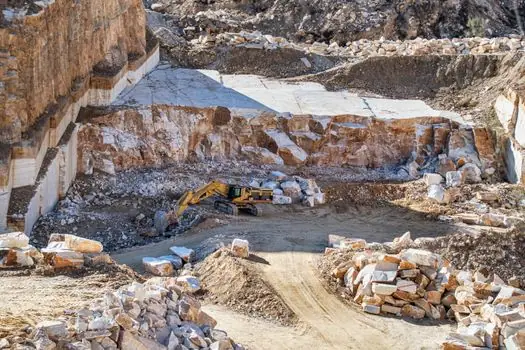
There is no mining-specific ISO or IEC standard for harmonic-drive reducers; selection follows general industrial gearbox practice (ISO 6336 for load capacity, ISO 14001 for environmental management at the supplier, and IEC 60079 for explosive-atmosphere certification when the unit is mounted on equipment in a methane or coal-dust hazardous area) [S5]. For surface mines with diesel particulate and potential methane release, the harmonic unit itself is normally mounted in a non-classified enclosure on the robot platform, with the hazardous-area certification carried by the platform, not the gearhead [S5].
Sourcing in 2026 splits three ways: Harmonic Drive Systems Inc. and Harmonic Drive AG for the premium tier with the HarmonicDrive® trademark and full cup/hat/pancake coverage, PICEA Motion and Devotec for the mid-tier with PMCG/PMHG/PMCD/PMHD series, and Fenghua Transmission (3F FAMED) plus a long tail of Chinese suppliers (Beijing Harmonic, Leaderdrive, Greenharmonic) for the price-driven tier [S1][S2][S4][S8]. For 2026 buying, shortlist 100:1 and 120:1 in the 50 mm or 65 mm frame first, request a 1.5 service-factor torque curve from each supplier, confirm IP65 sealing on the housing, and verify the grease temperature rating against the mine's worst-case ambient before signing the PO.
For comparison with neighbouring precision-mobility platforms, the harmonic reducer family sits alongside planetary and gear reducer lines that dominate other mining actuators such as mining dump truck steering and hoist systems; the selection gates above are the same five gates that filter a short list on any of those platforms, with the only mining-specific adjustment being the service factor and the sealing class. Cycloidal units built to a similar spec map dominate the wind-power sector, as covered in the cycloidal reducer selection map for wind power.
Trackable signals for the next 90 days: watch for new IP66 or IP67 sealed harmonic cup units from Harmonic Drive Systems and PICEA Motion, and watch for IEC 60079-22 compliant robot-joint module announcements that would let a harmonic drive sit directly in a Zone 1 mining enclosure without a separate purged housing. Also worth tracking: any 2026 catalogue revisions from Devotec or 3F FAMED that push the 65 mm frame rated torque above 178 Nm, which would extend harmonic-drive applicability into the small autonomous-truck steering-joint segment.