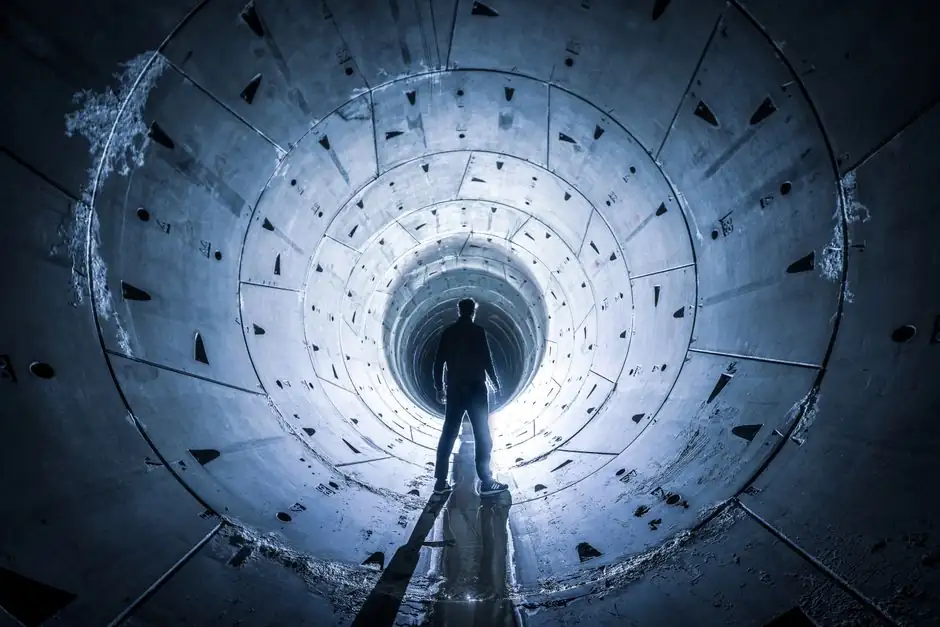
Confined-space work (vessels, manholes, digesters, rail tankers) routinely exposes crews to 95-115 dB(A) from pneumatic tooling, sandblasting, grinders, and steam let-down, while the same worker must still hear an attendant, a gas alarm, and a rescue line pull, per OSHA 29 CFR 1910.146 permit-required confined-space rules and ANSI/ASA S1.25-2024 personal HPD attenuation measurement [S3].
Wenzhou Only Electronics Co., Ltd. (Onlyele), founded 2003, is one of the China-based ODM/OEM suppliers building electronic earmuffs that target this dual requirement, shipping CE-, ANSI-, FCC-, and RoHS-marked products to the Americas, Europe, and Southeast Asia from its Wenzhou facility [S3].
Selection Criteria: NRR, SLC80, and the Dual Listen-Through Requirement
NRR (Noise Reduction Rating) is the U.S. EPA labeling metric derived under ANSI S3.19-1974 (r2024) and remains the default U.S. spec number on every earmuff carton, including Onlyele's electronic muffs aimed at industrial OEM channels [S3]. For Canadian and Australian tenders the equivalent single-number rating is SLC80 (AS/NZS 1269.1), typically running 4-6 dB lower than the same product's NRR on a like-for-like cup.
For permit-required confined spaces the hearing protector must (a) cap in-ear exposure below 80 dB(A) Lex 8h, (b) preserve speech intelligibility for radio/hand-signals, and (c) stay physically attached during vertical retrieval, so over-the-head banded muffs are normally preferred over neck-band or cap-attached styles that snag on rescue lines.
Onlyele's LE401B electronic muff is built around two omnidirectional hi-gain microphones feeding full-range dynamic speakers with sound-activated compression (sub-5 ms attack), a configuration that lets a worker in a 100 dB(A) environment still hold a face-to-face conversation at arm's length without removing the muff [S3].
Four Main Form Factors Compared for Permit-Required Spaces
The four form factors engineers actually specify for permit-required confined space are: (1) passive over-the-head earmuffs (NRR 23-31 dB, no electronics, lowest cost), (2) electronic earmuffs with ambient pass-through (NRR 23-27 dB plus directional mics, mid cost), (3) banded earplugs / cap-attached plugs (NRR 20-27 dB, low profile, snag risk in rescue), and (4) foam-plug-plus-muff dual protection (combined attenuation 30-40 dB, reserved for >100 dB(A) continuous noise). [S3]
Selection against four decision criteria for a 100 dB(A) vessel entry with active radio comms: Passive muffs score high on cost and oxygen-compatibility but low on listen-through; electronic muffs (e.g. Onlyele LE401B) score high on listen-through and radio pass-through, mid on cost, and high on oxygen/hydrocarbon compatibility when specified with a vented headband; banded earplugs score high on snag-free profile but fail on ambient awareness; dual protection (plug + muff) scores high on attenuation but low on comms and is generally rejected in permit spaces where verbal contact with the attendant is required [S3].
Oxygen and Flammable-Atmosphere Compatibility

For entry into digesters, methanol tanks, hydrogen service, or any space governed by NFPA 69 deflagrations rules and IEC 60079-0 equipment-protection philosophy, the hearing protector must be non-sparking, free of exposed copper/brass contacts, and carry a published material declaration, because the worker's head is inside the classified envelope [S3].
Onlyele lists CE (EN 352 series for hearing protectors), ANSI S3.19, FCC Part 15 (for the Bluetooth LE901 variant), and RoHS compliance on the product page, which together address EU attenuation marking, U.S. attenuation, RF emissions, and substance restrictions respectively [S3].
Two-Way Comms Integration: Bluetooth vs Wired vs Intrinsically Safe
The 2026 spec for petrochemical vessel entry typically uses a Bluetooth-enabled muff such as the Onlyele LE901 paired to a UHF radio handset kept with the attendant outside the space, with the muff's ambient-aware mode gating the radio audio during speech and re-opening it during silence, the same trick the LE401B's compression circuit performs passively [S3].
For Group IIC / Class I Div 1 spaces, neither consumer Bluetooth nor a standard 3.5 mm audio jack is acceptable: the radio must be IECEx/ATEX-certified and the cable routed through a barrier, with the HPD itself treated as a passive accessory. Banded earplugs fail this use case outright because they cannot be quickly removed to accept a radio earpiece if the comms plan changes mid-entry.
Plan the rescue scenario first, the hearing protection second: if the retrieval system is a tripod-and-winch with a full-body harness, the muff headband must sit below the hard-hat chin strap and above the harness yoke, which is why a slim low-profile cup (LE401B form factor, ~85 mm cup depth) is usually preferred over a deep cup (LE901, ~110 mm) for routine vessel work [S3].
Failure Modes and Field Inspection Points
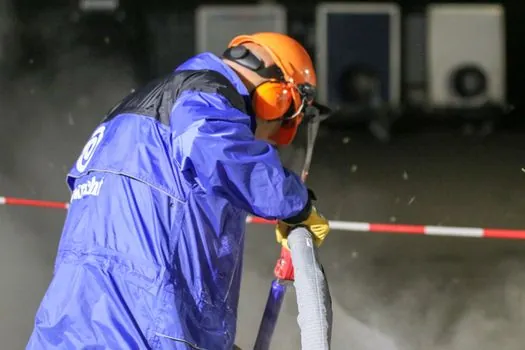
The most common confined-space HPD failure is cup-to-head seal loss from sweat, beard growth, or safety-glasses temple arms breaking the air gap, with NRR deratings of 5-15 dB documented when any of these are present. A daily pre-entry check should confirm cup-cushion elasticity, headband tension (Onlyele publishes a dedicated band-tension troubleshooting note for its over-the-head models, indicating the field recognises this as a real wear point), microphone port cleanliness on electronic models, and battery state on the LE901-class Bluetooth muffs [S3].
For mining-adjacent entries (underground surge chambers, conveyor tunnels) where both dust and methane are present, see the dedicated Mining Hearing Protector Selection spec map, which adds MSHA-muff certification and IP54 ingress to the same four-criteria decision matrix.
For laboratory-scale entries (cleanroom ductwork, pharmaceutical reactor ports) the attenuation goal drops, but the listen-through and chemical-compatibility goals rise; cross-reference the Laboratory hearing protector selection guide before specifying the same industrial muff inside a GMP envelope.
Sourcing, Standards, and Trackable 2026 Signals
Trackable signals to watch through 2026: the revision status of ANSI/ASA S1.25 personal HPD attenuation (currently the S3.19-1974 r2024 reaffirmation underpins U.S. NRR labels), the EU's ongoing alignment of EN 352 with the new PPE Regulation (EU) 2016/425 versus the older PPE Directive 89/686/EEC (most CE marks on imported muffs, including Onlyele's, transition by 2027), and the spread of Bluetooth LE Audio in hearing-protective earmuffs, which would let a single attendant channel serve multiple confined-space entrants without per-worker pairing [S3].
For an in-depth primer on how NRR, SLC80, and SNR ratings translate across jurisdictions, plus the underlying hearing protector attenuation physics, the SourceBySpec encyclopedia page is the natural reference. Sourcing decisions inside a broader PPE programme (gloves, respirators, motor protector trip settings for ventilation fans, surge protector on the attendant's radio charger) should be made against the same confined-space permit so that the PPE ensemble is consistent, not picked part-by-part.