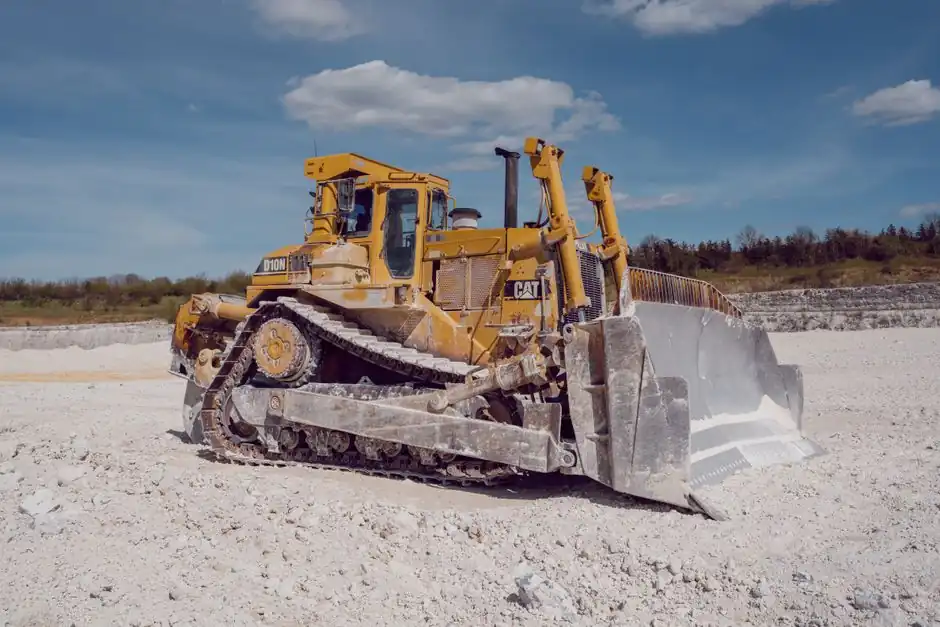
Underground and surface mining routinely exceed 85 dBA TWA, so hearing protector selection in 2026 must be driven by measured task noise, validated attenuation, and per-worker fit testing, not catalog NRR alone [S1][S5].
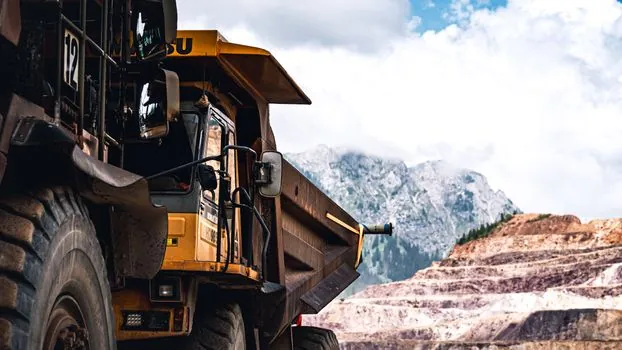
For a typical haul-truck loop, the operator cab hits 75-80 dBA, while the engine bay and drill floor sit between 95 and 110 dBA, which is why one HPD type does not cover the whole shift [S4].
Noise Survey: Where the Hazard Sits in a Mine
Mining noise hazards are not uniform across a pit, and OSHA identifies construction, manufacturing, mining, and utilities as the high-noise industries where roughly 20% of exposed workers develop noise-induced hearing loss, a figure that has held across successive NIOSH surveys [S1]. Continuous sources (compressors, ventilation fans, conveyor drives) sit in the 85-95 dBA range, while intermittent sources (drills, shot-firing, scaling, roof bolters) spike to 100-115 dBA. Impulse noise from blasting can exceed 140 dB peak, which is the regime where simple foam earplugs become insufficient on their own. A site survey must capture TWA, L_eq, and peak C-weighted levels per task, because selecting on a single 8-hour TWA under-specs the operator standing next to a working jumbo. Cross-check task dosimetry against MSHA noise limits and any state-specific overlay before any hearing protector selection for construction sites: comfort-driven spec map logic is ported into the mine.
Attenuation Math: From TWA and NRR to Target PAR
OSHA's method applies the derating formula (NRR - 7) / 2 subtracted from the measured TWA, while NIOSH uses NRR - 7 with a 50% safety factor, and the two methods routinely diverge by 5-10 dB on the same protector [S1]. The 2026 OSHA Safety and Health Information Bulletin on hearing protector fit testing reframes the calculation around the personal attenuation rating (PAR), which is the actual measured reduction for a specific worker wearing a specific HPD, not the laboratory NRR on the box. OSHA states that fit testing "allows workers to select the most effective HPDs that are comfortable, can be inserted correctly, and provide adequate noise reduction while allowing them to hear important communication and warning signals necessary for safety in the workplace" [S1][S8]. The mining spec should target a protected ear level of 80-84 dBA: aggressive enough to leave headroom for shifts longer than 8 hours, conservative enough that face-to-face radio checks and proximity alarms remain intelligible. Avoid over-attenuating past 70 dBA at the ear, which triggers the new risk of perceptual isolation in a haul-truck or confined stope.
HPD Type Comparison: Earplugs, Earmuffs, and Double Protection
Four common form factors cover the bulk of 2026 mining PPE catalogs, and the right pick is a function of attenuation need, fit-test result, climate, and other PPE in use [S4][S5].
Disposable foam earplugs (typically NRR 32-33 dB) are cheap, comfortable in heat, and easy to carry, but they require clean hands and a correct roll-down, and 50% or more of untrained workers get less than half the rated attenuation in field fit tests [S1].
Reusable elastomeric or premolded earplugs (NRR 24-27 dB) trade raw attenuation for a stem or band that aids insertion, which improves PAR consistency for workers who repeatedly fail foam plug fit tests.
Earmuffs (NRR 22-30 dB) are the default for drillers, blasters, and anyone in a high-impulse zone: no contact with the ear canal, no insertion error, and they can be doffed between noisy tasks. Their weakness is that safety glasses, hard-hat suspensions, and welding hoods break the headband seal and can drop effective attenuation by 5-15 dB, so any cap-mounted muff must be matched to the specific hard hat in service [S4].
Double protection (foam plug plus earmuff) is required when task noise exceeds about 100 dBA TWA or when impulse sources push peak above 130 dB, but the resulting protected level must still allow radio and alarm audibility, otherwise miners remove the muff to hear calls and the protection collapses. A side-by-side spec for a haul-truck driver, an underground driller, and a crusher operator should never be the same SKU on the same purchase order.
Fit Testing and the PAR-Based Spec
Two HPFT system types exist, subjective and objective (also called field-MIRE), and OSHA's bulletin treats them as a best practice, not a regulatory requirement under 29 CFR 1910.95 or 29 CFR 1926.52 [S1]. Subjective systems play tones through headphones with and without the HPD to derive a PAR; objective systems use a probe microphone in the ear canal to measure the actual protected level. Either way, the output is a personal attenuation rating that lets the safety officer say "this worker on this HPD gets 24 dB of real-world attenuation" instead of trusting a 33 dB NRR sticker. Mining operations that have rolled out fit testing in 2025-2026 report a meaningful jump in PAR consistency, but the bigger win is the training effect: workers who fail an initial fit test remember the corrected insertion technique, which holds across the rest of the shift [S7][S8]. For rotating crews, retest annually and after any weight change, ear infection, or PPE platform change such as a new hard hat or new safety-glass temple geometry.
Compatibility With Other Mining PPE
Hearing protectors do not live in isolation underground, and incompatibility with other PPE is a documented cause of effective-attenuation loss [S1][S4]. Cap-mounted earmuffs must match the specific hard hat (most hard-hat makers publish a compatibility matrix), and the band must clear the temple arms of safety glasses or goggles, otherwise the seal leaks 5-10 dB. In a hot pit, sweat reduces earplug roll-down grip and earmuff cushion seal, so hygienic sleeve covers and regular cushion replacement belong in the program. Communication headsets (Bluetooth or radio-integrated muffs) are an option for load-haul-dump operators and blast monitors, with the trade-off that built-in speakers limit the maximum protected attenuation to roughly 80-90 dBA at the ear, which is fine for a 90 dBA cab but under-specs a 105 dBA engine bay. For workers who also need a self-aligning bearing selection for mining duty spec on the same haul-truck, the same engineering-controls-first logic applies: quieter driveline, then isolation, then PPE.
Who HPD Selection Is For, and Where It Fails
This decision flow is for surface and underground mining safety managers, mining PPE buyers, and occupational hygienists running MSHA-aligned hearing conservation programs. It is not for general office or low-noise warehouse environments, where the 85 dBA action level is rarely approached. The most common failure modes in the field are: relying on the NRR sticker without derating, specifying a single SKU for the whole site, ignoring impulse noise from blasting, and not retesting fit after a PPE platform change. The biggest practical risk is the worker who removes a muff mid-shift to hear a radio call, which is why a fit-tested plug worn under a communication muff is often a more robust answer than a high-NRR muff alone. When the protected level at the ear drops below 70 dBA, situational awareness and alarm detection both fall off, and incident rates creep up; this is the other side of the over-attenuation coin that a PAR-based program is designed to catch. For the broader PPE landscape, including food processing protective clothing: 2026 selection map by hazard zone where similar noise-plus-hazard logic applies, the same measured-exposure-first methodology is the portable asset. [S4]
Next signal to track: MSHA and NIOSH 2026 enforcement summaries on hearing-loss standard 30 CFR Part 62, plus the next update to OSHA's SHIB 02-17-2026 fit testing bulletin. Look for site-level PAR libraries and a published list of MSHA-approved fit-test systems before your next procurement cycle.
For component-level specifications, see hearing protector, mining dump truck, and motor protector.