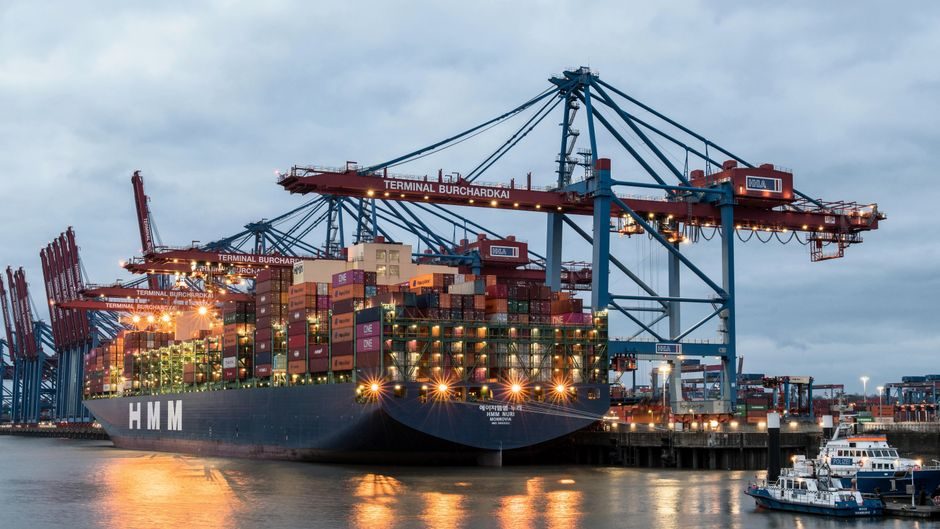
Global heat-pump market revenue reached USD 126.83 billion in 2025 and is forecast to reach USD 166 billion by 2030, with residential, commercial, and industrial end-uses all pulling simultaneously on the same upstream nodes. The 2026 supply chain has stopped being a back-office topic; it is the gating constraint on every installer order, every utility incentive programme, and every factory capacity announcement of the last twelve months.
Three upstream tiers are squeezing the most: hermetic and scroll compressors (single-source on a handful of Asian and US fabs), refrigerants in transition from high-GWP HFCs to lower-GWP HFOs/blends, and the rolled-copper / extruded-aluminium stock that feeds the heat-exchanger lines. Process engineers sourcing equipment for heat treatment furnace retrofits and process heat projects now compete for the same copper tube and brazed-fin capacity as the residential ASHP line.
Compressors: scroll, screw and inverter drive dominate the 2026 bill of materials
Scroll compressors in the 3-30 kW range continue to anchor the residential and light-commercial air-source heat pump (ASHP) market, while screw and centrifugal types cover the 100 kW-2 MW commercial-industrial and heat-recovery process bands. The 2026 sourcing reality is that only a small number of OEMs control the scroll-weld, orbiting-scroll, and inverter-drive IP that most European and North American assemblers depend on under OEM-supply or licensing agreements. [S1]
For 2026 specifiers, the meaningful BOM lever is the inverter drive stage. Variable-speed inverter compressors now dominate new ASHP platforms, raising the share of IGBT modules, DC-link capacitors, and DC power supply rails in the BOM. Lead-time risk on 600-1200 V IGBTs and on grain-oriented electrical steel for the motor lamination stack has re-emerged as a serious constraint, and is driving a quiet re-design toward switched-reluctance and reluctance-assisted permanent-magnet motors that drop or eliminate the rare-earth content.
Refrigerants: GWP transition reshapes compressor, lubricant and seal selection
The 2026 refrigerant landscape is defined by the F-Gas phase-down and equivalent regional rules, which are pushing new equipment toward low-GWP HFOs and HFC/HFO blends while still allowing high-GWP HFCs in service and in some process-heat applications [S1]. System-side, this means redesigns around mildly flammable A2L refrigerants (R-32, R-454B, R-454C, R-290) with new leak-detection, ventilation, and charge-size rules for occupied spaces.
The supply chain consequence is more severe than the marketing suggests: a refrigerant change cascades into compressor elastomer compatibility, lubricant miscibility (POE vs PVE vs ester oils), condenser pressure rating, expansion-valve superheat tuning, and the heat detector plus refrigerant-leak sensor chain on the safety loop. Each cascade is a re-qualification, and each re-qualification is a six-to-eighteen-month programme that gates model launches. Process engineers building heat-recovery loops against the heat treatment furnace inventory should treat refrigerant availability as a long-tail BOM risk, not a commodity call-out.
Metals: copper, aluminium and electrical steel are the 2026 cost and lead-time lever
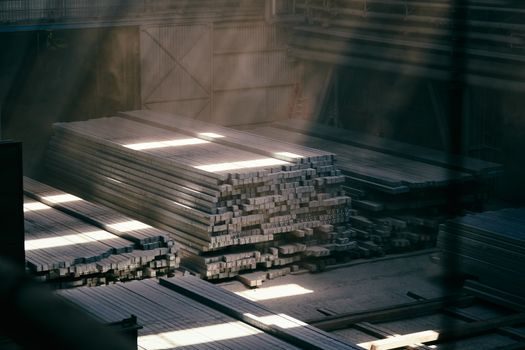
Heat-exchanger copper content has become the single most volatile line in the BOM. A typical 12 kW residential ASHP evaporator plus condenser can absorb 6-10 kg of refined copper, while a 500 kW commercial water-to-water unit can exceed 150 kg before counting interconnecting pipework [S1]. The 2026 supply side is constrained by concentrate grades trending lower, smelter outage risk in South America, and the cross-sector pull from EV traction motors, grid cabling, and BESS busbars.
Aluminium microchannel and brazed-plate heat exchangers are the structural response. Aluminium rolls and extrusions remain cheaper and more stably supplied than copper tube, and the 2026 design pattern is a hybrid: aluminium outdoor coil, copper or cupro-nickel indoor hydronic coil where water quality and galvanic-corrosion risk rule out aluminium, and selective aluminium use on the refrigerant side where brazing allows. Switching power supply sub-assemblies inside the inverter add a separate, smaller copper-and-grain-oriented-steel demand that usually does not gate delivery but does gate cost.
Industrial process heat: high-temperature and waste-heat-recovery pumps open a new upstream
2026 is the year industrial process heat moved from pilot to procurement. High-temperature air-source and water-source heat pumps capable of delivering 120-160 °C outlet temperatures are being specified for food, paper, chemicals, and district-heating applications, mostly around screw and centrifugal compressor frames with CO2 (R-744), ammonia (R-717), or hydrocarbon refrigerants on the high-stage [S4]. This is a fundamentally different supply chain from the residential ASHP one, and it pulls on the same industrial compressor, plate-heat-exchanger, and chain conveyor / conveyor chain fabrication shops used in process-equipment fabrication.
The 2026 bottleneck in this segment is not the refrigerant or the metals; it is the engineering-hours bottleneck for cycle design, control integration, and standards compliance (pressure equipment, flammable refrigerant codes, electrical codes for large inverters). For process plants the procurement signal is: engage compressor OEMs and EPC partners on a 9-15 month cycle, not a 6-week cycle, and freeze the control interface early so the inverter, sensor, and switchgear supply chains can run in parallel rather than serial.
Logistics, tariffs and the 2026 sourcing map
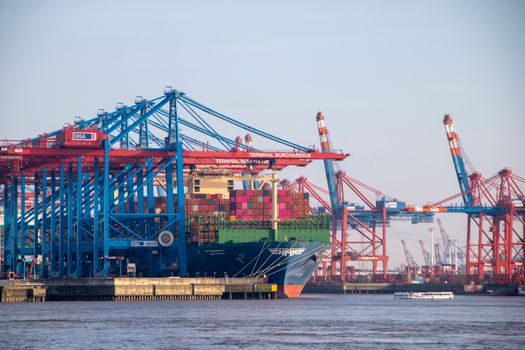
Container freight rates on Asia-to-Europe and Asia-to-US routes have eased from the 2021-2022 peaks but remain above 2019 baselines, and the 2026 map is being redrawn by tariff actions, CBAM-related carbon-cost reporting, and local-content rules tied to subsidy programmes [S1][S2]. The result is a more regionalised sourcing pattern, with European and North American assemblers qualifying second-source compressor and heat-exchanger suppliers inside their own trading blocs to avoid duty exposure and to satisfy green-procurement criteria.
The second-order effect is that stockists and wholesalers have re-built safety stock of finished units, especially for the popular 8-16 kW residential band, and that buffer is hiding genuine capacity tightness upstream. For buyers, the practical 2026 lever is to qualify two or more compressor platforms (e.g. one scroll, one rotary or screw) and to design the refrigerant loop so it can run on at least two A2L options, so a single OEM or refrigerant allocation cannot block a project. Reading a 2026 heat-pump datasheet is less about headline COP and more about which compressor, which refrigerant, and which metal stock the unit is locked to.
Standards and traceability that actually gate 2026 procurement
Heat-pump equipment sits at the intersection of pressure-equipment, electrical, refrigerant-safety, and energy-performance standards, and the 2026 procurement discipline is to require documentary evidence at quote stage, not at delivery. For the refrigerant side this means the F-Gas compliance record, charge size, and GWP figure for the factory-fill; for the electrical side it means conformity to the relevant low-voltage and EMC directives and, where the unit is grid-tied, grid-code compliance documentation; for noise and efficiency it means declared sound power and declared seasonal performance figures traceable to the standard used. [S2]
For process-heat applications the documentary load is heavier again: pressure-equipment conformity assessment for refrigerant and water sides, PED/CE marking for the assembly, ATEX/IECEx assessments where the heat pump is sited in a classified zone, and the usual process-side P&ID, HAZOP, and LOPA deliverables [S4]. Buyers who treat this as a checkbox tend to discover gaps in factory-acceptance testing; buyers who pre-agree a documentation matrix with the OEM at RFQ stage keep the 2026 supply chain running.
The verifiable signals to watch over the next two quarters: (a) whether scroll and screw compressor OEMs publish 2026 H2 capacity-allocation letters or move to allocation-only quoting, (b) whether A2L charge-size and refrigerant-leak-sensor requirements drive a new safety-component sub-supply chain, and (c) whether CBAM and local-content rules start to appear in European public-tender heat-pump specifications in late 2026.
For related coverage, see Stepper Motor 2026 Price & Cost Guide: Frame, Torque, Feedback and Brake Levers.