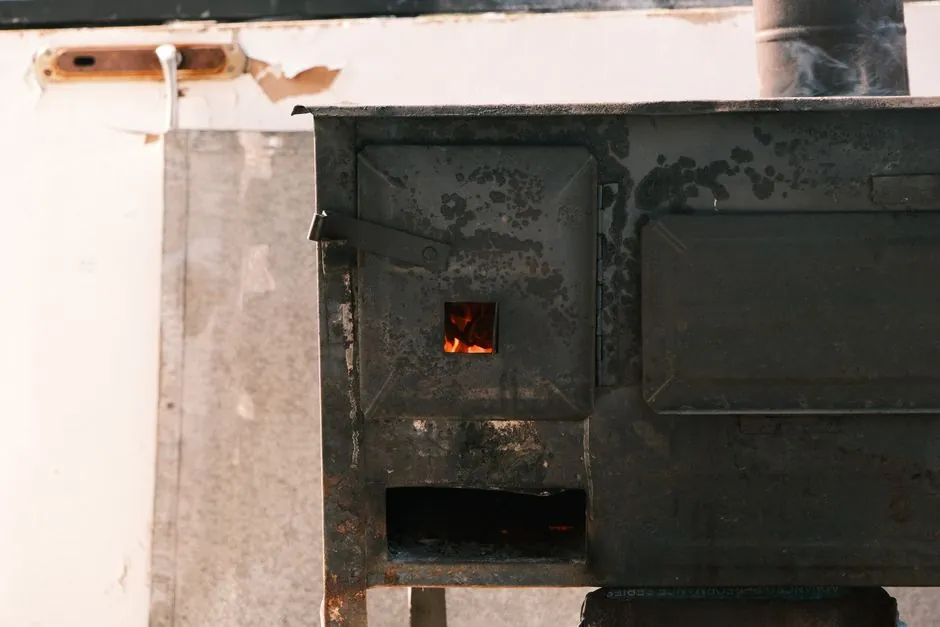
For HVAC component manufacturing, the furnace decision reduces to three families, air, atmosphere (gas-tight or muffle), and vacuum, with the right pick driven by alloy grade, surface-finish tolerance, and lot size [S1]. Air furnaces remain the lowest-cost option for stress-relieving and annealing carbon-steel HVAC brackets, shafts, and housings where light scaling is acceptable [S1].
Atmosphere and vacuum furnaces enter the HVAC spec when stainless, alloy, or copper components demand oxidation-free surfaces, which is the rule rather than the exception for brazed heat-exchanger assemblies, valve bodies, and compressor parts [S1][S8]. In the broader industrial furnace encyclopedia entry on heat-treatment furnaces, these same three families cover the majority of OEM heat-treat workloads [S8].
Furnace Family Comparison for HVAC Heat Treatment
Air furnaces are the most common type of heat-treating furnace, operating with a natural or forced air environment and used where oxidation is not a major concern [S1]. They carry the lowest capital cost and the simplest controls, but parts are exposed to oxygen, which produces surface scaling and decarburization on plain-carbon HVAC parts [S1].
Atmosphere furnaces split into two practical sub-types for HVAC work. Gas-tight atmosphere furnaces seal the chamber and back-fill with nitrogen or argon to suppress scaling on alloy components, accepting higher capital and operating cost plus a continuous monitoring burden for gas composition and flow [S1]. Muffle furnaces place the load inside a sealed inner chamber filled with inert gas, giving very low oxidation risk at the cost of smaller working volume and slower heating or cooling rates [S1].
Vacuum furnaces deliver the cleanest environment by removing oxygen and reactive gases entirely, often eliminating post-process cleaning on stainless HVAC valve seats, brazed assemblies, and tool-steel compressor components [S1]. Their purchase and operating cost is the highest of the three, and they require more sophisticated maintenance and operator training [S1]. A useful adjacent reference for HVAC shops that also run induction or specialty heating equipment is the dedicated entry on crucible furnaces, which covers higher-temperature metallurgical melting rather than HVAC heat-treat duty.
Decision Criteria: Alloy, Surface Finish, Batch Size, and Cost
Four criteria govern HVAC furnace selection: alloy class, required surface condition, batch or throughput profile, and total cost of ownership. Air furnaces win on cost and simplicity for carbon-steel stress relief, annealing, and tempering where oxidation is acceptable [S1].
For alloy steels or high-value components where surface finish and material integrity are critical, gas-tight atmosphere furnaces are the working default, with muffle variants added where small delicate parts need minimal surface degradation [S1]. When the spec is critical aerospace-, automotive-, or tool-steel-grade cleanliness, vacuum furnaces are the only acceptable option despite the cost premium [S1].
Batch size and HVAC part geometry matter. A typical 1 ft³ work envelope, common for short shafts, bearings, and bicycle-class hardware, fits any of the three families, but the muffle variant may constrain basket density, while a vacuum hot zone can limit charge weight per cycle [S2]. For very high HVAC production volumes, builders such as AFC-Holcroft are known for batch IQ (integral quench) furnaces and pusher configurations that move large lots continuously [S4].
Temperature Range and Process Fit for HVAC Alloys
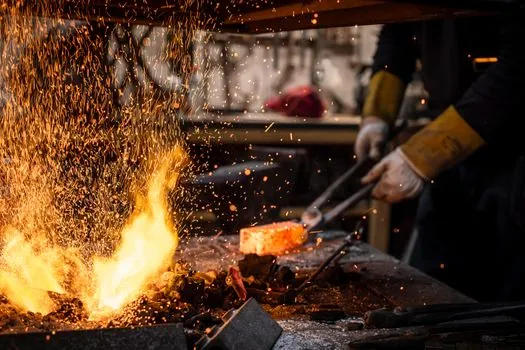
Industrial heat-treat furnace lines for HVAC duty typically top out at 2,400°F (about 1,316°C), which covers stress relief, normalizing, annealing, austenitizing, and most tempering cycles on carbon and alloy steels used in compressor and valve bodies [S6]. A practical operator note from a long-running shop thread is that harden and temper cycles sit roughly 1,000°F apart in setpoint, so a single furnace running both duties in one program pays a multi-hour cool-down penalty between stages unless two chambers are used [S2].
Process fit also drives furnace choice. HVAC stress relief and post-weld heat treatment (PWHT) on fabricated housings, ductwork, and pressure vessels are usually done in air furnaces, since oxidation is acceptable and PWHT cycles are long and forgiving [S5]. Neutral hardening, carburizing, and nitriding require atmosphere control, which is why these process names show up on every custom furnace builder's capability list, including Heat Treat Furnaces' published menu of aging, nitriding, carburizing, austenitizing, normalizing, and solution treatment [S3].
For shop owners evaluating a wider thermal-processing toolkit, the general heat treatment furnace encyclopedia entry maps the process-to-furnace relationship in more detail, while HVAC-specific thermal management of conditioned spaces is covered separately under marine HVAC and adjacent climate-control categories.
North American Builder Landscape and Capacity Signals
The 2023 sales ranking of North American heat-treat furnace builders, published in mid-2024, puts Ipsen USA at the top with over USD 110 million in 2023 sales, almost double the second-largest builder and split roughly 50/50 between new equipment and aftermarket parts, service, and hot zones [S4]. Ipsen USA builds vacuum furnaces for the global market, while the parent group in Kleve, Germany produces the atmosphere line [S4].
AFC-Holcroft of Wixom, Michigan is described in the same ranking as the largest manufacturer of atmosphere heat-treating furnaces in North America, with a history going back to 1916 via the original Holcroft & Company and current ownership by the AICHELIN Group since 2016 [S4]. Surface Combustion of Maumee, Ohio rounds out the publicly named top tier in the same article, with other builders in the broader top-20 including Solar Manufacturing, Gasbarre, and McLaughlin, all with annual sales of USD 20 million or more [S4].
For HVAC buyers, the practical signal is supplier breadth: a single builder such as Heat Treat Furnaces in Sturgeon Bay, Wisconsin, will design, fabricate, install, and service batch, bell, box, car-bottom, continuous, drop-bottom, pit, roller-hearth, and tip-up configurations, and will train plant personnel as part of the package [S3]. Cooperheat, by contrast, focuses on post-weld heat-treatment furnaces and curing ovens for oil and gas, power, chemical, heavy fabrication, forging, and foundry duty, a relevant option for HVAC coil and pressure-vessel fab shops that need PWHT capability rather than general hardening [S5].
Selection Logic: When to Choose Air, Atmosphere, or Vacuum
A simple decision rule covers most HVAC spec situations. Specify an air furnace when the part is plain-carbon steel, the surface finish tolerates light scale, and the duty is stress relief, normalizing, or tempering below about 1,400°F [S1][S6]. Specify a gas-tight atmosphere furnace when the part is alloy or stainless steel, the surface must stay bright or scale-free, and the batch fits a sealed chamber [S1]. Specify a muffle furnace when the load is small, high-precision, or contamination-sensitive and a smaller working volume is acceptable [S1].
Specify a vacuum furnace when the spec demands minimal oxidation and scaling, exceptional temperature uniformity, and post-process cleaning elimination, and when the higher capital and operating cost, plus the maintenance and training burden, fit the business case [S1]. Induction heating is sometimes raised as an alternative for localized hardening, offering high heating efficiency with minimal heat loss and precise control, though it sits outside the three core furnace families discussed here [S9].
For HVAC shops already running induction equipment and looking to round out their thermal-processing line, the related article on arc welder specs for HVAC installation covers the joining side of the same workflow, while a broader view of fabrication-shop procurement gates is in the industrial gearbox quality standards spec map.
Limitations, Failure Modes, and Standards Anchors
Every furnace family has failure modes the spec writer must price in. Air furnaces cannot hold atmosphere control, so any spec that calls out stainless or alloy surface protection in an air unit is a mismatch that produces scrap, not savings [S1]. Gas-tight atmosphere furnaces require continuous gas composition and flow monitoring; a failed nitrogen supply during a high-temperature hold will oxidize the entire load [S1]. Muffle furnaces have a smaller working volume and slower heating and cooling, which caps throughput and rules them out for high-tonnage HVAC lines [S1].
Vacuum furnaces demand the most operator skill: leaks, hot-zone degradation, and partial-pressure control of low-pressure inert gas are routine pain points that surface as elevated rejection rates when maintenance slips [S1]. The 1,000°F setpoint gap between typical hardening and tempering temperatures means a single chamber running both duties in one program pays a multi-hour cool-down penalty unless dual chambers are specified [S2].
Standards anchors matter when the furnace interfaces with other plant systems. The 2,400°F upper limit on industrial heat-treat lines from US-based builders such as HeatTek sits well within the operating envelope of the HVAC alloys in question [S6]. The long-running Practical Machinist thread, originally opened in September 2009 and still referenced for small-shop heat-treat setup, remains a useful reality check on the gap between marketing literature and bench-top operating experience with small muffle furnaces [S2]. For shops that also run process cooling water, the encyclopedia entry on plate heat exchangers is the natural downstream reference.
Two trackable signals to watch after 2026-09-11: the next published North American furnace-builder sales ranking, which will show whether Ipsen's near-USD 110 million 2023 base held or shifted under continued vacuum-furnace demand, and any builder announcement around expanded atmosphere-furnace capacity from AFC-Holcroft, which holds the largest atmosphere-furnace footprint in North America [S4]. A third signal is the IMTS 2026 cycle in Chicago, where furnace builders traditionally launch new chamber and control-platform variants relevant to HVAC component production [S2].