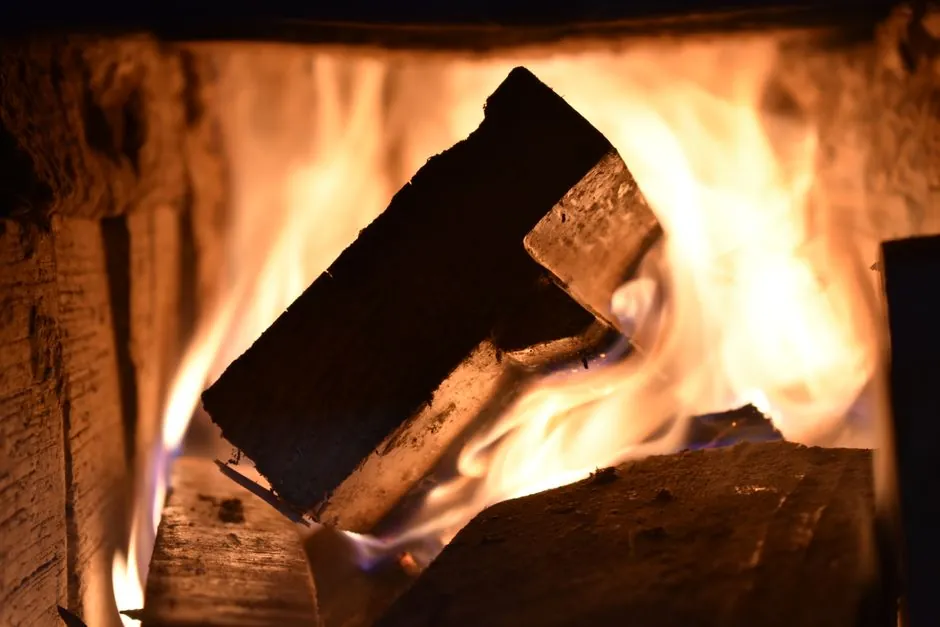
A heat treatment furnace is selected by matching furnace class, atmosphere, and chamber volume to the required temperature uniformity, case depth, and production cadence, with batch box or integral-quench units covering most general-purpose work and pusher or walking-beam continuous lines reserved for high-volume throughput [S2][S3].
Total cost of ownership hinges on heating-element chemistry (NiCr or FeCrAl alloys), insulation integrity, and the manufacturer's spare-parts lead time, all of which determine uptime more than the quoted nameplate kW rating [S1]. Capacity oversizing past roughly 1.4x the calculated design load wastes fuel and degrades temperature uniformity, the opposite of what a new capital purchase is supposed to deliver [S5].
Furnace Classes by Workload and Atmosphere
Heat-treating equipment splits into batch units (work stationary) and continuous units (work moving through zones), with the further split into atmosphere furnaces, vacuum furnaces, and applied-energy methods such as induction, flame, or laser [S2]. Integral-quench batch furnaces are the most common batch type for case-hardening gears, with effective 50 HRC case depths up to about 0.060 inch (1.5 mm) routinely achieved [S2]. Pusher furnaces dominate continuous duty, typically running truck-transmission gears at 50 HRC case depths of 0.025 to 0.035 inch (roughly 0.6 to 0.9 mm) [S2].
Vacuum furnaces are specified where surface chemistry must not shift, such as tool steels, die steels, and aerospace alloys, while salt bath (salt pot) furnaces cover nitriding, nitrocarburizing, and carbonitriding of small intricate parts, accepting the trade-off of salt residue and intensive maintenance [S4]. The same gear-heat-treat application, hardened in atmosphere, in salt, or in vacuum, will produce different retained austenite and surface roughness even at the same nominal hardness, so atmosphere choice must follow the metallurgical spec, not the lowest bid.
Sizing the Chamber, the kW, and the Load
For residential HVAC, ASHRAE-style guidance caps oversizing at 1.4x the 99 percent heating load; the industrial analog is to size the furnace to the heaviest single charge plus fixtures, then verify recovery time at maximum setpoint [S5]. A working method: list the heaviest charge mass (kg), the soak temperature (°C), the ramp rate (°C/h), and the target uniformity class, then ask the OEM for a guaranteed heat-up time at 100 percent charge, because recovery time is the metric that drives furnace class, not nameplate kW.
Charge density matters as much as weight: a 1.0 m³ box furnace loaded to 60 percent fill with steel fixtures has different recovery characteristics than the same box loaded with light stampings at 20 percent fill, even though both charges weigh the same. The five-step durable-furnace checklist from Lucifer places build quality (heavy-gauge steel framing, high-temperature insulation, NiCr or FeCrAl heating elements, precision-welded seams) ahead of capacity, reflecting that a furnace running 20 percent oversized on a class-uniformity workload can be re-tuned, while a poorly built chamber will not hold class over its second year of service [S1].
Temperature Uniformity and Furnace Class
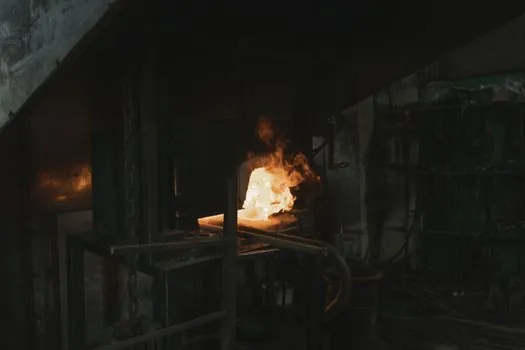
Furnace class is set by the required temperature uniformity, typically expressed as plus or minus delta in °C across the working zone at soak; common industrial classes span ±5 °C (aerospace and tool-steel), ±10 °C (general heat treating), and ±15 °C (stress relief and annealing) [S6]. The class is decided before the OEM is picked, because moving from ±15 to ±5 °C uniformity can change the chamber design, the recirculation fan layout, and the element zoning enough to swing price by 30 to 60 percent [S6].
Buyers sometimes chase a higher class than the metallurgical spec requires, paying for tighter uniformity that does not improve hardness scatter in the actual part. If the heat-treat specification calls for HRC 58 to 62 on a through-hardened alloy, ±10 °C uniformity at soak is normally sufficient; demanding ±5 °C adds cost without measurable metallurgical benefit, and the budget should be redirected to spare elements and a maintenance contract instead [S1][S6].
Decision Matrix: Batch vs Continuous vs Vacuum vs Salt
Choose a batch box or integral-quench furnace when lot sizes are 1 to roughly 200 pieces and case depths are 0.5 to 1.5 mm, with cycle flexibility valued over throughput; this is the workhorse of general job shops [S2][S3]. Choose a pusher, walking-beam, or roller-hearth continuous furnace when the same part runs daily for months and the line can feed at 200 to 2000 kg/h, accepting higher tooling cost for lower per-part cycle time [S2].
Choose a vacuum furnace when surface finish, decarburization, or oxidation cannot be tolerated, accepting the lower maximum case depth and the higher per-cycle energy cost; choose a salt bath for small intricate parts needing nitriding, nitrocarburizing, or carbonitriding with rapid uniform heating, accepting the salt-residue cleaning step and the higher routine-maintenance burden [S4]. For deeper case depths above roughly 1.5 mm effective 50 HRC, integral-quench batch units or sealed-quench batch furnaces remain the mainstream path, with longer soak times at 850 to 930 °C in endothermic atmosphere [S2].
Buyer-Side Selection Criteria and Red Flags
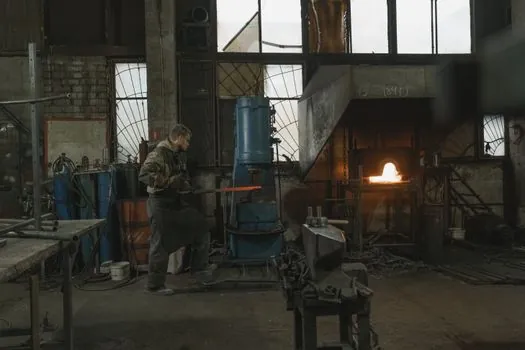
The five-step build-quality checklist calls out five concrete items: heavy-gauge steel framing, high-temperature insulation rated for the maximum setpoint, durable NiCr or FeCrAl heating elements, easy-access service panels, and modular components that can be replaced without rewiring the cabinet [S1]. Same-day or next-day shipment of heating elements and thermocouples, direct engineering support rather than a call-center queue, and standardized (non-proprietary) parts round out the practical buying criteria [S1].
Red flags that should stop a purchase: proprietary-only parts that lock the buyer into one supplier, complex control cabinets that require factory technicians for every setpoint change, and vendors who cannot document the last 12 months of their own furnace-class uniformity surveys [S1]. A useful cross-check is the supplier's own preventive-maintenance schedule; if it is a one-page generic PDF, the unit has not been in real field service long enough to be a low-risk buy [S1].
Standards, Sources, and Cross-Reference Reading
Industrial furnace safety, combustion, and atmosphere control are typically governed by NFPA 86 (ovens and furnaces), ASME BPVC Section IV (boilers and unfired pressure vessels, for vacuum vessels), and CQI-9 (automotive heat-treat assessment); buyers should require the OEM to name the specific clauses they meet, not just assert "compliance". Uniformity surveys should reference AMS 2750 (or the equivalent national spec) for class definition, thermocouple calibration, and survey frequency; this is the document that ties "furnace class" to a testable procedure rather than a marketing claim. [S2]
For buyers comparing a heat-treat line investment with other capital equipment, the spec-first approach used in residential and light-commercial furnace sizing decisions generalizes well: pick the class, then the chamber, then the kW, then the OEM, in that order, and reject any quote that asks for kW first. The gear-heat-treat furnace comparison in industrial literature gives the same lesson in a different domain: atmosphere and case-depth targets drive furnace type, not vice versa [S2]. For a deeper look at the metallurgy side, the vacuum versus atmosphere trade-off and the batch versus continuous throughput math are covered in adjacent reference pages and supplier application notes [S3][S4].
For HVAC-side furnace sizing, ASHRAE's Manual J load calculation plus the 1.4x cap on oversizing is the cleanest cross-domain anchor: the same 1.4x factor that limits residential furnace oversizing maps to industrial furnace class, where over-sized chambers lose uniformity and under-sized chambers lose recovery time, and both failure modes are visible in the first year of production [S5].
Two practical follow-up signals worth tracking: the supplier's published list of spare-element and thermocouple part numbers (with the OEM's own stock position), and the OEM's uniformity-survey sample report tied to a named AMS 2750 class; both should be requested in the RFQ stage, before any commercial discussion of price. A more cross-discipline comparison is laid out in this spec-first buying guide for a different capital-equipment class, which uses the same class-first, then chamber, then kW logic for adjacent equipment.
Spec-level background on the components involved: linear guide, and ballast water treatment.