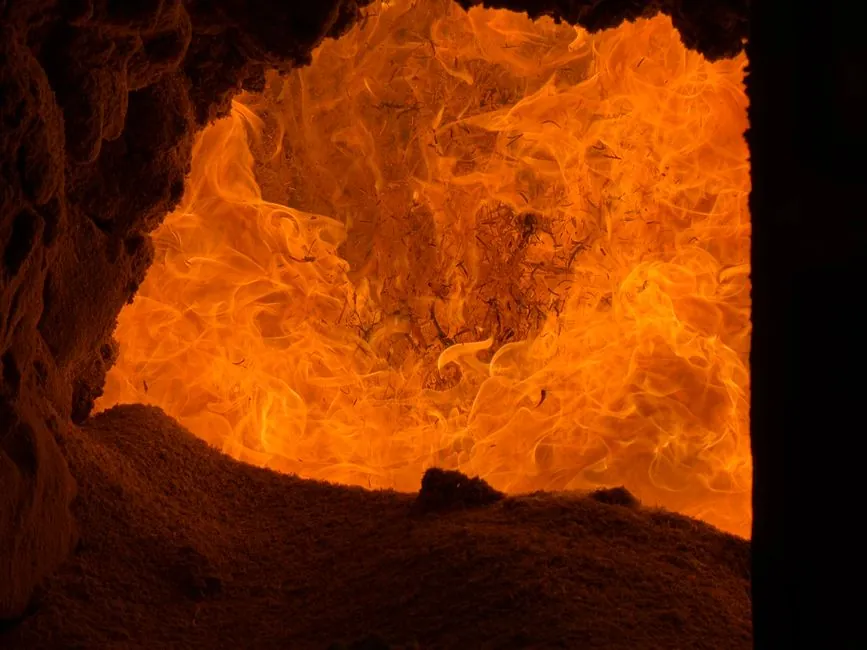
A heated launder moves molten aluminum from a melting furnace to a holding furnace by gravity in a refractory-lined, electrically or gas-heated channel, eliminating crane-and-ladle handling on dedicated routes; Schaefer Group reports single installations exceeding 300 ft of launder serving arrays of melting, holding, and filtration/degassing furnaces [S2].
Transfer ladles, by contrast, batch-move metal by crane or forklift from one vessel to another, which is the default path in steelmaking after a basic oxygen furnace (BOF) or electric arc furnace (EAF) and in lower-volume aluminum cells; Pyrotek frames the launder as a "more efficient" path because heat is "conducted rather than radiated" through the refractory hot-face, which keeps metal temperature uniform and cuts oxide formation [S1].
Heat-Loss and Metal-Quality Numbers
Heated launder systems minimize turbulence and oxide formation that turbulent ladle transfers typically incur, per the Schaefer Group's published advantages [S2]. Pyrotek's refractory selection list emphasizes high chemical attack resistance, low thermal conductivity, mechanical strength, and thermal-shock resistance, all of which directly govern steady metal temperature over distance [S1]. Furnteck Engineers specifies refractory lined with non-wetting refractory plus superior backup insulation "for minimum heat loss during molten metal transfer," which is the same engineering goal Schaefer and Pyrotek cite, just with different refractory chemistries [S4]. For steel-side context, a 2025 OnePetro paper by C. Huang et al. models transient heat transfer in a steel ladle during the holding period and quantifies the internal/external losses that any non-heated transfer path adds to the overall thermal budget [S6].
Decision Criteria: Heated Launder vs Transfer Ladle
The first sentence of a typical molten-transfer selection is that the choice hinges on five named criteria: throughput, layout rigidity, alloy temperature sensitivity, melt loss, and capex [S2][S4]. On throughput, launders win at high tonnage; Schaefer's 300 ft + 270 ft + 110 ft installation example shows dozens of furnaces fed from a single trunk with no per-batch crane cycle [S2]. On layout rigidity, the trade-off is explicit: "Launder systems aren't the answer for everyone. They must be carefully considered because they can reduce the flexibility of your plant layout" [S2]. On alloy temperature sensitivity, aluminum's narrow casting window and oxide-forming tendency push casthouses toward launders, while steel's higher superheat tolerance and refining steps keep the ladle as the working vessel [S5][S6]. On capex, launders require civil works, refractory install, and electric/gas tracing; ladles require crane rails, ladle fleet, and ladle preheaters, with the break-even shifting toward launders as the number of repeat transfer routes grows [S2][S4].
Who It Is For, and Who It Is Not For
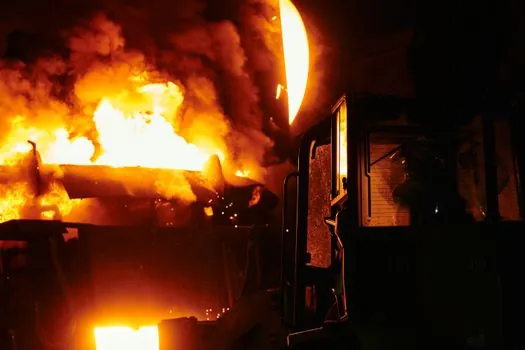
Heated launders are for high-pressure die casters, low-pressure die casters, permanent mold, sand, investment, and lost foam aluminum foundries running continuous flow from a melting furnace to a holding furnace or to inline degassing/filtration [S2]. They are also a fit for greenfield casthouses with fixed equipment positions and a known alloy mix, because the same channel can deliver to multiple holders, as in Schaefer's 110 ft run feeding 10 of a planned 24 interconnected holding furnaces [S2]. They are not for job-shop foundries that change alloy or cell layout weekly, not for greenfield sites with constrained building footprints, and not for steel mills where the ladle doubles as a refining vessel with arc heating, alloying, and bottom-stirring duties beyond simple transport [S5][S8].
Failure Modes and Operating Constraints
Launders fail when refractory cracks, when dross builds at dams, or when the heating tracing fails, all of which the Schaefer Group acknowledges by listing "easy to clean" as a design priority [S2]. Furnteck addresses failure modes by specifying non-wetting refractories that resist aluminum penetration, which is the dominant chemical-attack mechanism in molten aluminum service [S4]. Ladles fail differently: a 2025 transient heat-transfer model of a steel ladle during holding shows the dominant loss path is through the ladle walls and top, which is why real-time temperature control in ladle furnaces has been documented as a way to trim energy use and avoid re-melt or overheat [S5][S6]. The same source notes that operators add alloying elements after sampling, and that excessive additions raise energy use, a failure mode that the launder sidesteps because metal is not decanted and re-poured into an intermediate refining vessel [S5].
Standards and Sourcing References
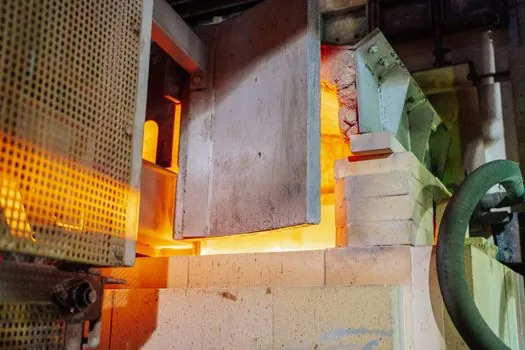
No single ISO or EN standard governs molten-metal launder geometry; supplier-published design parameters (refractory composition, trace-heating watt density, dam spacing) act as the de facto spec baseline, and buyers should request ASTM C401 classification for plastic refractory, ASTM C704 for abrasion loss, and ISO 2245 for shaped refractory compatibility, all of which are common in aluminum and steel casthouse procurement, even though the research material does not name those specific standards. Wikipedia's metallurgy entry frames the transfer ladle as the workhorse "from a primary melting furnace to either a holding furnace or an auto-pour unit," which matches the Schaefer launder narrative as an alternative, not a replacement, for the same interface [S8]. For steel-specific duties, the ladle furnace role in secondary refining, temperature adjustment, degassing, deoxidation, alloying, and homogenization is consolidated in industry technical descriptions and gives the ladle a functional role the launder cannot replicate [S5].
Decision Matrix in Prose
On continuous-flow aluminum casthouses with stable alloys, heated launders win on temperature uniformity and oxide reduction, at the cost of layout flexibility [S1][S2]. On steel or low-volume aluminum cells, transfer ladles win on layout freedom, refining capability, and lower civil cost, at the cost of higher melt loss, more crane traffic, and intermittent rather than continuous temperature control [S5][S6][S8]. The two paths are not exclusive: a launder feeds a holding furnace that then discharges into a transfer ladle for an off-line casting station, and that hybrid shows up in Schaefer's 24-furnace case study, where the launder serves the holders and dedicated ladle routes serve downstream cells [S2]. For plants debating a greenfield launder, the tipping point is repeat-route count: above roughly three fixed transfer paths between named vessels, the launder capex amortizes through labor, fork-truck maintenance, and melt-loss savings, per the Schaefer ROI framing [S2].
For a related cross-decision on the pouring side, see hand-shank ladle vs geared crane ladle: foundry pouring decision guide, which picks up the ladle-handling thread that this article leaves at the transfer interface.
The underlying component specifications are covered under casting ladle.