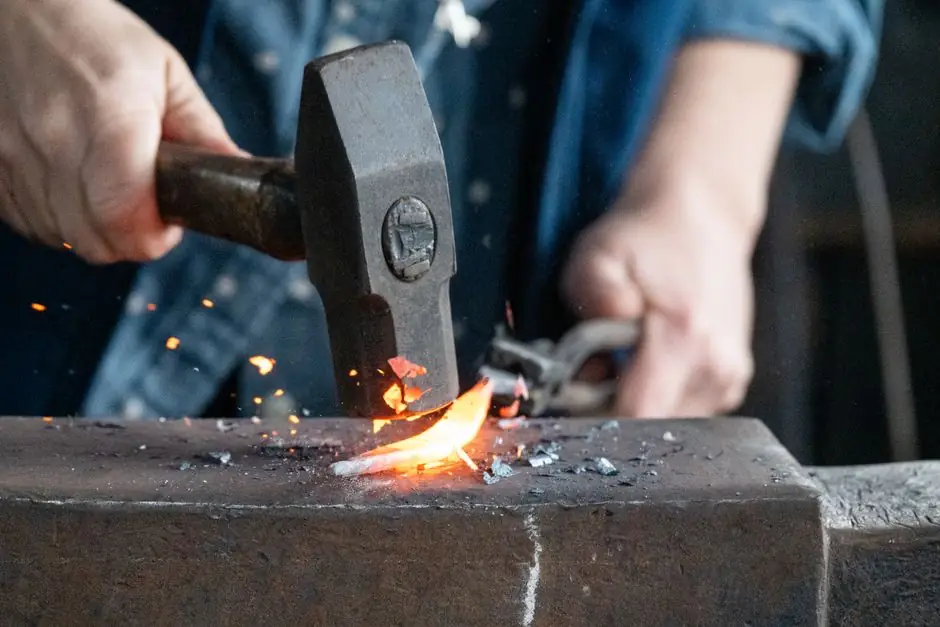
Heavy forgings need an estimated 18–31 weeks from mill order to “as-forged” delivery: 14–25+ weeks for steel procurement plus 4–6 weeks for forging [S4].
CJ Forge estimates mill lead times of 14–25+ weeks, with additional time for outside processes, while new tooling can add 4–8 weeks before production begins [S4][S8].
Heavy Forging Lead Time Range and Stage Breakdown
A practical 2026 planning window for heavy forgings is 18–31 weeks to “as-forged” condition. CJ Forge estimated 14–25+ weeks for mill material and instructed buyers to add 4–6 weeks for forging when the steel is on the ground or available from a service center [S4].
The total delivery date must also include finishing. CJ Forge listed 3 weeks for heat treatment, 1 week for mechanical processing, 3 weeks for non-destructive testing, and 2–6 weeks for machining [S4]. Those sequential stages can add roughly 6–12 weeks, depending on the required route and whether operations overlap.
That benchmark fits standard production planning rather than a 2026 heavy-forging order starting with mill procurement.
Material Availability Drives the Longest Queue
The dominant variable in 2026 is not the hammer cycle, but access to steel. Mill lead times of 14–25+ weeks were estimated for July 2026, while an “as-forged” order required another 4–6 weeks [S4]. A buyer with certified stock on hand avoids much of that mill window, while an open production order inherits it.
Alloy selection can further extend procurement and processing. The requirement for certified material, mechanical properties, traceability, and inspection records also affects whether a distributor can substitute stock.
The wider steel market reinforces the constraint. As of July 2026, structural-steel lead times were 14–20 weeks nationally, with regional variation [S2]. Structural steel is not a forging quote, but the range demonstrates that upstream steel capacity was already constrained across procurement channels.
Tooling, Heat Treatment, and Inspection Set the Schedule
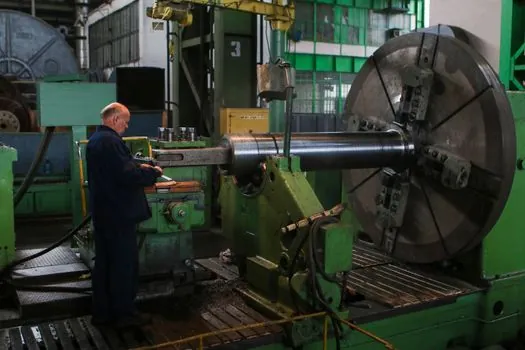
New tooling is a separate schedule risk. Die design and manufacture typically add 4–8 weeks before production begins [S8].
The buyer should therefore separate approval time from physical production time in every purchase order.
Open-die capacity offers a defined envelope for short-run or prototype work. Great Lakes Forge lists individual forgings up to 4,000 lb, 18 in diameter or thickness, and 120 in length, with in-house heat treatment and machining [S5]. These limits are supplier-specific, but they demonstrate why one supplier’s “heavy” scope can differ materially from another’s.
Comparison by Order State and Forging Route
For stock-based heavy forgings, the mill element can fall to zero if suitable material is already on hand, leaving about 4–6 weeks for the hammer operation and approximately 6–12 weeks for downstream processing [S4]. For mill-ordered heavy forgings, the comparable route is 18–31 weeks to “as-forged,” followed by as much as another 6–12 weeks.
Great Lakes Forge describes its open-die forging capabilities as optimal for manufacturing short production runs and prototypes [S5].
Who Benefits from Stock, Open Die, or Large Capacity

Heavy-forging buyers need a firm drawing, approved material grade, defined inspection scope, and a delivery state before comparing quotations. A request for “heavy forging” without distinguishing raw forging, heat-treated forging, or machined forging is not comparable across suppliers. [S1]
Stock-based open-die work fits prototypes, low quantities, and unusually large pieces that do not justify production tooling. Great Lakes Forge describes open-die forging as optimal for manufacturing short production runs and prototypes [S5]. The commercial limit remains material, furnace availability, and equipment capacity, not a universal one-size-fits-all schedule.
A buyer should ask whether the quoted interval starts at RFQ, drawing approval, purchase order, or mill release. These are different clocks and can differ by weeks.
Procurement Risks and Failure Points
The largest planning error is counting only the forging operation. CJ Forge’s July 2026 estimate separated 14–25+ weeks for mill material, 4–6 weeks for forging, 3 weeks for heat treatment, 3 weeks for non-destructive testing, and 2–6 weeks for machining [S4]. Omitting any of these stages understates the delivery commitment.
A second error is treating production capacity as guaranteed. Large-diameter rings and heavy forgings may receive longer schedules when furnace capacity and equipment scheduling constrain output [S1]. New tooling adds a further 4–8 weeks, and complex geometry or tight IT6–IT8 tolerances may require additional iterations [S1][S8].
Material certification is another practical constraint. CJ Forge noted that its 4–6 week forging lead time applied when material was on the ground or available as service-center stock [S4]. A buyer should resolve the grade, heat, certification, and mechanical-property package before accepting a mill-based date.
How to Build a 2026 Heavy Forging Schedule

Use 18–31 weeks as the external planning range for a heavy forging ordered without suitable stock, measured to “as-forged” delivery [S4]. Add 6–12 weeks for heat treatment, mechanical processing, non-destructive testing, and machining when those operations are sequential [S4]. Add 4–8 weeks if new tooling is required [S8].
For a sample-driven project, reserve 3–6 weeks for the development sequence before treating a production delivery date as committed [S1]. Large-diameter rings should also be checked against the supplier’s furnace and forging equipment schedule, because those constraints can move the date beyond the general production range [S1].
For more detailed procurement context, duplex stainless steel lead times show why a 1–4 week stock market and a 12–24 week mill window cannot support the same delivery assumption for material substitution.
The verifiable procurement signal for a specific order is the mill confirmation date, forging slot, die status, and inspection release. Until those four dates are tied to the purchase order, 18–31 weeks remains a planning estimate rather than a committed schedule [S4].