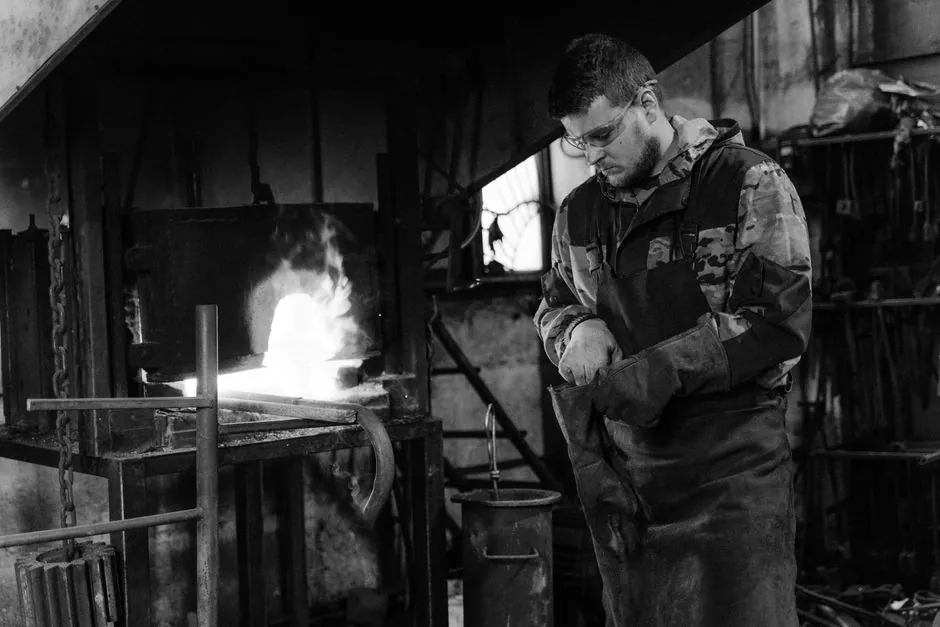
A new heavy forging press is a multi-year industrial construction project, not a standard machine purchase, with the schedule driven by capacity, foundation work, utilities, controls, tooling, and commissioning.
Heavy forging presses can reach the scale of a 10-story building, while 12,000-ton extrusion presses were about 120 feet long, so the project requires heavy civil engineering, large hydraulic systems, material-handling infrastructure, and a qualified operating team [S1][S3].
What is the realistic build time for a heavy forging press?
There is no single defensible build time for every heavy forging press because the supplied research does not publish a universal schedule in weeks or months [S1][S2][S3]. The defensible planning position is a multi-year build for a new large press, with the exact duration set after the press concept, site capacity, regulatory approvals, and vendor scope are frozen.
Historical references provide scale rather than a modern procurement timetable: the United States Heavy Press Program funded four forging presses and six extrusion presses, and the largest machines among them became the largest presses in the world at the time [S1][S3]. A 12,000-ton extrusion press measured approximately 120 feet in length [S1]. These dimensions explain why a heavy press project behaves more like industrial plant construction than ordinary capital equipment.
For a practical schedule, separate three stages: engineering and permitting, fabrication plus civil construction, and commissioning with tooling and process qualification. A schedule that combines all three into one delivery date is weak because each stage has different approval gates, interfaces, and failure consequences.
Press capacity and machine scale
Forging capacity should be fixed before the schedule is baselined, because rated force and physical scale determine the foundation, frame, hydraulic circuit, controls, handling equipment, and maintenance access [S1][S3]. A historical example is the Alcoa 50,000-ton forging press [S1].
The distinction between press force and press weight matters during project definition.
A comparison of the main press architectures highlights the schedule drivers:
The decision criteria are capacity, part geometry, material-flow control, heating method, material handling, and available building envelope. For a manufacturer comparing a hydraulic press with a mechanical press, the former offers flexible stroke and force control, while a new heavy hydraulic installation carries substantial civil, utility, and commissioning demands [S4].
Civil works and building requirements
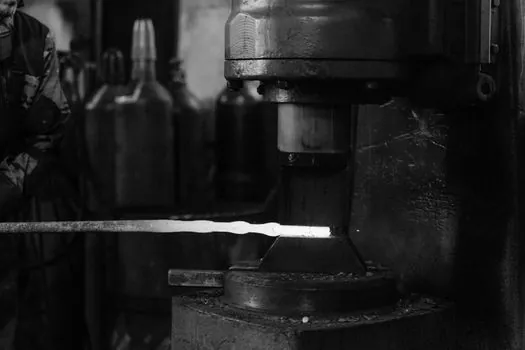
Heavy forging presses are comparable in scale to a 10-story building [S3].
The 120-foot length of historical 12,000-ton extrusion presses reinforces that a heavy press line is a production-cell layout rather than a stand-alone machine [S1]. Engineers should map billet delivery, heating, forging, manipulation, die change, inspection, and scrap removal before freezing the building. A tablet press handles a different form of compression operation, but the comparison is useful because it separates press force from the upstream and downstream process equipment required for a repeatable forging line.
Hydraulic, control, and automation scope
A heavy forging press requires continuous pressure through the stroke, dependable die protection, and control matched to material flow, tooling, temperature, and production requirements [S4]. The hydraulic system must therefore be scoped as a complete power and control architecture, not reduced to a pump and cylinder order.
Available hydraulic functions include ejectors, knock-out systems, die shuttles, quick die change, and scrap-removal equipment. Integrations can include robots, transfers, conveyors, monitoring, and automation [S4]. These interfaces create schedule dependencies among the press builder, civil contractor, controls integrator, tooling supplier, and production line integrator.
Forging presses can be engineered around material flow, tooling, temperature requirements, and production goals, with monitoring and automation available as features [S4]. The research identifies monitoring and automation as integration options but does not assign universal response times or acceptance thresholds, so any project-specific values must come from the approved functional specification and validated FAT or SAT plan.
For plants building around new forging capacity, electrical and control packages require the same interface discipline used for other long-lead equipment. The wider planning lesson is covered in EPC Controls for Long-Lead Electrical Equipment Risk, while the press scope itself must remain tied to verified forging requirements.
Tooling, heating, and production qualification
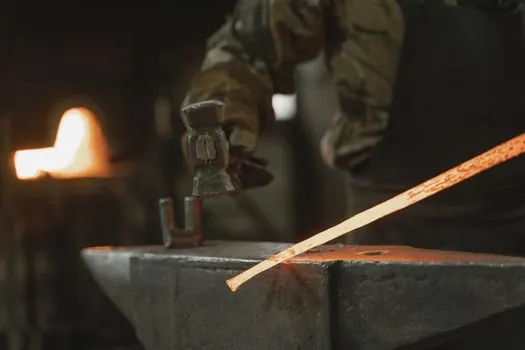
Press commissioning does not establish forging capability by itself, because the die set, heating method, lubricant, handling equipment, and process settings determine repeatable part quality. Custom hydraulic forging presses can be engineered around open die, closed die, or custom work, with support for hot, warm, and cold forging and added temperature-control and material-handling requirements [S4].
Acceptance should distinguish mechanical commissioning from production qualification. Mechanical commissioning checks installation, hydraulics, motion, interlocks, and basic control functions. Production qualification then verifies the agreed forging route, die operation, repeatability, handling cycle, inspection results, and operator procedures.
Tooling is not a minor accessory. Die installation, alignment, clearances, heating effects, and ejection or knock-out operation can change the final acceptance sequence. For closed-die work, hydraulic ejectors or knock-out systems and die shuttles can be integrated into the machine [S4]. Any promise that the press will be producing saleable forgings on one date should therefore specify whether that date follows mechanical completion, first article approval, or serial production acceptance.
The same distinction matters when planning adjacent manufacturing equipment. A laser marker can support material identification and traceability, but its procurement and installation do not replace heat-number control, die records, inspection plans, or forging-process qualification.
Who should own a new heavy press project?
A new heavy forging press suits manufacturers that need very high force, large workpiece envelopes, flexible die control, or material families including aluminium, magnesium, titanium, and high-quality steel [S3]. It is also relevant to producers of aircraft, spacecraft, tanks, oil-platform equipment, nuclear reactor pressure vessels, and other structurally demanding components [S3].
This investment is not a rational fit for a low-force workshop, occasional small-part forging requirement, or operator without the capital and infrastructure to support a machine measured against a 10-story building [S3]. A smaller hydraulic press may be more appropriate when the required force, stroke, die area, cycle time, and annual volume fit within a compact machine envelope.
The commercial test is broader than tonnage. The owner must have a stable forging workload, sufficient annual utilization, trained operators, planned maintenance access, upstream heating and handling, downstream inspection and machining, and a credible source of large dies and replacement parts. A press built without a viable product pipeline can be technically successful and commercially weak.
Large forgings can replace assemblies of many smaller fastened parts, improving grain-direction control and reducing machining waste from plate or billet [S1]. That manufacturing logic supports the capital case, but it does not shorten the construction schedule.
Long-lead risks that can extend delivery
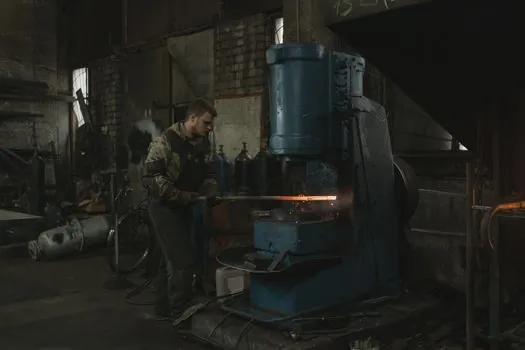
The principal schedule risks are design freeze delay, civil-interface changes, foundation non-acceptance, late electrical or hydraulic modifications, delayed controls integration, tooling mismatch, handling-system conflicts, and extended process qualification [S1][S4]. These risks are more consequential at heavy-press scale because fixing a poor interface can involve a 10-story-scale machine and its supporting building rather than a portable machine component.
Three schedule controls are defensible. First, freeze force, stroke, daylight, die area, material temperatures, cycle requirements, and handling interfaces before detailed civil design. Second, map every supplier interface with an owner, acceptance criterion, and approval gate. Third, distinguish four contractual milestones: design approval, mechanical completion, first qualified forging, and production acceptance.
Permits, foundation loading, electrical service, compressed air, cooling water, hydraulic oil storage, crane access, fire protection, and emissions controls must be verified against the final equipment configuration. The supplied material does not establish a universal permitting period or commissioning duration, so assigning a fixed number of months without project-specific data would be fabrication.
Aerospace production can also constrain the operating sequence. Forgings can be machined from plate or billet, but the process generates substantial chip waste and may not produce equivalent mechanical properties through the part thickness. Forged grain direction can be tailored to design stress patterns, which is why the process remains relevant to demanding structural components [S1].
How to set a defensible delivery forecast
Set the forecast from approved project data, not from a generic “heavy press lead time.” A defensible schedule identifies the rated force and press architecture, confirms the building and foundation, lists utility and handling requirements, closes the control and automation scope, sets tooling milestones, and defines acceptance tests. [S4]
For a new heavy press, the public evidence supports planning for a multi-year project, but it does not support one fixed duration. The schedule should be rebaselined at concept freeze, 30 percent design completion, civil completion, mechanical completion, and first qualified forging. Each stage should carry contingency based on unresolved interfaces rather than a generic percentage [S1][S3][S4].
Track three signals before committing the production start date: foundation acceptance, hydraulic and controls readiness, and successful first-article forging. If those milestones are not verified in sequence, the press is not production-ready regardless of vendor fabrication progress.