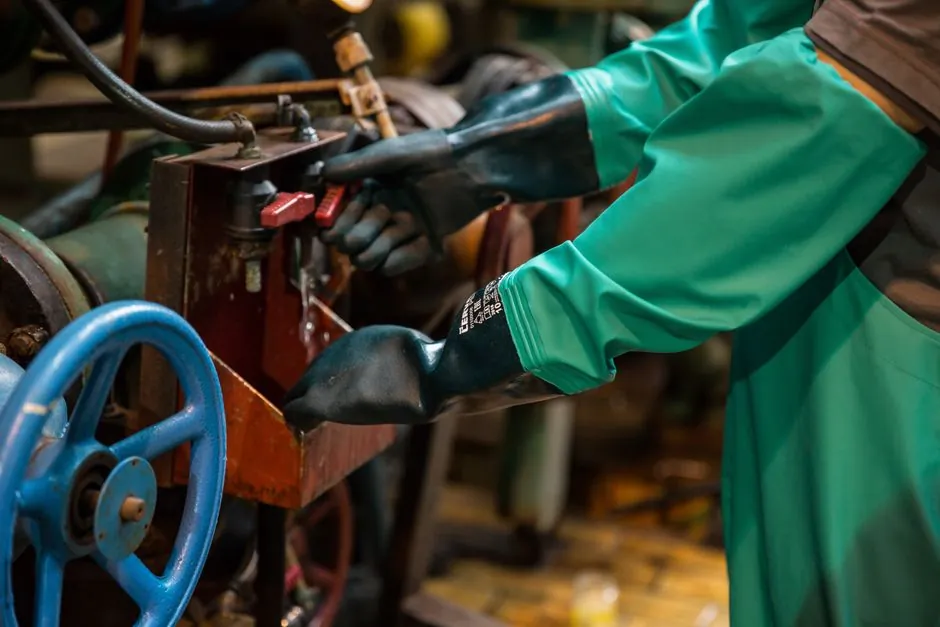
A high-performance butterfly valve is fundamentally defined by its double-offset (or triple-offset) geometry, a PTFE/RPTFE or metal seat, and a cast steel or stainless body that lifts the operating envelope to ANSI Class 600 and roughly 1200°F, far above the 200-250 PSIG and 300-400°F ceiling of a resilient-seated unit [S3][S4][S8].
The resilient-seated butterfly, often called concentric or zero-offset, uses an elastomer liner bonded into a cast or ductile iron body and gives bubble-tight bidirectional shutoff at low torque, which is why it dominates water, air, and non-corrosive service [S1][S10]. When a process engineer is told to "spec a butterfly," the seat architecture is the first fork in the road, and the next paragraphs lay out what sits on either side of it.
Geometry: Zero-Offset Concentric vs Double- and Triple-Offset
A resilient-seated butterfly is a concentric, zero-offset design: the disc rotates 360° around the centerline of the bore, the stem passes through the disc centerline, and sealing relies on an interference fit between the disc edge and the rubber seat at every angle [S1][S3]. This is the cheapest way to get a drip-tight shutoff, but the continuous rubbing contact is exactly what limits seat life and caps the temperature/pressure window.
The high-performance butterfly uses a double offset: first the shaft is set behind the disc centerline (a primary offset), then offset again from the pipe centerline (a secondary offset) [S1][S3]. With the stem behind the disc, the cam action lifts the disc off the seat through most of the rotation, only rubbing the seat in the first and last 10° of opening and closing [S3]. A triple-offset adds a third, angled seat geometry that takes the disc completely off the seat on every cycle, enabling metal-to-metal sealing for tight-shutoff fire-safe service [S3]. For comparison geometry across the butterfly valve family, this offset progression is the single biggest driver of duty range.
Seat Material and Body: Where the Real Spec Lift Comes From
Resilient-seated designs bond an elastomer (EPDM, NBR, FKM, or Viton-class compounds) to a cast iron or ductile iron body, which keeps the body isolated from the process fluid and lets the body be a cheaper alloy [S3][S4][S7]. The elastomer is the entire sealing surface, so its temperature ceiling, typically 300°F for general-purpose compounds and roughly 400°F for high-grade resilient formulations, is the valve's ceiling [S3][S4].
High-performance valves flip that: the seat is PTFE, RPTFE, reinforced PTFE, or a metal alloy such as Stellite, and the body is cast steel, cast stainless (CF8M is common), or higher alloys when corrosion demands it [S3][S4][S7]. One common OEM configuration pairs a PTFE/RPTFE seat with a CF8M disc and stem, rated up to 740 PSIG and 400°F; higher-pressure builds reach ANSI Class 600 in carbon steel and 1440 PSIG with temperature ceilings approaching 1200°F when the seat goes metal [S3][S4][S8][S9]. A direct comparison on the four most common decision criteria:
Resilient-seated: pressure class typically 200-250 PSIG, temperature up to 300-400°F, body in cast or ductile iron, low torque suitable for manual handles or small actuators [S3][S4][S5][S10].
High-performance: pressure class up to ANSI 600 (and higher in triple-offset metal-seated builds), temperature up to 1200°F, body in cast steel or stainless, higher torque that usually needs a gear operator or powered actuator [S2][S3][S4][S5][S8].
The "high performance" label, in short, is bought with stronger metallurgy, harder seat materials, and offset geometry that decouples the disc from the seat.
Shutoff Class, Leakage, and Cycle Life

Resilient seats are widely described as providing bubble-tight, zero-leakage bidirectional shutoff, which is why they are the default for clean water, air, and chemical service where any seat weep is unacceptable [S1][S10]. Cycle life, however, is the trade: continuous interference contact between the elastomer and the disc edge wears the seat, and the rubber itself degrades with temperature, chemical exposure, and age [S3][S5].
High-performance double-offset designs move the disc off the seat across most of the travel, so seat wear drops sharply and the valves typically outlast rubber-lined units in demanding service [S3][S4]. Shutoff is usually rated to API 598 or FCI 70-2 Class IV or VI depending on seat material, with metal-seated triple-offset builds typically meeting Class IV-VI on demand [S3]. When the spec requires fire-safe performance (a common refinery or offshore requirement), the metal seat is essentially mandatory because the elastomer cannot survive a hydrocarbon fire.
Cost, Torque, and Actuation Reality
Two sources flag the same penalty: high-performance valves cost more in raw material and machining, and they need more torque to operate, which pushes the actuator up a size and often forces a gear operator or powered actuator instead of a bare handle [S2][S5]. Resilient-seated valves, by contrast, run at low torque and accept a 10-position locking handle or a small pneumatic actuator for on/off, throttling, and isolation duty [S4][S10].
For lower-pressure lines, the spec economy usually favors resilient seated: the body is cheaper, the actuator package is smaller, and installation is faster. The crossover tends to sit where pressure alone overwhelms the elastomer, for example in tall building risers where the static water column exceeds a rubber-seated valve's rating, and on hot water or steam loops above ~250 PSIG or ~300°F [S4]. Beyond that point, the resilient valve is being asked to do a job its seat material cannot do, and the high-performance build earns its extra cost.
Where Each Design Fits and Where It Fails
Resilient-seated butterflies are the right call for water, wastewater, fire-protection mains, HVAC chilled water, low-pressure steam, air, light chemicals, and the food/pharmaceutical side of the plant where a rubber-lined wetted path keeps the process fluid off a less corrosion-resistant body [S3][S4][S10]. They are the wrong call for hot hydrocarbons, high-pressure steam above their rating, abrasive slurries that chew elastomer, or any service above ~250 PSIG or 300-400°F, and they should not be used where fire-safe shutoff is a project requirement.
High-performance double- and triple-offset valves are the right call for steam and hot-water service above the resilient ceiling, hydrocarbon and refinery service, high-rise risers, power plant cooling water, marine and offshore, and any abrasive or cavitating service where a soft seat would erode [S1][S3][S4][S6]. They are the wrong call for low-budget, low-pressure water lines, where the price premium, the heavier body, and the larger actuator cannot be justified against a perfectly adequate resilient-seated unit [S2][S5].
Selection Workflow and Standards to Pin the Spec
A defensible butterfly-valve spec starts with four numbers: maximum operating pressure, maximum operating temperature, line size, and the required shutoff class, then layers in fluid chemistry, fire-safe requirement, and cycle frequency [S4][S6]. With those on the page, the resilient-vs-high-performance decision usually makes itself: stay below ~250 PSIG and ~300°F in non-flammable, non-abrasive service and pick a resilient-seated butterfly valve; cross any one of those thresholds and switch to a high-performance double or triple offset.
For procurement, pin the shutoff class to API 598 or FCI 70-2, the face-to-face dimensions to ASME B16.10 (or the manufacturer's short pattern if wafer style), the flange drilling to ASME B16.5, and the fire-safe test, if required, to API 607 or API 6FA [S3]. Material traceability to ASTM A216 WCB for cast carbon steel bodies and ASTM A351 CF8M for stainless is the baseline that lets a QA team actually verify what shipped [S3][S4]. For actuation packages sized off the higher torque of the high-performance build, gear operators and pneumatic or electric actuators need their own sizing pass; reference material on control valve actuator pairing covers the methodology for throttling duty where a simple on/off handle is not enough.
Two trackable signals for the next quarter: new high-performance butterfly launches targeting hydrogen and carbon-capture service, where temperatures and pressures sit well above the resilient-seated envelope, and a steady shift of HVAC and building-riser specs toward high-performance builds as static water columns in tall structures push past 250 PSIG [S1][S4].
For component-level specifications, see high voltage tester.
This topic is covered further in Floating Offshore Wind 2026: From Demo to Serial Production.