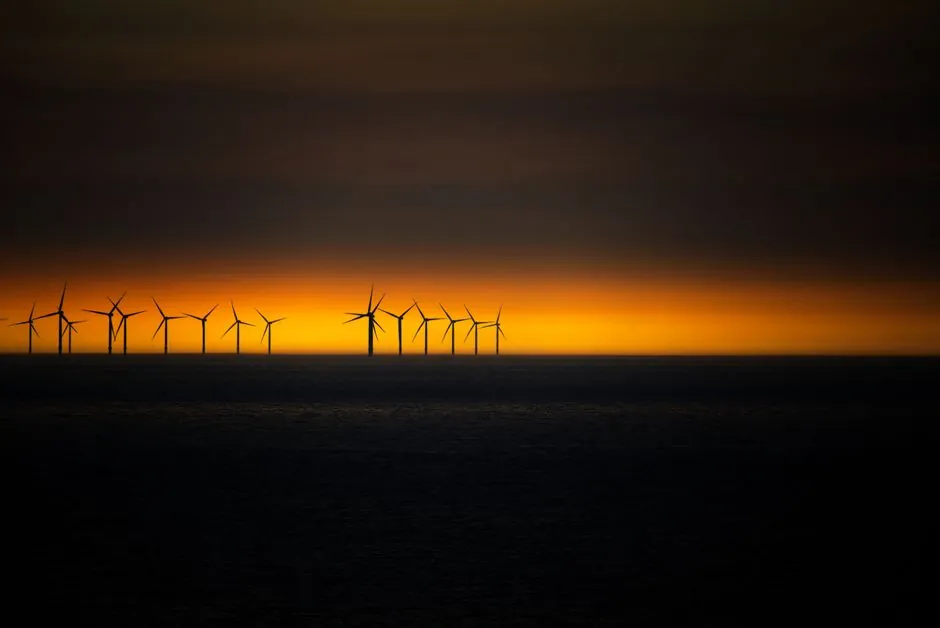
Floating offshore wind crossed a commercialization threshold in 2026, with the industry's three anchor conferences (FOWT Montpellier, Floating Wind Europe London, and Floating Offshore Wind Aberdeen) all framing their agendas around industrialisation, port-based serial fabrication, and cost-down engineering rather than concept validation [S1][S3][S5].
Market sizing published in 2026 diverges sharply by methodology: one research note values the floating wind power segment at USD 8.87B in 2026, scaling to USD 28.67B by 2030 at a 34.1% CAGR, while a separate industry report pegs the 2026 baseline at USD 3.16B rising to USD 25.40B by 2031, a 4-5x spread driven by how each report counts sub-structure fabrication, mooring systems, and dynamic cabling [S6][S9]. Capacity scenarios from event organisers point to under 1 GW installed in 2026, over 16 GW under construction or installed by 2030, and 48 GW by 2035, with Europe, the US, and Asia named as the three anchor hubs [S5].
FOWT 2026 in Montpellier: 1,400-Attendee Benchmark and a 2012 Provenance
The FOWT 2026 conference ran 24-26 March 2026 in Montpellier, France, continuing a series that began in 2012 under the "Rencontres de l'Eolien Offshore Flottant" banner before rebranding to FOWT in 2016 when France Renouvelables joined as co-organiser [S1]. The event's 2025 edition in Marseille drew 1,400 attendees from more than 30 nationalities, up from roughly 50 attendees at the 2012 founding, a 28x growth in headcount that the organisers cite as evidence the technical conversation has shifted from research consortia to commercial project teams [S1]. FOWT's published "no pay-to-speak" policy is a deliberate commercial signal: it bars vendor-funded keynote slots, which keeps the technical programme aligned with operator and developer priorities rather than OEM marketing roadmaps [S1].
Floating Offshore Wind Aberdeen, 7-8 October 2026: Where DemoSATH Became the Commercial Reference
Saitec Offshore Technologies used the 7-8 October 2026 Aberdeen platform to mark ten years of SATH floating-substructure R&D and to release what the company calls an "optimised SATH design" built for port-based serial production, local supply-chain integration, and reduced CAPEX/OPEX at commercial scale [S4]. The timing lines up with the second operational anniversary of DemoSATH, the 2 MW pre-commercial platform that has been grid-connected since 2023 and now supplies the engineering data feeding the next-generation SATH geometry [S4]. RenewableUK's programme for the same Aberdeen dates is explicitly framed as a "delivery-focused forum" for "the floating offshore wind industry's most pressing priorities," a phrasing that recurs across the organiser's promotional copy and signals the event's pivot away from R&D showcase toward procurement, financing, and supply-chain scale-up [S3].
Floating Wind Europe London, 23-24 June 2026: 150+ Attendees, Sub-1 GW Baseline
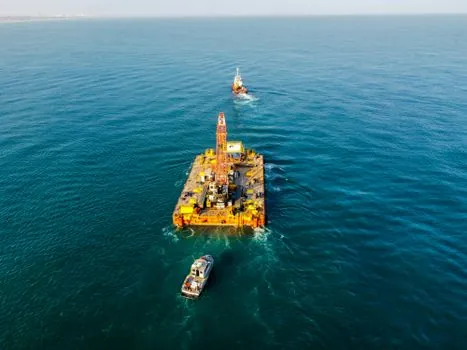
The 6th Annual Floating Wind Europe ran 23-24 June 2026 at the Radisson Blu Hotel London Heathrow, with 35+ speakers, 150+ attendees, and 5+ sponsors on the published count [S5]. The organiser's market-outlook briefing anchors the 2026 commercial starting point at "under 1 GW today" of installed floating capacity, a number consistently repeated across the European conference circuit and broadly aligned with the 2025 public tallies of Hywind Scotland (30 MW), Kincardine (50 MW), WindFloat Atlantic (25 MW), and DemoSATH (2 MW) [S5]. pressure transmitter and flow meter suppliers serving the segment are positioning for mooring-line load monitoring and dynamic-cable coolant flow instrumentation, both flagged as recurring engineering pain points at the London sessions.
Where the 2026 Forecasts Actually Disagree
The two 2026 market reports cannot be reconciled without knowing each one's scope. The USD 8.87B / 34.1% CAGR figure (2026 baseline, 2030 endpoint) appears to include floating-specific balance-of-plant, mooring, and dynamic cabling hardware alongside turbine supply [S6]. The USD 3.16B / USD 25.40B figure (2026 baseline, 2031 endpoint) excludes downstream electrical infrastructure and counts only the floating turbine-plus-substructure package, which explains the lower starting value and the slightly longer ramp horizon [S9]. Both reports agree on the qualitative trajectory: a near-term commercial pilot phase through 2027, an industrial ramp from 2028, and a step-change in annual installations after 2030 as 15 MW+ turbines move from prototype to serial deployment [S5][S9].
Decision Criteria: Semi-Submersible vs Barge vs TLP vs Spar
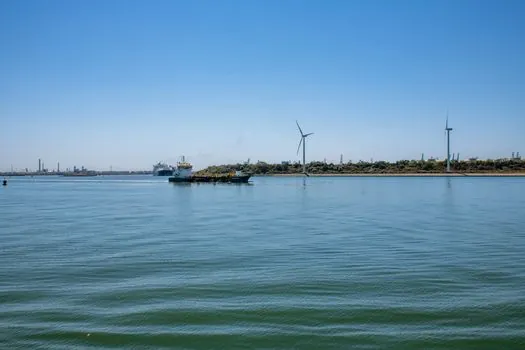
Floating substructure selection in 2026 is being driven by four criteria: port-depth and quay-length compatibility for serial fabrication, towing draft to the installation site, mooring-system cost as a share of total CAPEX, and demonstrated operational hours at sea. Saitec's SATH (a twin-pontoon semi-submersible with shallow draft) and the Principle Power WindFloat semi-submersible are the two architectures with the most cumulative operating hours from pre-commercial platforms, while spar designs (Hywind, Hywind Tampen) dominate by absolute capacity deployed but require deep-water tow-out and specialised upend operations [S1][S4]. Tension-leg platforms (TLP) remain at prototype stage in Europe, and barge designs are largely confined to Asian demonstration sites. Port logistics, not hydrodynamic performance, is now the gating constraint for commercial-scale deployment, and that is why 2026 conference programmes are dominated by harbour-side manufacturing case studies rather than tank-test results.
What "Commercialization" Actually Means in 2026
Commercialization in 2026 floating offshore wind is being defined by four measurable shifts, not by announcements. First, mooring-line and dynamic-cable procurement is moving from one-off project specifications to multi-year framework agreements, which is the supply-chain signal that developers expect a serial-production pipeline [S3]. Second, PLC-based floating-substation control architectures are being standardised across the major OEMs, replacing the bespoke SCADA stacks that characterised the pre-commercial pilots. Third, industrial valve specifications for the seawater ballast and cooling loops on floating hulls are converging on duplex stainless steel wetted parts, driven by 25-year design-life requirements under marine immersion. Fourth, warranty structures for floating substructures are being written for 25-30 year operational windows, a doubling of the 12-15 year warranties common in the 2018-2022 pilot era. Each of these is a procurement-side change, not a technology breakthrough, and that is the point: 2026 is the year the floating wind supply chain starts behaving like a supply chain rather than a research consortium.
Constraints and Failure Modes the 2026 Programmes Are Working Around
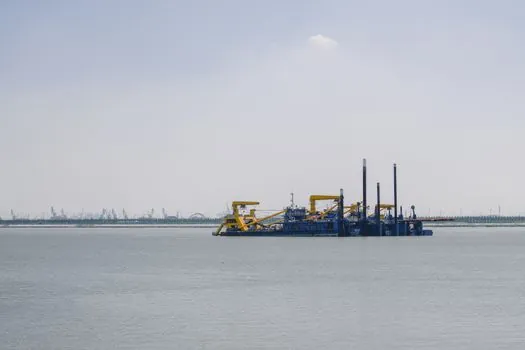
Three failure modes are dominating the 2026 engineering agenda. Mooring-chain fatigue in combined wave-current loading remains the top-ranked integrity risk, and the public-domain operational data from Hywind Scotland and Kincardine is now sufficient to calibrate S-N curves that did not exist in 2018 [S5]. Dynamic-cable failure at the hang-off and at the touchdown point is the second-highest risk, with most pre-commercial platforms having replaced at least one cable section during their operational life, a fact that is reshaping HV cable procurement specs toward improved fatigue-resistant armours. Third, port availability for serial fabrication is the binding constraint on deployment pace, since only a handful of European harbours have the combination of quay length, load-bearing capacity, and sheltered water needed to assemble and tow out 15 MW+ floating units, and that bottleneck will not be resolved before 2028 at the earliest [S5].
The trackable signals over the next 6-12 months are: (1) the publication of FOWT 2027 dates and venue, since the 2026 Montpellier edition was the largest yet by attendance and the 2027 edition will set the baseline for how fast the conference circuit is scaling; (2) the first commercial-scale SATH or WindFloat project financial investment decision, which would convert the 2026 industrialisation narrative into a contracted CAPEX number; and (3) the next RenewableUK Floating Offshore Wind conference, which by tradition returns to Aberdeen and will be the first indicator of whether the 2026 delivery-focused agenda produced signed offtake or just signed memoranda [S1][S3].
See also our earlier report, Digital twin for packaging line bottleneck analysis: how it works, what it returns.